
Jacob Williams: When the Search for Meaning Led to Divine Oneness
Jacob Williams grew up in twenty-first-century Britain, where the Anglican inheritance often remained more a cultural shadow than a daily religious practice. At Oxford he studied philosophy, yet later wrote that the prevailing language of progress and individual choice did not answer his deeper question: what gives life binding meaning and makes goodness more than changing preference? His search did not begin by rejecting everything around him, but by refusing to settle for answers that no longer carried spiritual or moral weight for him.
That question led him to seek God. He sought conversations with Christians of traditional convictions and visited chapels to hear ministers, but did not find the renewal he had hoped for. [Source] Questions about incarnation and Trinity remained, especially how those doctrines related to the absolute oneness of God. This is his dated account of a personal path, not a judgment on the sincerity of other believers or a summary dismissal of broad Christian traditions.
In the Islamic testimony of faith and in tawhid he found a more direct structure: God is one, uncreated and transcendent, and does not share divinity with any mediator. For Williams, divine oneness was not merely an abstract proposition. It grounded objective meaning and moral responsibility: human beings do not manufacture truth for themselves, but receive existence and obligation from one Creator. The philosophical question and the call to worship therefore became parts of the same inquiry.
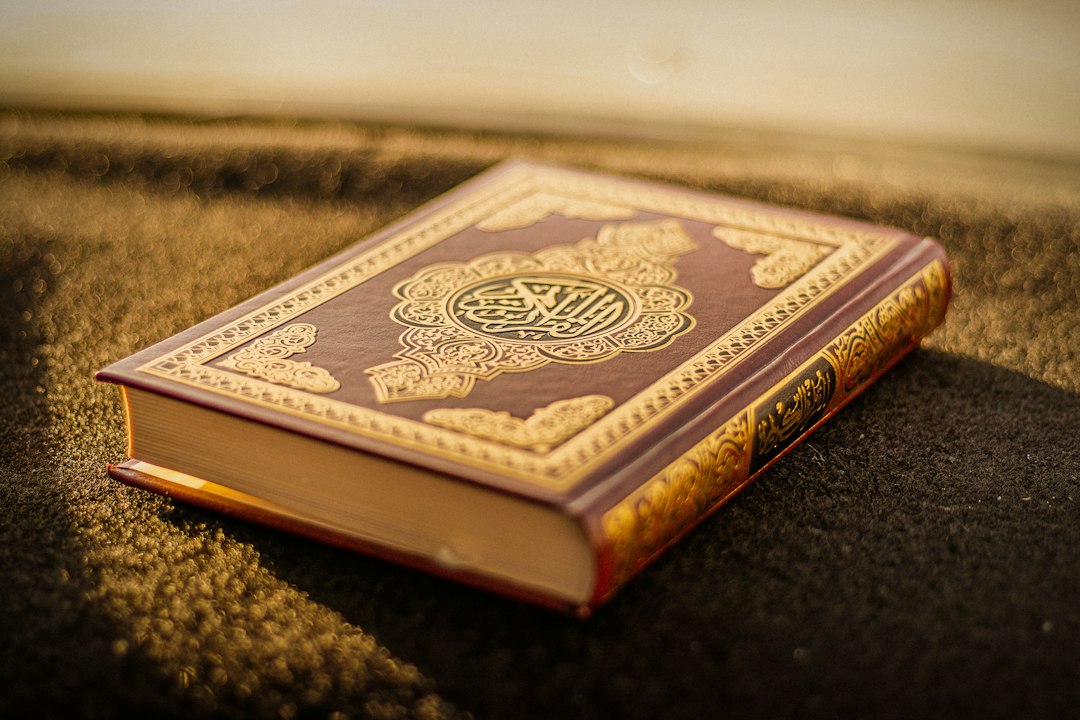
Williams records that reading the Quran and the biography of the Prophet Muhammad moved Islam from a general idea to a historical claim that could be examined. He encountered in the Quran a direct address about God, humanity and revelation, and in the prophetic biography an account of how belief became community, worship and ethics. Reading did not make every question easy, but it changed the centre of comparison: instead of asking whether Islam resembled an inherited image, he asked whether its claims about God and prophethood were true.
His hardest obstacle was cultural. He had absorbed an image of Islam as foreign to Britain or hostile to everything within its inheritance. A visit to North Africa helped him see Islam as a lived religious tradition rather than only a set of propositions in books, and prompted him to distinguish creed from culture. He concluded that accepting Islam did not require a new name, borrowed dress, or denial of what was good in his British inheritance.
Williams entered Islam in 2017. The reviewed sources publish no day, venue, witnesses or wording of his own declaration, so no missing scene is supplied. In his 2019 essay and a recorded interview listed in 2024, he presented the journey as a convergence of Muslim and British identity, not an escape from civic identity into a void. A 2023 academic publication independently confirms his public scholarly identity; none of these dated records is used to infer his private religious state today.
The story leaves three useful questions for outreach. Why is divine oneness the centre of Islam rather than a secondary heading? How can the Trinity be discussed respectfully, without hurtful simplification? Does entering Islam erase national and linguistic belonging? Williams’s path suggests examining a tradition through its texts, history and living communities, while separating a claim addressed to conscience from the political and cultural images accumulated around it.
Sources
- Jacob Williams, First Things — Why I Became Muslim (first-person essay, 1 May 2019)
- Blogging Theology / IslamiCity — Why I Became Muslim with Jacob Williams (recorded-interview listing, 16 January 2024)
- Blogging Theology — Why I Became Muslim with Jacob Williams (direct video, 16 January 2024)
- Jacob Williams, The Muslim World / Wiley — Islamic Traditionalists: “Against the Modern World”? (academic identity, 4 September 2023)