
The Question That Found Its Place
C03 · 6–8
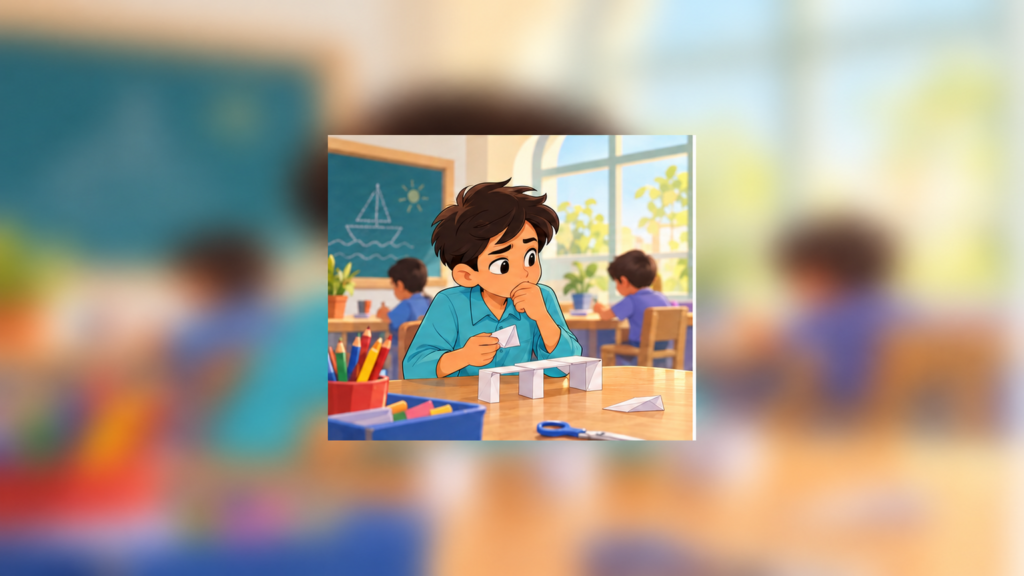
In art class, seven-year-old Yusuf was fastening the last pieces of a small paper bridge. Behind him, one boy told another, “If your faith is strong, you never ask how.”
Yusuf’s hand stopped. His two classmates were seven too.
A question had been sitting in his mind for days: How does Allah bring people back to life after they die?
He did not say it aloud. He wrote it on a small piece of paper, folded the paper twice, and slipped it into his pocket. The question stayed hidden, but it did not grow quiet.
He tried sticking the paper together again, but stopped at the same piece. He wanted someone to listen calmly before judging a question he had not even asked.
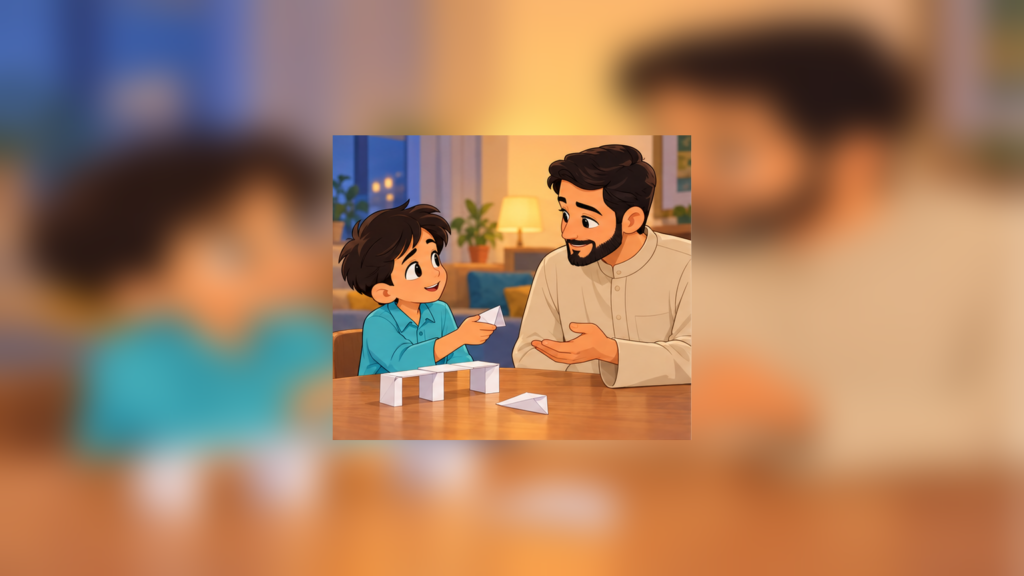
That evening, Yusuf sat in front of his paper bridge. It needed only one more piece. The piece lay beside his hand, yet he did not pick it up.
“Did the bridge wear you out?” Dad, who was thirty-five, asked.
Yusuf shook his head. Then he pulled out the folded paper.
“It’s a question,” he said. “But I was afraid it might be a bad question.”
Dad read it. He did not laugh, and he did not look angry.
“We don’t bury a question that is honestly trying to understand,” he said. “We take it to someone trustworthy who knows. And if that person does not know, they should say, ‘I don’t know.’”
Dad sat beside him and moved the bridge away from the table’s edge. “Let’s read your paper first,” he said. “Then separate what you heard from what you want to understand.”
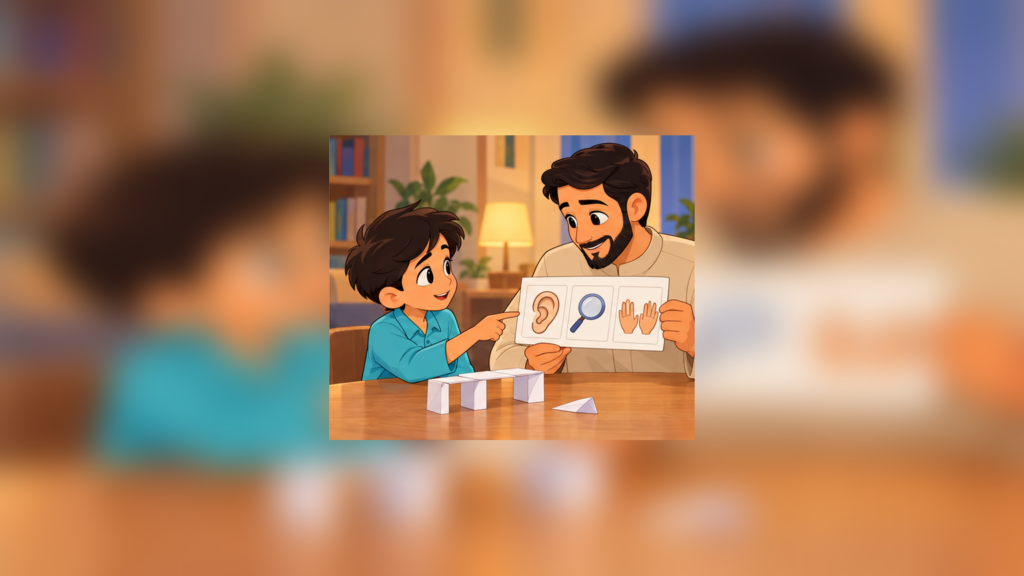
Dad brought a card and drew three boxes:
What did I hear?
What do I want to understand?
Whom can I ask?
In the first box, Yusuf wrote: “I heard that a believer never asks how.”
In the second: “I want to understand how I can have this question while believing that Allah is able to do all things.”
In the third: “Mr Nabil at the mosque library.”
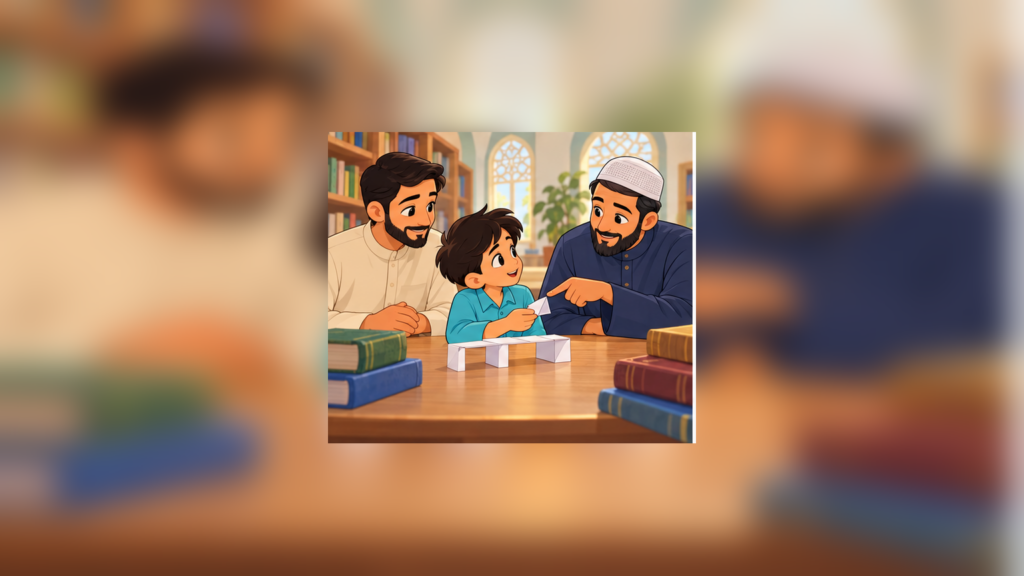
The next day, Yusuf and Dad sat with Mr Nabil, a forty-year-old male teacher. The teacher read the card.
“You did well to make your question clear,” he said. “The Quran tells us that Prophet Ibrahim asked Allah how He gives life to the dead. Ibrahim already believed. He asked so that his heart could become more settled. A question that seeks understanding is not the same as refusing the truth.”
“Do we know every detail?” Yusuf asked.
“We know what Allah has told us,” Mr Nabil replied. “Allah is able, and He will bring the dead to life. But when revelation has not given us a detail, we do not invent a picture of the unseen.”
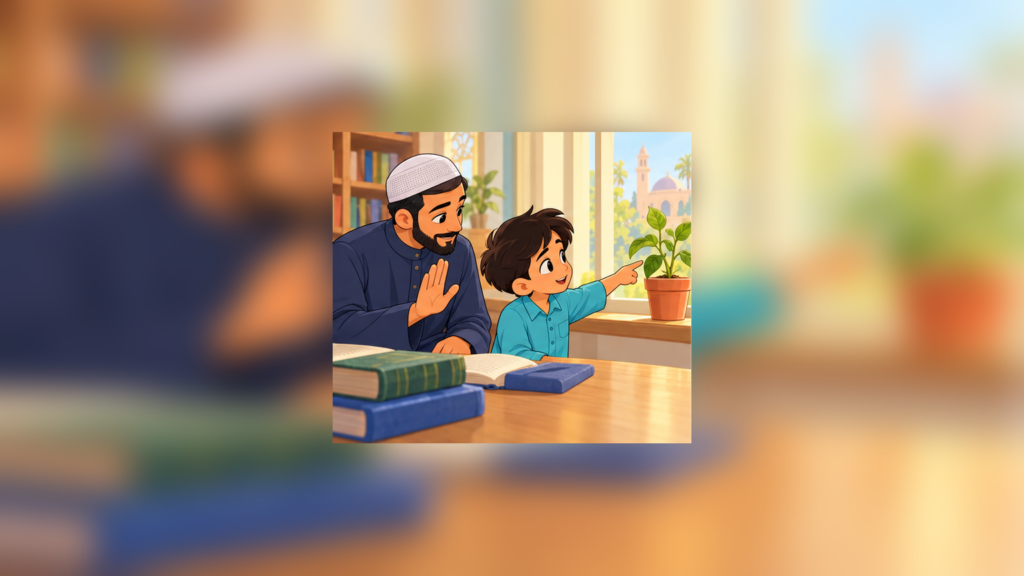
Yusuf pointed to a little plant on the windowsill.
“What about a seed growing?”
“It can remind us of Allah’s power and of the life we can see,” said Mr Nabil. “But it is not a picture of exactly how an unseen event will happen. We learn from what we observe, and we stop where our knowledge stops.”
Yusuf unfolded his small paper. He did not erase the question. Beneath it, he wrote:
“I learned what we believe, and I learned what I should not pretend to know.”
He kept the card in his notebook. He wrote down whom he had asked and what he had understood, leaving room for a question that might need more explanation.
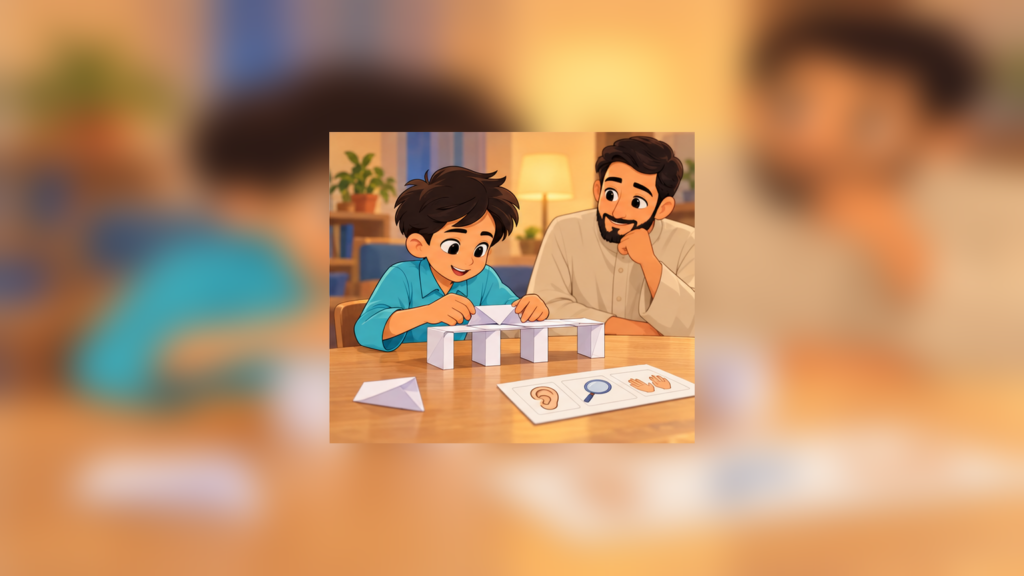
Back at home, Yusuf fitted the last piece into his bridge. It stood firm.
The question had not vanished because it was frightened away. It had found its proper place: clear words, a trustworthy grown-up, and an answer that says what we know—and stops where we do not.