
The Race Day and the Rain
C04 · 6–8

In the school yard, the coach drew two white lines and set six coloured hoops between them. The relay race was three days away. Omar, Mazen, and their teammates were seven-year-old boys. Their male coach was thirty-five.
“If we practise well, we are sure to win!” Omar told his team.
Mazen lifted the small wooden baton. “We are going to practise well,” he said. “But winning is not ours to command.”

Practice began. Omar ran fast, but he held the baton out too late. It struck the ground. On the next try, he watched his teammate’s hand and slowed for one careful step. The baton moved from hand to hand without falling.
Omar stood at the line and tried the movement slowly with Mazen. They chose a short call for the boy receiving the baton, then swapped places. Instead of only promising to do better, they repeated the pass until each knew when to reach out.
“That part belongs to us,” the coach said. “We can learn, practise, and correct a mistake.”

That night, rain tapped hard against Omar’s window. By morning, the yard was dotted with little pools. The school postponed the race for one week.
Omar clapped one palm against the other. “All our practice was wasted!”
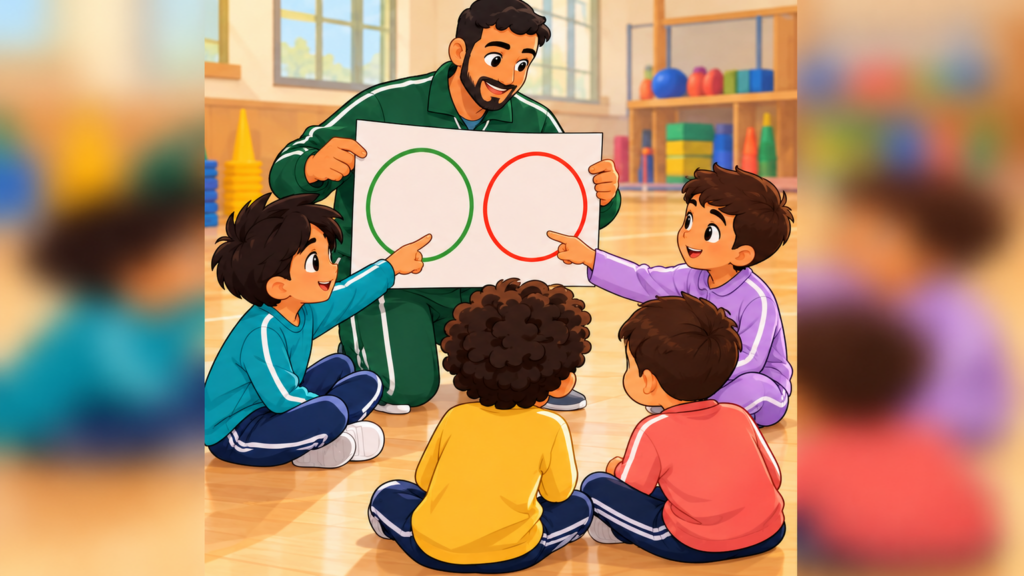
The coach took a sheet of paper and drew two circles. Above the first, he wrote: What can we do? Above the second: What result can’t we control?
“Can we stop the rain?” he asked.
“No,” said the team.
“Can we choose the new race day?”
“No.”
“Can we practise passing the baton in the hall?”
Omar looked around at his teammates. “Yes. We can also check the new time and make sure we rest before it.”
They wrote those steps in the first circle. In the second, they wrote: the rain, the speed of the other teams, and the final result.
In the hall, Mazen read the first step aloud. The boys practised the pass while standing still. Their coach watched and corrected their hand positions. When it was time to leave, they returned the equipment to its box. Omar decided to check the next practice time instead of watching the rain.
“We use the good means that are available,” the coach said, “and we ask Allah for help. But we do not demand that success must arrive in the one shape we have imagined.”
The next day, Omar ticked the steps they had completed. Then he folded the sheet into his bag, ate his meal, and made time to rest. There were small things he could do today, even while the race result remained unknown.
The following week, the sky cleared. The team took their places at the starting line.
“We will do the part we can do well,” Omar said, “and place our trust in Allah.”
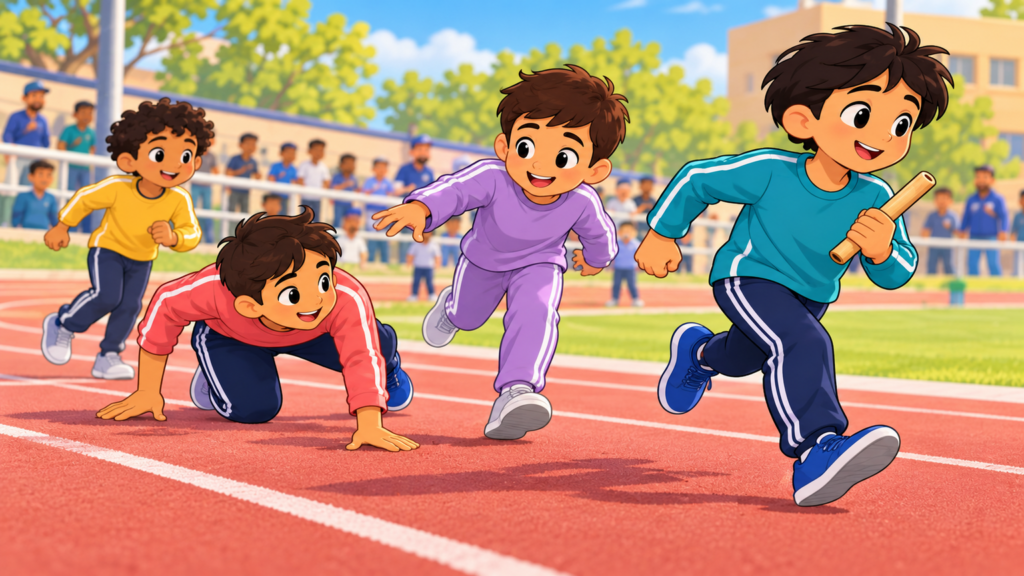
The race began. The first baton pass was smooth. During the second lap, one runner stumbled. He stood up and kept going. At the finish, their team came second.

Omar was silent for a moment. Then he looked at the baton, which had not hit the ground during the race.
“We did not come first,” he said, “but we fixed our passes. And after the stumble, we finished the race.”
“We can still study what caused the stumble before the next race,” Mazen added.
Omar returned the baton to the equipment box. The result was not the picture he had drawn in his mind, but he no longer said the practice was wasted. He had learned the difference between being responsible for the next honest step and trying to own a result that was never his to command.