
Tomorrow’s Possible Card
C10 · 6–8

Salim was a seven-year-old boy. His father was a thirty-seven-year-old man, and his teacher, Mr Fahd, was a thirty-five-year-old man. The boys in his class were seven years old.
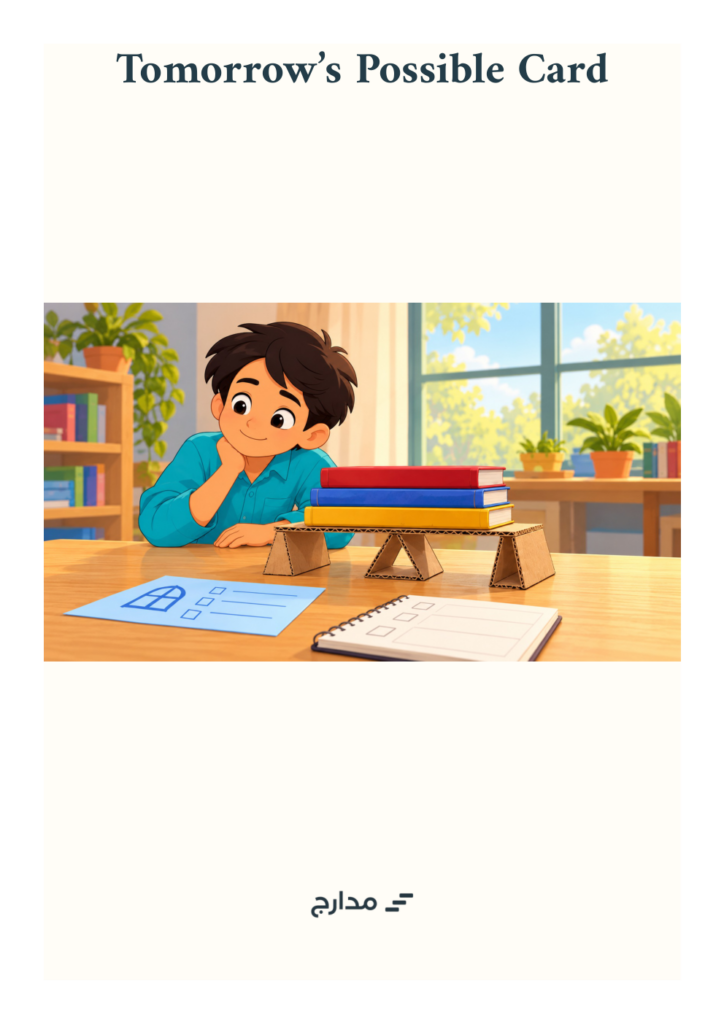
Salim’s notebook held ten wishes, each written in large letters: BUILD A STRONG BRIDGE. READ THE WORLD ATLAS. KEEP MY ROOM TIDY. GET FASTER AT MATH.
Opening the notebook made him happy for a moment. Then the wishes seemed to crowd around him. Where should he begin? He would turn the pages, add one more wish, and close the notebook without doing anything.

During skills class, Mr. Fahd handed out small cards. Each card had a blue window at the top and four lines underneath:
What do I hope for?
What step is within my power?
When will I do it?
What specific help should I ask for?
“Do not choose the biggest wish,” Mr. Fahd said. “Choose one you can move a single step today. We hope for good from Allah and do what is within our power. A step is not a promise that the result must happen.”
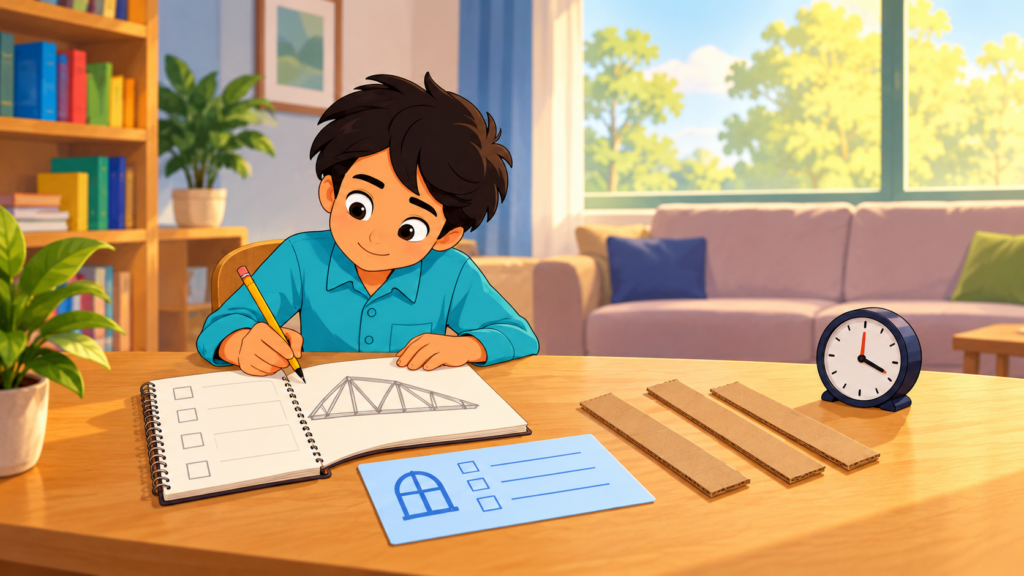
Salim looked at his list. He chose the bridge because the school science corner was only one week away. On the first line he wrote, “I hope my bridge can hold three books.”
On the second line he wrote, “Draw a design and fold three strips of cardboard.” He chose a time: “Today, 4:30 to 5:00.” On the last line he wrote, “Ask Dad to cut the strips with the craft knife.”
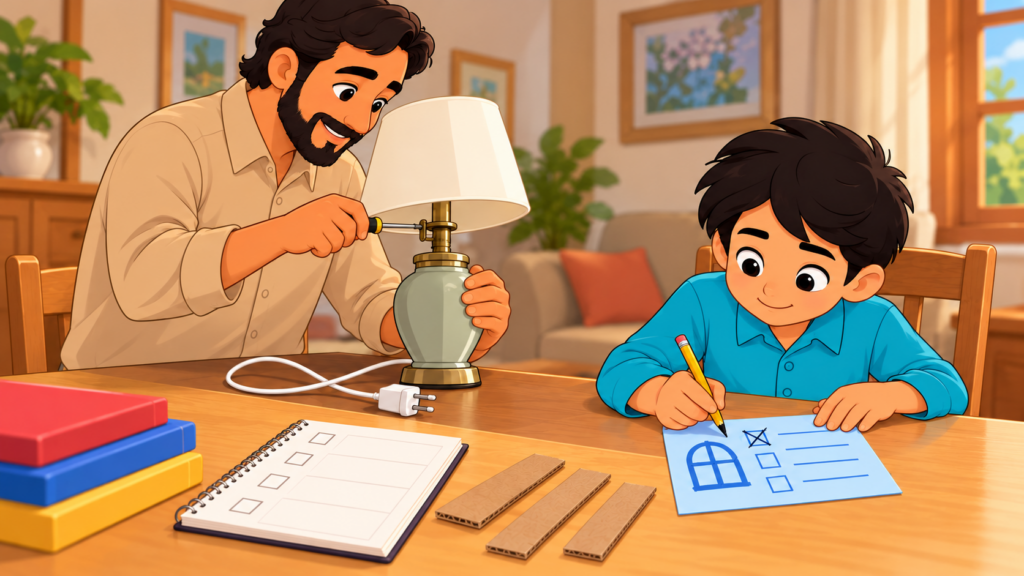
At half past four, Dad was repairing an unplugged lamp.
“I can do the cutting at half past five, but not now,” he said.
Salim almost said, “Then the card has failed.” Instead, he read the time line again, crossed out 4:30, and wrote 5:30. The plan needed an adjustment, not a journey to the bin.
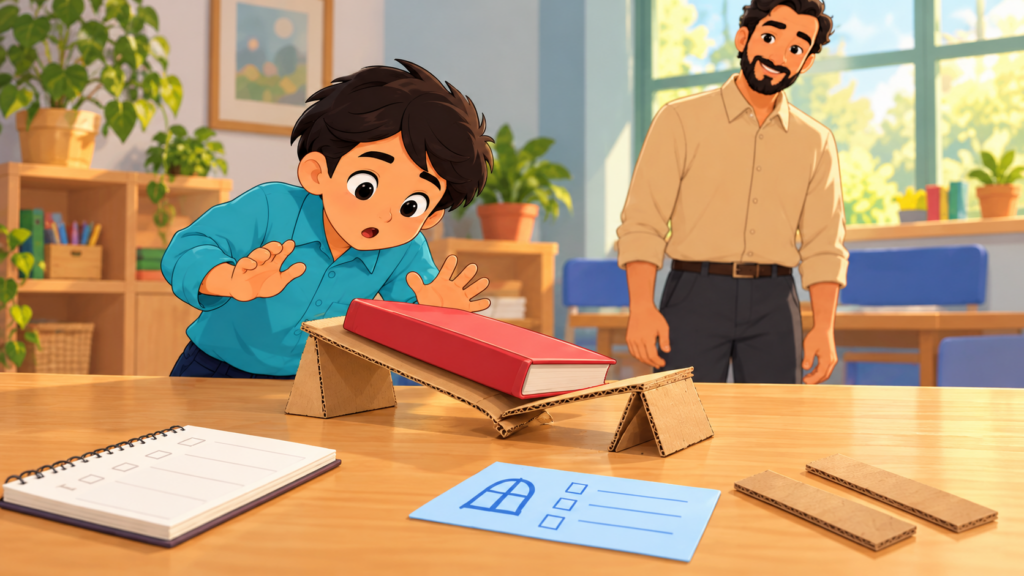
At the new time, Salim drew a wide bridge. Dad cut the strips and then stepped away from the table. Salim folded and fastened the cardboard. He placed one book on top. The bridge bent and fell.
On the back of the card, Salim wrote:
“Fact: The bridge fell under one book.
The thought that came to me: I am bad at building.
Question: Does the cardboard need a stronger fold?”
“We both saw the fact,” Dad said. “But your judgment about yourself is not a fact. Test your question.”
Salim folded the strips into long triangles. The bridge held one book, then two. It fell under the third. Salim did not write, “Everything is over.” He wrote, “Tomorrow, ask Mr. Fahd where a support should go.”
The next day, Mr. Fahd did not build the bridge for him. He showed Salim a picture of a support beneath the middle of a bridge.
“You can test this,” he said. “It may work, or it may need another adjustment.”

After school, Salim added the support during another short work time. He placed the first book on the bridge, then the second, then the third. The bridge stayed firm.
Salim smiled, but he did not write, “My card makes wishes come true.” He wrote, “The card helped me see my step, my time, and the help I needed. For the result, I learned, tested, and adjusted.”
Did he tear out the crowded wish page? No. He kept it in the notebook and drew a small square beside every wish. He did not have to finish them all tomorrow. He only needed to choose, begin with a possible cause, and look honestly at what happened next.