
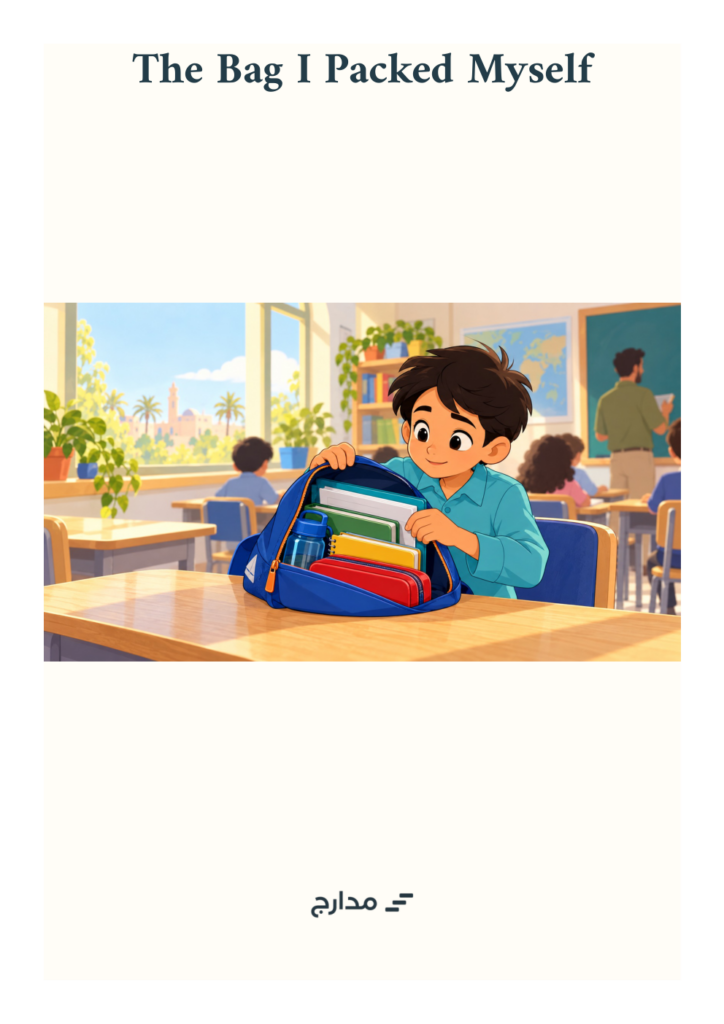
The Bag I Packed Myself
C11 · 6–8
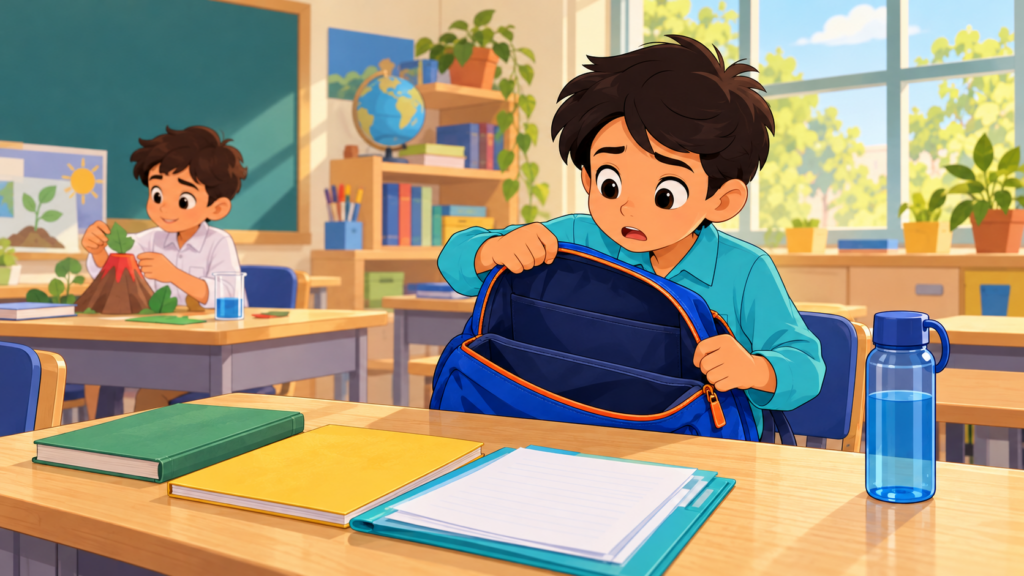
Zayd was a seven-year-old boy. His father was a thirty-six-year-old man. His friend and the other boys in his class were seven, and their teacher was a thirty-five-year-old man. Zayd liked to be ready for school, but he had grown used to leaving his father to organise his things.
On Monday morning, Zayd opened his school bag and reached for his science notebook.
It was not there.
He searched the front pocket for a pencil. That was missing too. When colouring time began, he discovered that his box of colours was still on his desk at home.
“Dad always packs my bag,” Zayd told his friend. “Maybe he forgot.”
But as he said it, he remembered Dad asking the night before, “Is there anything else for your bag?” Zayd had answered, “No,” without even looking.
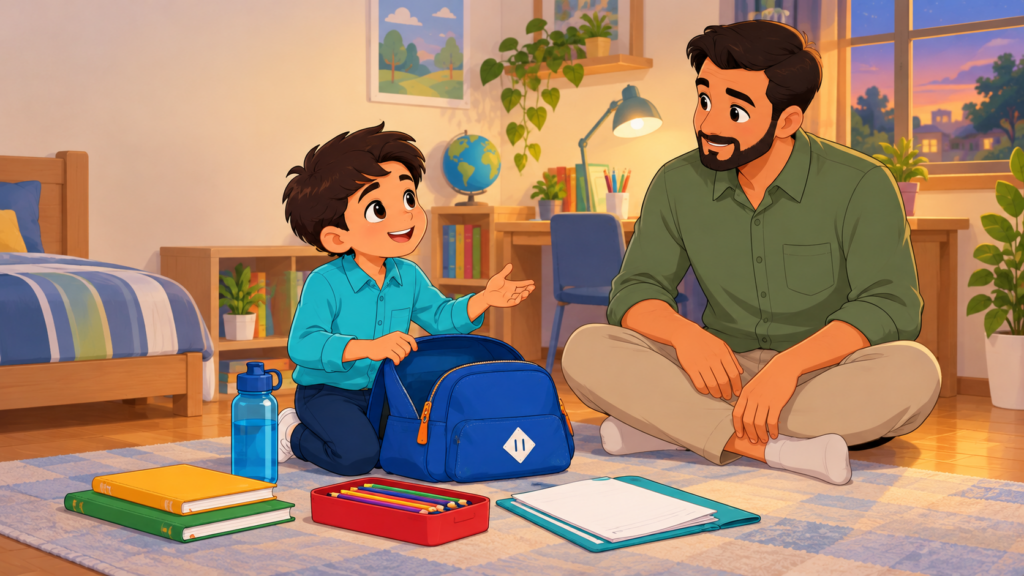
That evening, Zayd placed the bag on the floor. “I want to pack it by myself from now on.”
Dad did not say, “Fine—do everything.” He did not pick up the bag and pack it for Zayd either. He sat nearby and said, “We’ll learn it one step at a time.”
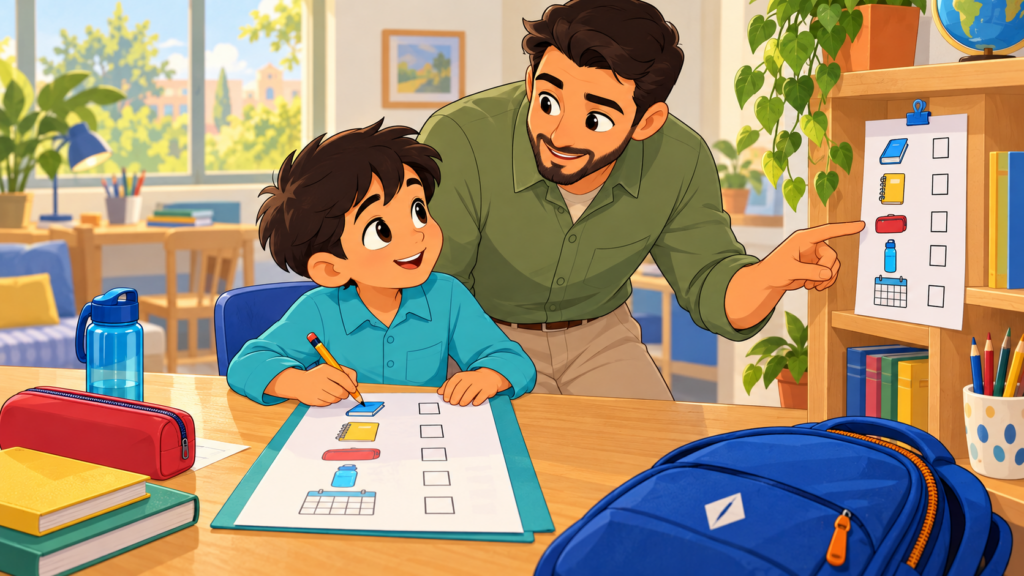
They brought a small sheet of paper. Zayd drew four signs on it: a book, a notebook, a pencil case and a water bottle. Underneath, Dad wrote: CHECK TOMORROW’S TIMETABLE.
“Where should the list go?” Zayd asked.
“Somewhere you can see it before you close the bag.”
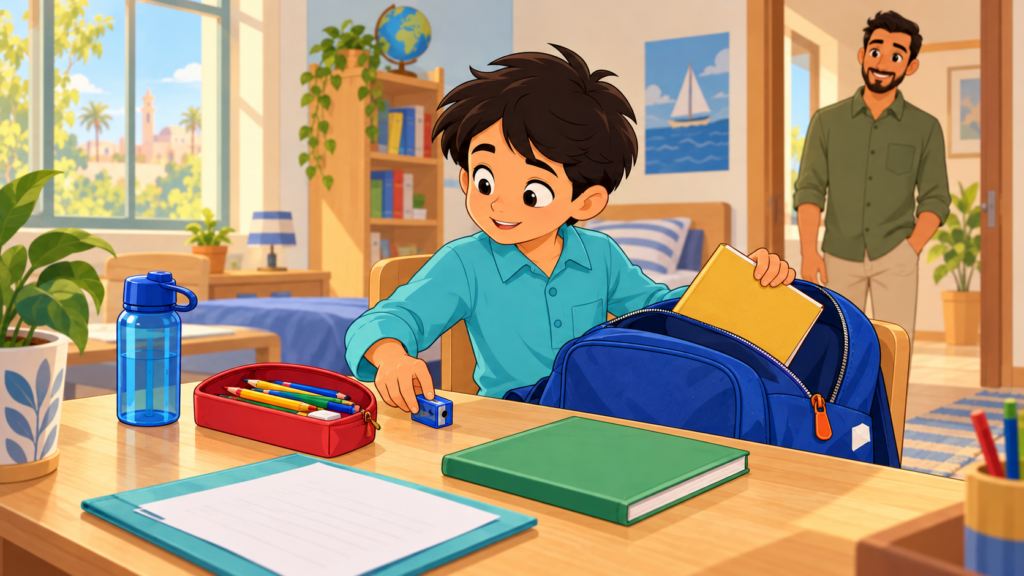
They fixed the paper to a low shelf beside the desk. Zayd read Tuesday’s timetable. He collected his language book and maths notebook. When he reached the pencil case, he opened it to check.
“Two pencils and an eraser… but no sharpener!”
Dad smiled. “If we had closed the bag quickly, the sharpener would still be outside it.”
On the first day, Dad read the list while Zayd collected each item. On the second day, Zayd read the list while Dad waited near the door. On the third day, Dad said, “Pack the bag, and then I’ll ask you one question.”
Zayd gathered his books, opened the pencil case, and filled his bottle with Dad’s help. Then he pulled the zip closed.
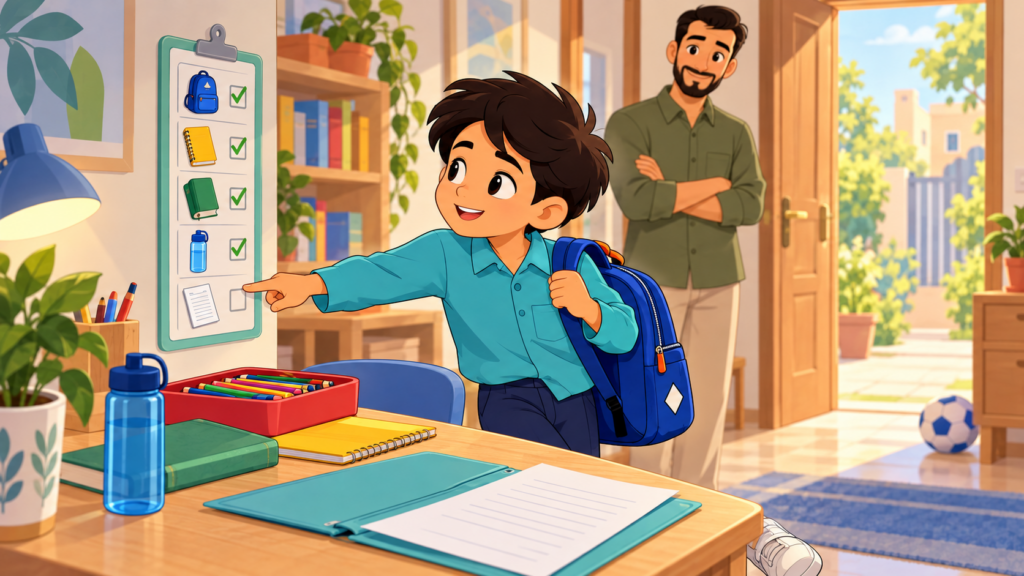
Dad asked, “Did you check tomorrow’s timetable?”
Zayd stopped. He had checked the packing list, but he had forgotten the timetable. He opened the bag again and swapped one book for another.
“The bag wasn’t ready after all,” he said.
“And you are the one who discovered that,” Dad replied.
On Thursday evening, Zayd hurried towards his game as soon as the bag was closed. Dad called, “What is the last step?”
Zayd turned back. “The quick check!”
He touched every picture on the list. “Book, notebook, pencil case, water, and tomorrow’s timetable.” Then he spotted his homework sheet at the edge of the desk and slipped it into his folder.
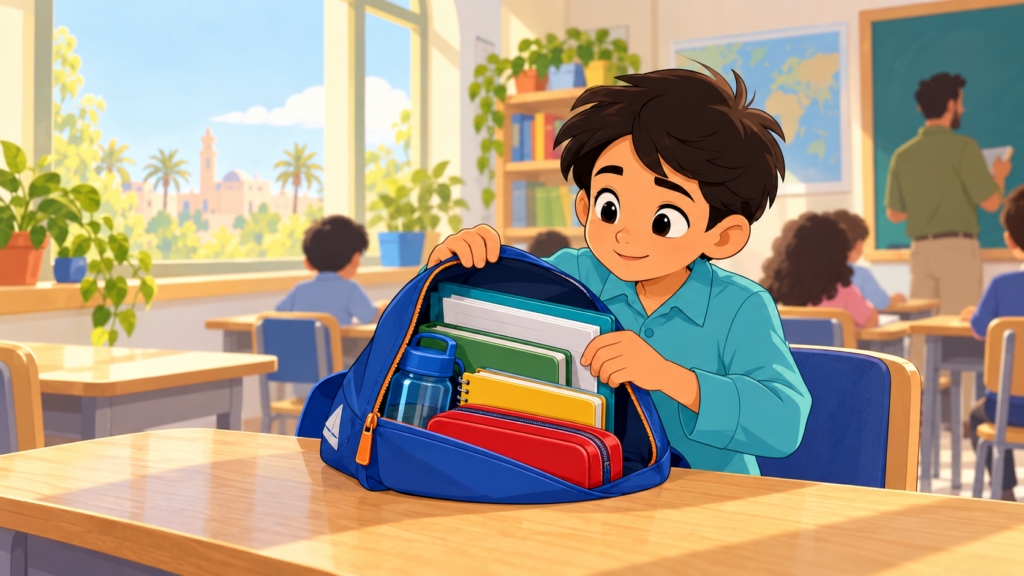
On the next school morning, Zayd opened his bag in class. Everything he needed was there—even the sheet that had nearly stayed at home.
He did not say, “I will never forget again.” He knew that anyone could forget. Instead, he had built a small path that helped him remember.
When he returned home, he did not ask Dad to pack the bag. “I’ll begin,” he said. “If I need help, I’ll ask for it with one exact step.”
Dad pointed to the list and left the space clear.
Zayd opened his timetable and began.