
The Game Can Wait a Little
C12 · 6–8
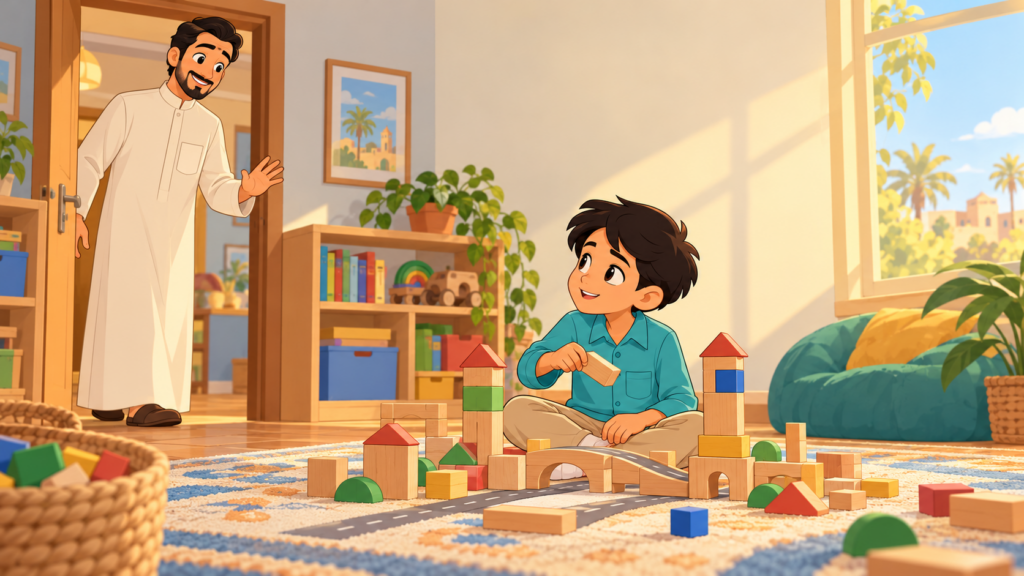
Umar was a seven-year-old boy. His father was a thirty-six-year-old man.
Umar was building a city from wooden blocks. He had made two towers and a road between them, and now he was starting a small bridge.
Umar looked over his city. He liked finding his games just as he had left them and disliked forgetting his next idea. So he kept telling himself: just one more piece. He did not mean to lose track of time, but he had not chosen a stopping place. Dad saw how busy he was and came close to speak quietly instead of calling from far away.
“There isn’t long until Maghrib,” Dad said.
“I’ll come when I finish,” Umar replied, keeping his eyes on the bridge.
He placed one block, then thought of a gate for the city. As soon as the gate was done, he decided the city needed a wall. Every finished idea seemed to uncover another one.
When Umar heard the call to prayer, he said, “But the bridge isn’t finished!”
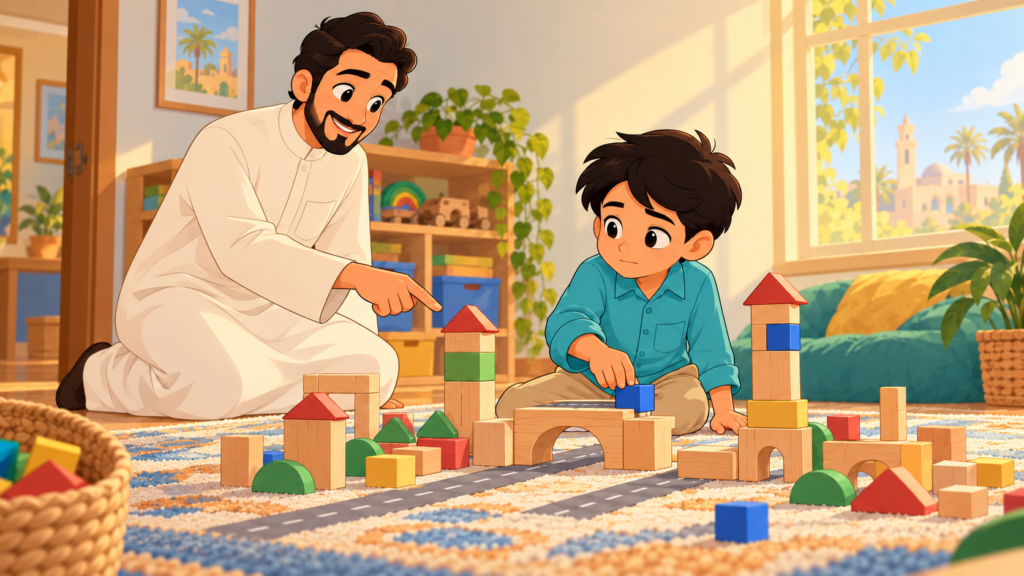
Dad did not raise his voice or knock down the city. He pointed to a little blue block. “Put this where you want to continue. It can hold the starting place for your next step.”
Umar placed the blue block at the end of the unfinished bridge. Then he rose slowly and went to make wudu. He was rushing, so he forgot to fold up his sleeve and its edge became wet.
After the prayer, Umar said, “It feels as if I have to jump out of my game all at once.”
“Then we won’t wait for the final moment tomorrow,” Dad said. “We’ll try two signals: an early reminder, and then your stopping block.”
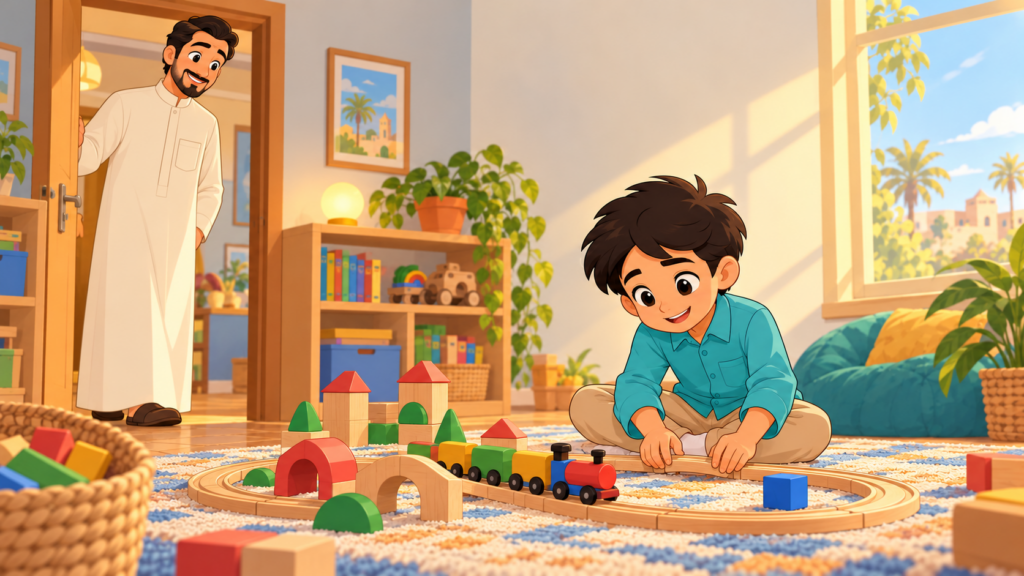
The next day, Umar was joining pieces of a wooden railway. The first reminder sounded.
“I still have time,” he said.
“This is time to finish the step you are on,” Dad replied, “not time to begin a new one.”
Umar fixed the final piece of track in place and set the blue block beside the train. Then he looked at a small card near his bedroom door: STOP. SAVE MY PLACE. GET READY.
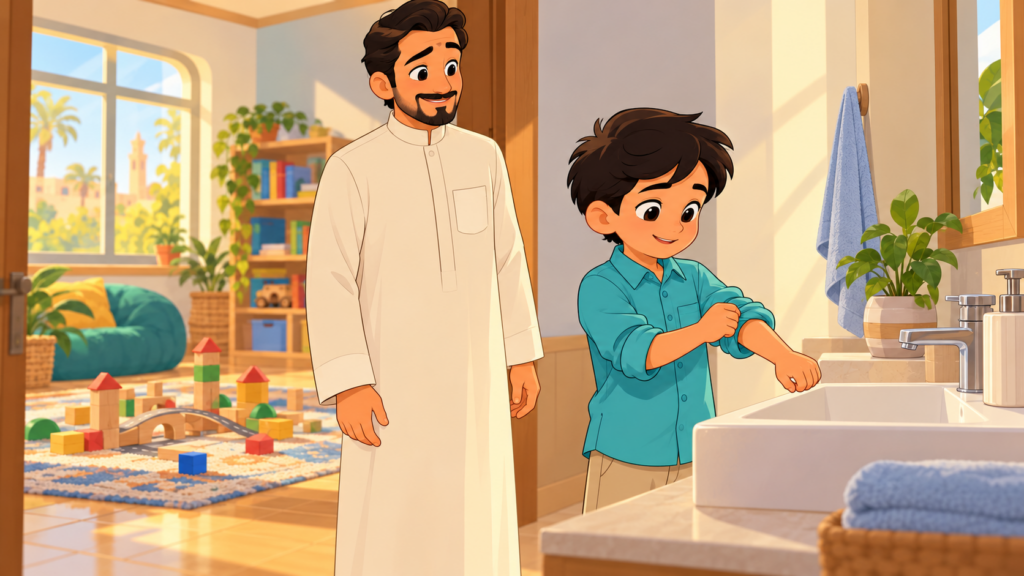
This time, he folded his sleeves before wudu and walked without racing. Every step did not suddenly become easy, but he was no longer entering the prayer while thinking about one last piece he had not added.
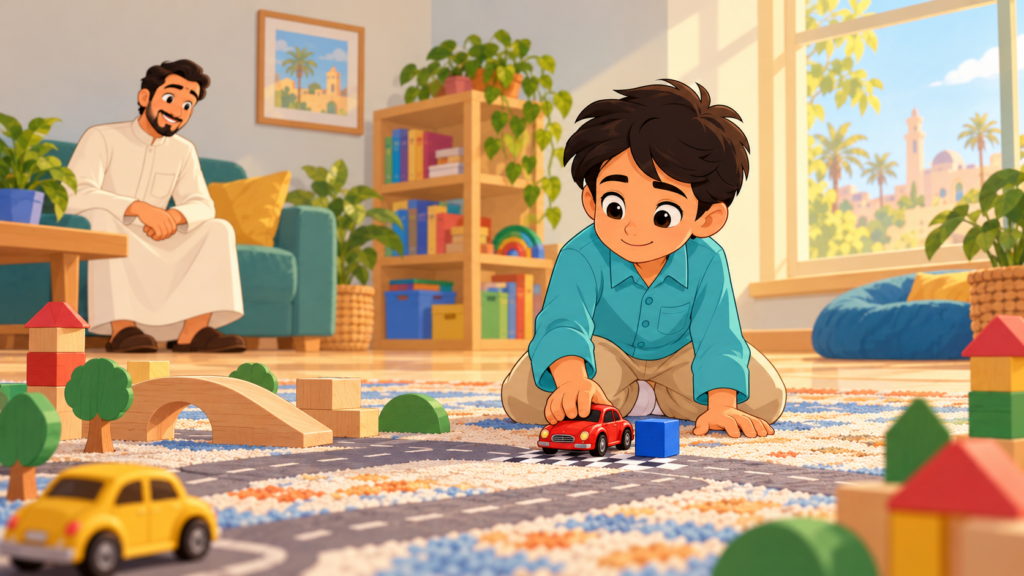
On the third day, the reminder sounded in the middle of a toy-car race. Umar wanted to begin another lap. He held the car for a moment, then said, “No. This is time to finish the step.”
He parked the car at the starting line and placed the blue block next to it. Dad did not need to repeat the reminder.
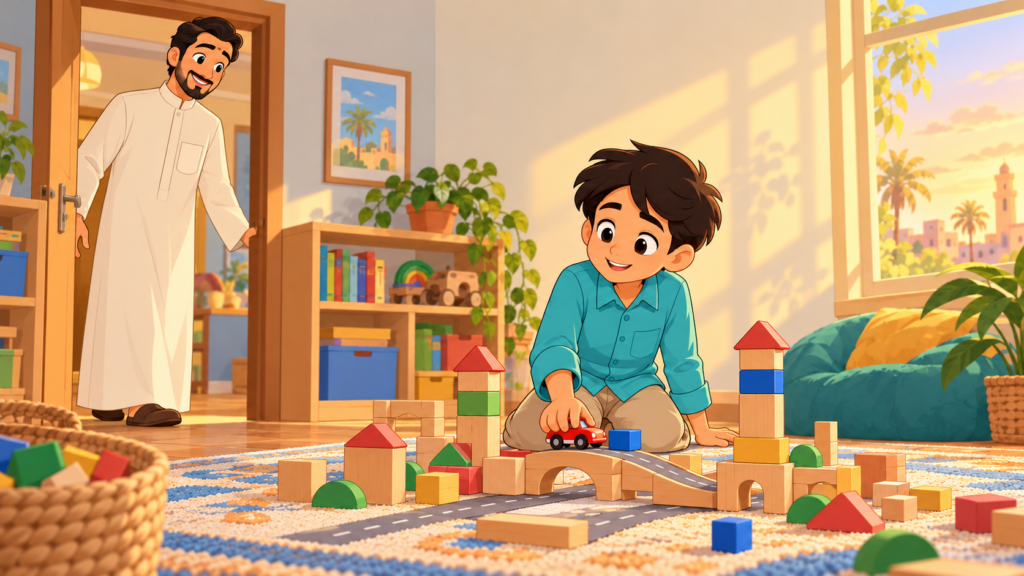
After the prayer, Umar returned to his room. The car and blue block were exactly where he had left them.
“The game waited,” he said with a smile, “and I know where to begin again.”
“And you did not wait until the time became tight,” Dad said.
Umar looked at his dry sleeve and remembered rushing on the first day. The block had not finished the bridge or stopped the train by itself. Umar had chosen to stop and get ready.
During the next week, Umar did not need the blue block every time. Sometimes he used it. Sometimes he simply told himself, “Finish this step, then get ready.”
Stopping did not become magic, and Umar did not stop loving his games. He had learned something more useful: to give prayer a known place in his day before play filled every minute around it.