
Quick Pay and Uncertain Right
F06 · 16–18

Rami, who is seventeen years old, paused in front of his computer screen as a new notification flashed. Nasser, the thirty-five-year-old project owner who had approached Rami as a content designer, had sent over a proposal for a short content-work project involving digital design. The offer clearly outlined a generous fee that Rami would receive for completing the task, along with a strict deadline for the final submission. It appeared to be a very tempting opportunity for a young man looking to build his skills and establish a foothold in this fast-paced technical field.
Rami began opening the attached files provided by Nasser to understand the project details more deeply. He browsed through the documents carefully, finding a collection of images and texts that he was required to rephrase and format within a specific template. As he delved into the supplied materials, he noticed several elements that seemed to be taken from external sources without a full explanation of their origin. At that moment, Rami was not deciding on the legality of the situation; he was simply focusing on absorbing the content available to him.

While flipping through the pages, a specific point caught his attention and sparked a sense of confusion in his mind. He noticed that one of the core files the work relied upon lacked a clear permission for use or an explicit authorization from the original rights holder of the content. Rami did not call Nasser or reach out to anyone else at that moment; he simply stared at that gap in the paperwork, wondering about the nature of that missing permission before taking any actual step.
Rami moved the message window to the side and opened a new folder for inspection. He copied Nasser's attachments into it, keeping the originals as they had arrived so he could return to them if he became confused. Nearby were pictures from his own practice sessions, including a card he had designed to test a heading and some colours. He separated those samples from the client's files. Similar-looking cards did not tell him how each item had reached him.
He opened a note with three columns: the file name, what he knew about its source, and any permission supplied with it. One picture carried the shop's name. He recorded that name without filling the remaining spaces with guesses. Another file contained a link to a picture website. He entered the link but kept the question of use open. Knowing where a picture came from was a different question from knowing how he was allowed to use it.
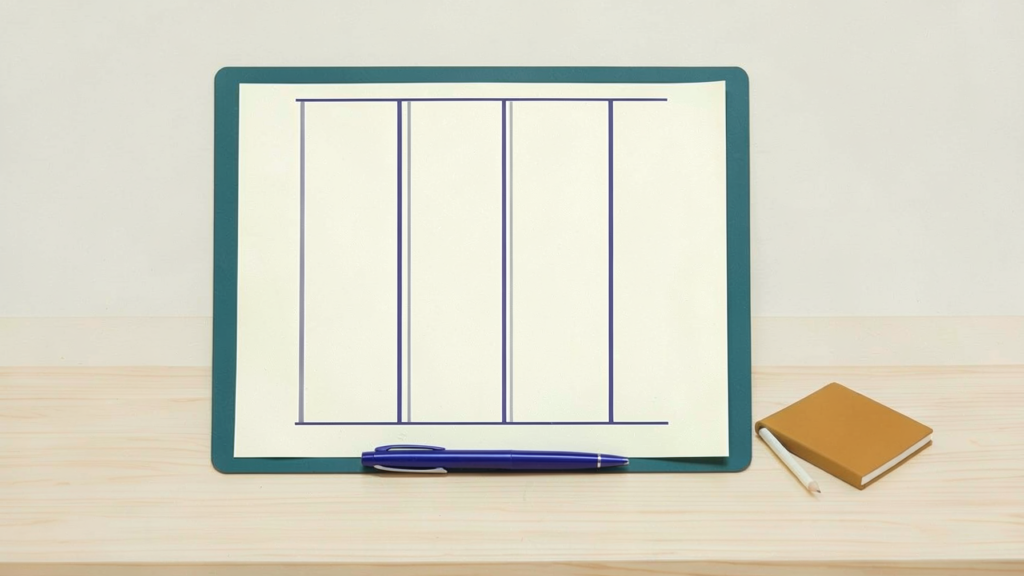
Some files provided neither a name nor an explanation he could follow. Beside these, he wrote that the source was not identified in the attachments. For others, he knew a name but still lacked clear permission, and he kept those observations separate. He checked each row against its file, avoiding confusion between similar pictures. His marks were not judgements about Nasser or the whole assignment. They showed what he had read and what still needed an answer. He saved the table and left the message open beside his specific questions.
Rami returned to the chat window, but he did not type, “Is everything allowed?” He chose his first question from the table and named the file so it would not disappear among the attachments. He asked Nasser what changes he could make to the texts and pictures, and where the finished material would appear. Then he asked about the file bearing another website's name: was it a reference for the style, or was the picture itself meant to be used? He reread the message, removed a phrase that sounded accusatory, and sent it.
Nasser replied a few minutes later. The company had written the main texts and prepared the product photographs for this project. He listed those files and explained the intended task: arrange the text and resize the pictures for an advertisement on the shop's page. For the outside pictures, he referred Rami to their individual notes instead of giving one answer for the whole folder. Rami entered those details in the corresponding rows, keeping Nasser's message beside his table for comparison.
The landscape picture remained different. Nasser said another party had supplied it, and he was still waiting for an answer about using it in the advertisement. Rami did not treat the party's name as permission. He recorded Nasser's request to leave that picture out of the current design and kept its row open. The table was less crowded now, but that row still held the picture's name and an unanswered question.
The next morning, Rami took his laptop to Mazen's office. Mazen was forty-two, worked with content rights, and was the professional Rami had asked to advise him about this task. Rami laid out the offer, his table, and the attachments, then opened Nasser's latest reply. He did not describe every file as uncertain or ask Mazen to judge the man who had sent them. He pointed to the open row and explained that Nasser had asked him to leave that picture aside. What remained unclear was how to record the materials included in the delivery before he committed to the task.
Mazen asked to see the files rather than rely on their descriptions. Reading their names beside Nasser's reply, he asked, “Which message specifies what you will deliver, to whom, and where it will be published?” Rami moved between two windows. Details appeared in the conversation, but they were scattered instead of collected in the work description. Mazen noted three places needing clearer wording: the list of materials, the intended changes and publication, and how the client's confirmation of those details would be recorded. They kept the landscape picture outside the list for the current work.

Rami repeated the points in his own words. Would knowing the picture owner's name close its row? Mazen said the name did not answer the question Rami had brought: was there permission for this particular use? He could examine the material before him, but could not confirm unseen correspondence or speak for either party. Rami saved the notes and opened a new message to Nasser, leaving its confirmation line blank.
Rami returned to the work description and replaced “the attached materials” with a short list of filenames. He entered the texts and product photographs Nasser had identified, followed by the intended publication and requested changes. At the landscape picture, he did more than remove its name. He added a line saying it was excluded from the current delivery and that the question about its use remained open. He checked the list against his table, file by file, to avoid silently adding or dropping anything they had discussed.
He sent the description to Nasser and asked him to read the list and intended use before confirming them. A short reply arrived: “Why give the picture its own line if it won't be in the advertisement?” Rami explained that a clear exclusion would keep someone from putting it back into the folder by mistake. Nasser opened the relevant file, agreed to keep the line, and returned the description with written confirmation of the named materials, changes, and publication. He added no other picture to the list.

Reading the confirmation beside his own copy, Rami noticed one phrase could describe two different picture sizes. He asked about it, revised the wording after Nasser's reply, and saved both versions with the response. The documents did not promise that every future question had vanished. They gave the two people something specific to consult instead of relying on memory. Rami closed his old question window and kept the clarified description open for the work ahead.
Rami wrote his acceptance of the specified task and attached the version Nasser had checked, so his reply would not refer to an older description. He created a folder for the current delivery and copied the listed materials into it, leaving the originals in place. He kept the landscape picture in the inspection folder, outside the current delivery. Its note said that permission for this advertisement remained unresolved. He did not need to delete or hide the file; he needed to keep it separate from the work he had accepted.
He began arranging the advertisement. Moving the text and resizing a product photograph left a space the landscape would have filled in the first sketch. Before trying a background, he checked the exclusion line in the description. He then returned to the task description and tried a simpler arrangement using the listed materials. He sent Nasser a preview of that layout, identifying it as work in progress. The deadline was still close, but Rami could name what he was trying to finish and which question remained unanswered. He saved the revision and moved the table beside his working window.
Before finishing, he looked at the first message again. The offered fee had not changed, and one visit had not made him an expert. What had changed was the set of files before him and the scope of his acceptance.
Reader activity: Choose material in an imaginary project. Ask who owns it, what use is intended, and where you would keep permission or the owner's reply.
Rami returned to his preview and saved it under a new name before switching off the screen.