
A Notebook for Decisions, Not Wishes
F11 · 16–18
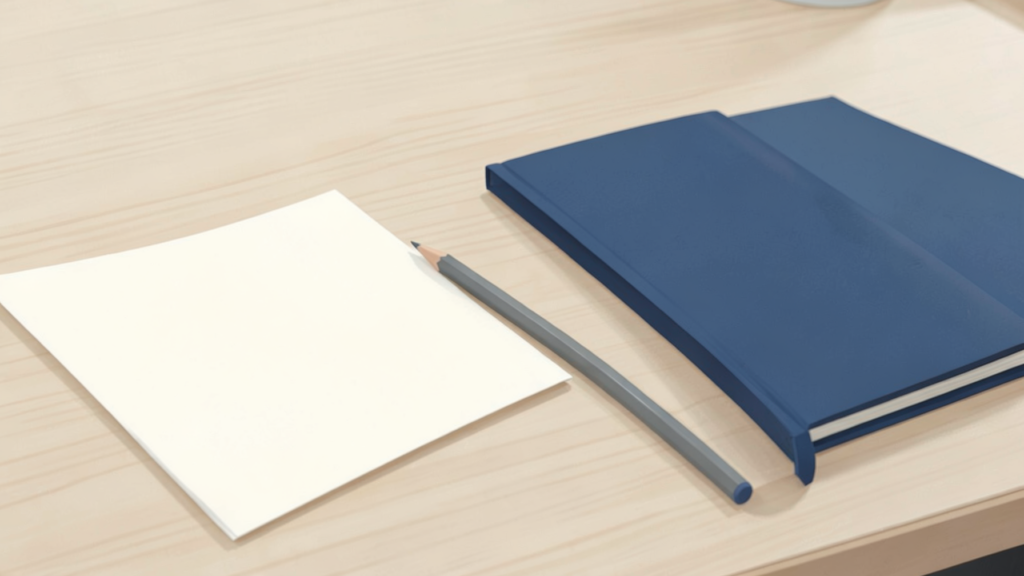
The mathematics sheet lay closer to the edge of Yusuf's desk than his notebook, yet he kept looking at the notebook. At seventeen, he often wrote down the next practice date before sorting out the previous practice papers. That afternoon, beneath the date, he wrote, “I will struggle again.” He pressed hard on the last word, leaving a mark on the page underneath. Then he half closed the cover, as though the sentence had settled what would happen. The returned school worksheet remained beside his hand, showing corrections to answers he had written in a hurry.
He opened the notebook again and tried to give a reason for his conclusion. First he wrote his mark from the previous exercise. That was something he could point to on the sheet. The result he had predicted beneath the next date was different: he had nothing to point to yet. He glanced at the calendar above his desk, then back at the sentence. The date remained close, and pausing had not made his worry disappear. Still, he noticed that he had put a past result and a feared future result together, treating them as though they had the same evidence.
Yusuf pulled the worksheet from beneath another book. One question had a large empty space beneath it. Above it, a correction marked a step in another answer. He could not remember where he had stopped or what had gone wrong. Before making another list, he turned to the first question and began examining what was actually on the sheet.
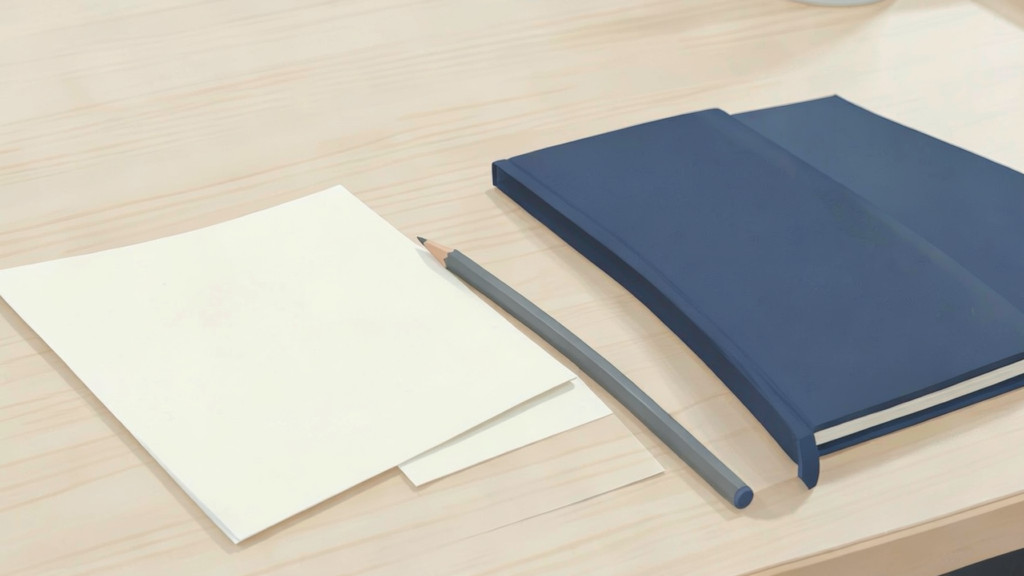
Yusuf began with an answer he had written, rather than the mark at the top. Following his working with one finger, he found a correction beside a step he had thought was right. He read the question again without trying to fix the answer yet. In his notebook he wrote, “There is one step here whose mistake I do not understand.” The sentence was narrower than his prediction about the next exercise, but it pointed to something he could examine. He added the question number and left space for what he might discover.
Next he looked for unfinished working beneath the unanswered question. There was none. He remembered moving on during the exercise, intending to return before time ran out. That did not show that he had attempted the question and been unable to solve it. It showed that he had not written an answer. He recorded that, then stopped himself from adding an explanation he had not checked. Perhaps he needed to practise dividing his time. Perhaps something else had stopped him. He would need another attempt or a clearer question before choosing between those explanations.
He circled his earlier prediction lightly, without erasing it or replacing it with certain success. He moved it to the margin under “Prediction” and kept his observations in the middle. The distinction was visible, although reviewing still felt difficult. He chose one specific question about the corrected step, took his examples notebook from his bag, and began looking for a similar example. He did not yet know how long understanding it would take.
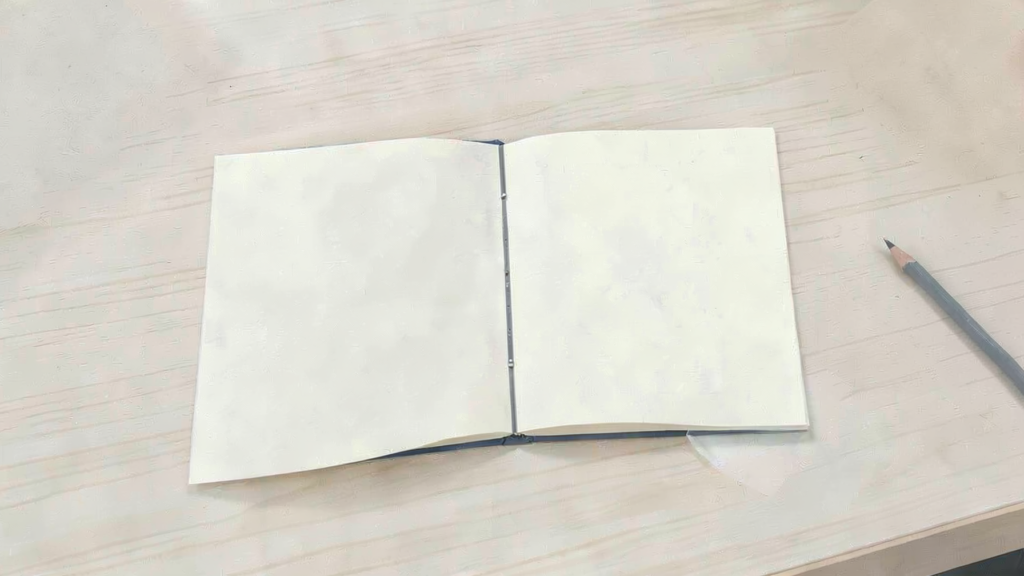
Yusuf found the example halfway through his examples notebook. The order of the question resembled the corrected problem on his worksheet, although the numbers were different. He put the pages side by side and read both questions before looking at the worked answer. Copying a result would not help him understand another problem with different numbers. He placed a scrap of paper beneath the line where he would begin, leaving the rest visible. He wanted to understand the method rather than remember a particular number.
He left the notebook open and considered the work still waiting that day. Writing “Review mathematics” was easier than deciding when to do it or which task to choose. On his calendar he marked twenty minutes after school the following afternoon to attempt this kind of problem. He did not reserve the whole afternoon or promise to finish the chapter. He gathered a blank sheet, a pencil and the returned worksheet beside his notebook, then moved an unnecessary book away from the middle of the desk. The task now had materials and a limited time.
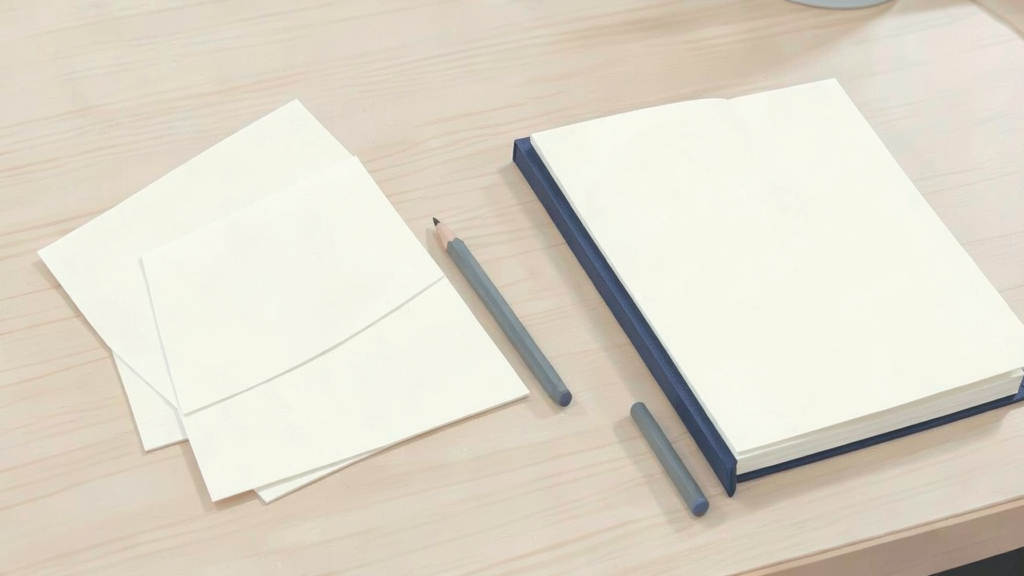
He wrote down his chosen task: attempt a similar problem, compare the steps with the example, and identify where he stopped. He added a check on the day after his attempt, when he could examine what he had done and adjust the plan. He nearly wrote a hoped-for mark beside the task, then left the space blank. A clear plan had not made the question easy. He moved the scrap to the beginning of the example and started reading its first step.
The following afternoon, Yusuf placed a blank sheet in the middle of his desk and set the examples notebook beside it. He began at the time he had chosen, covering the worked answer with a scrap so that he would not copy a line without noticing. The first steps went steadily. Then he reached a bracket preceded by a minus sign. He wrote the next line quickly and stopped. Something about the arrangement seemed wrong. This time he kept his attention on the new working rather than the old mark on his school worksheet.
He uncovered the matching step in the example. The minus sign affected both terms inside the bracket; he had changed one and left the other unchanged. He underlined the place and rewrote that transformation separately. The error looked small on its own, but he did not yet know whether he would notice it inside a longer problem. He tried a similar step with different numbers and compared it with the example. He needed a second look before he felt sure about the sign, so he marked where he had hesitated.
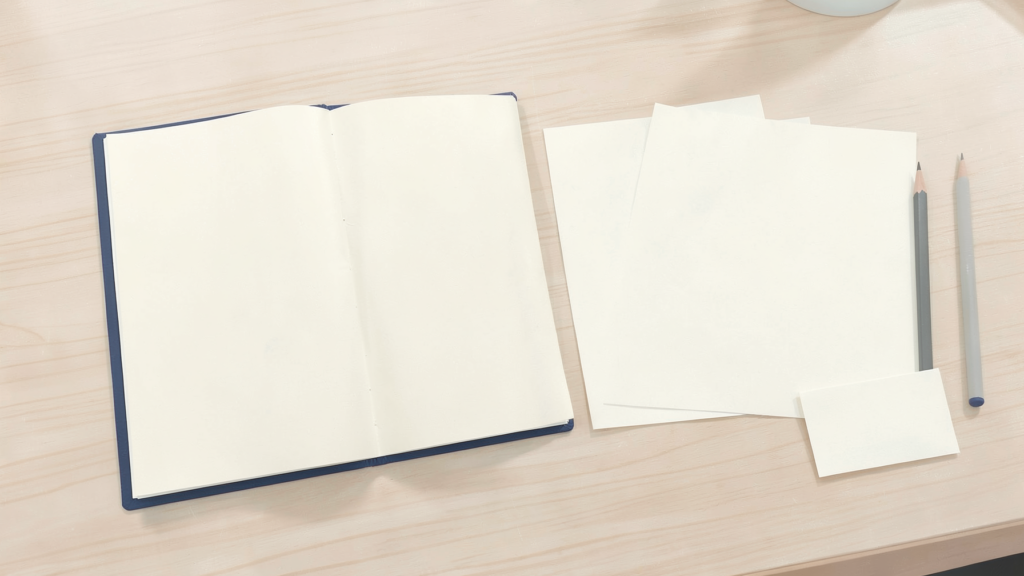
When twenty minutes ended, the sheet did not contain a complete answer. He spent five more minutes gathering his papers and writing a question to take to school about checking the signs. He recorded the time honestly and kept the first attempt beside the correction. He had identified a stopping point, tried a step, and found something still to ask. He put the paper inside his notebook, ready for the review he had scheduled.
At the scheduled review the next day, Yusuf opened his notebook and took out both sheets before adding anything to his plan. He had allowed twenty minutes, then recorded twenty-five minutes for the attempt and for writing his question. He looked from the two figures to the work between them. Simply writing “Reviewed mathematics” would have hidden that difference. The extra time alone did not tell him whether the plan had helped. He needed to examine what he had done and what remained unfinished.
His chosen task had been to attempt a similar problem, compare the steps and identify a stopping point. The papers showed that he had begun and checked a sign error. They did not show that he could solve every problem in the chapter. He described what he had completed and left his question about checking signs open. Preparing and gathering the papers had also taken time. For the next attempt he would arrange his materials first and work on the transformation where he had hesitated, rather than the whole problem, while keeping a clear stopping time.

He did not fill the week with sessions intended to repair everything at once. He chose one place for the new attempt and left room for an adjustment after review. His old prediction remained in the margin. He could record what had actually happened without erasing it or claiming that everything was better. He copied his specific question onto a card inside the notebook and kept the first attempt beside the correction, so that the difference between his plan and his work would remain visible.
At the next attempt, Yusuf arranged his materials before starting, as he had decided. He chose a transformation like the one that had troubled him and covered the worked answer until he had written his own line. At the minus sign, he paused to check both terms. When he uncovered the example, that step agreed. This did not settle the whole lesson: something in the next line still needed a question. He added it to his card, distinguishing the step he could check from the question still open, and stopped at the time chosen for this limited attempt.
The notebook was less full than he had imagined, but easier to use. It held his starting worksheet, a corrected attempt, an adjusted appointment and a question he could take to school. He placed the card where he would find it when opening his bag the next day. Then he closed the notebook without writing down a future exam mark. He still hoped for a good result and still felt some uncertainty. He did not need to settle the future that evening to know what he would carry with him.
Imagine a practice sheet with one unanswered question, using no real grades or private details. Write the fact, a possible explanation and a prediction. Distinguish what is known from what needs checking; choose a question, one small action and a review time, without promising a result.
Yusuf kept his card inside his notebook and prepared for another school day whose outcome he did not yet know.