Lauren Booth: When Lived Reality Broke the Media Image
العربية · English · 中文 · हिन्दी · Español · Français · Deutsch
When They Came to Know Islam
Lauren Booth’s path to Islam did not begin in a mosque or in the moment of profound peace she later described in Qom. It began about five years earlier, when the British journalist and broadcaster travelled to Palestine to work alongside charities in Gaza and the West Bank. She arrived carrying what she later described, with unsparing honesty, as a condescending Western picture of Muslim women: veiled and silent figures whose lives were directed by men.
Booth was already a public figure in British media. She worked in journalism, television and Palestine-related advocacy, while her family connection to Tony Blair made her especially attractive to headline writers. Yet inside offices and homes in Ramallah, and on later visits to Palestine, Egypt, Jordan and Lebanon, she met a reality that did not fit the picture. She worked with educated women, professionals and people holding responsibility, and encountered family bonds and human warmth that the familiar news frame had failed to explain.
No single scene told her, “This is Islam.” In her own account, change accumulated slowly. She noticed calm in Muslims she knew, the ease with which affection was expressed, the life of households and the persistence of worship among people who did not treat material comfort as a complete answer to happiness. She began asking why the version of Islam she had received was narrower than the people she met, and why some relationships in her usual environment appeared colder and more isolated than those she witnessed in Muslim homes.
The movement reached her language before she announced any decision. Booth wrote that for roughly a year her private prayers had begun, almost unnoticed, with “Dear Allah” rather than “Dear God”—two words referring to the same God. She did not make this detail a proof by itself. For her it showed that the linguistic barrier that made Islam feel wholly foreign was already dissolving. The story was unfolding in the background while she continued travelling, working and caring for her daughters.
In September 2010, she visited Iran for work and entered the shrine of Fatima al-Masumeh in Qom without the shrine having been the original purpose of the journey. She performed ablution and prayed there, then attributed to that moment an intense feeling of peace, joy and gratitude. In an early interview, she also returned to a woman who approached her and expressed affection beyond prior acquaintance or family connection.
The Qom experience did not stand apart from the years before it; it was the moment in Booth’s account when long-standing observations and questions came together. What she encountered was not one new fact but a sense of belonging and contentment before God, and a challenge to the promise that materialism and consumption can provide lasting fulfilment. She wrote that after this prayer, life could not simply return to its previous form.
On returning to Britain, she chose to enter Islam. Her first-person account says she made the shahada at a London mosque, where a sheikh advised her not to rush but to learn and avoid allowing other people’s demands about appearance and details to overtake gradual understanding. Contemporary reports place the decision approximately in September 2010, about six weeks before her public announcement.
On 23 October 2010, Booth appeared at the Global Peace and Unity event in London and publicly said she was Muslim. That was a public declaration of an identity already chosen, not a substitute date for the private shahada. Her story immediately became an argument in the press: how could a Western woman choose Islam while knowing its popular image on veiling and women’s rights? Her answer began with the gap she had personally observed between media assumptions and the people and religious life she had encountered.
The decision quickly took practical form. She began the daily prayers, adopted hijab, stopped eating pork, left alcohol and set regular time for reading the Qur’an. She said earlier efforts to stop drinking had failed, whereas in the first weeks after conversion she could no longer imagine returning to it. That was an honest account of an early change, not a medical claim or a guarantee that every future challenge had ended.
She also described a change in family life: quieter evenings, prayer at the beginning of the day and a feeling that she was more present with her daughters. She still cooked, worked and made television programmes about Palestine. The story did not move from an “ordinary life” into a detached religious scene; it reordered ordinary life around worship and meaning. Details about her children belong outside the narrative unless they are necessary to explain that public testimony.
Booth faced public sarcasm and suspicion, particularly from writers who treated a Western woman’s choice of Islam as the surrender of independence. She answered that injustice against women must be opposed wherever it occurs, but that neither custom nor abuse should automatically be attributed to God or to the foundations of a religion. Her conversion story also does not make every political opinion she expressed before or after it evidence for Islam; personal testimony establishes her route, not her authority on every question.
Her story inspires because it refuses to reduce guidance to one isolated emotional event. It began with a ready-made picture, then allowed real people to expose that picture’s limits and permitted questions to move from professional observation into personal life. Qom gathered a long accumulation into clarity; prayer, study, family life and work then tested the choice. The lesson is not that an intense feeling is sufficient by itself, but that honest encounter, primary sources, meaning and practice can meet until a person sees her life from a new angle.
Sources
Lauren Booth's essay in The Guardian · The Guardian report · The Independent report · Islam Times interview
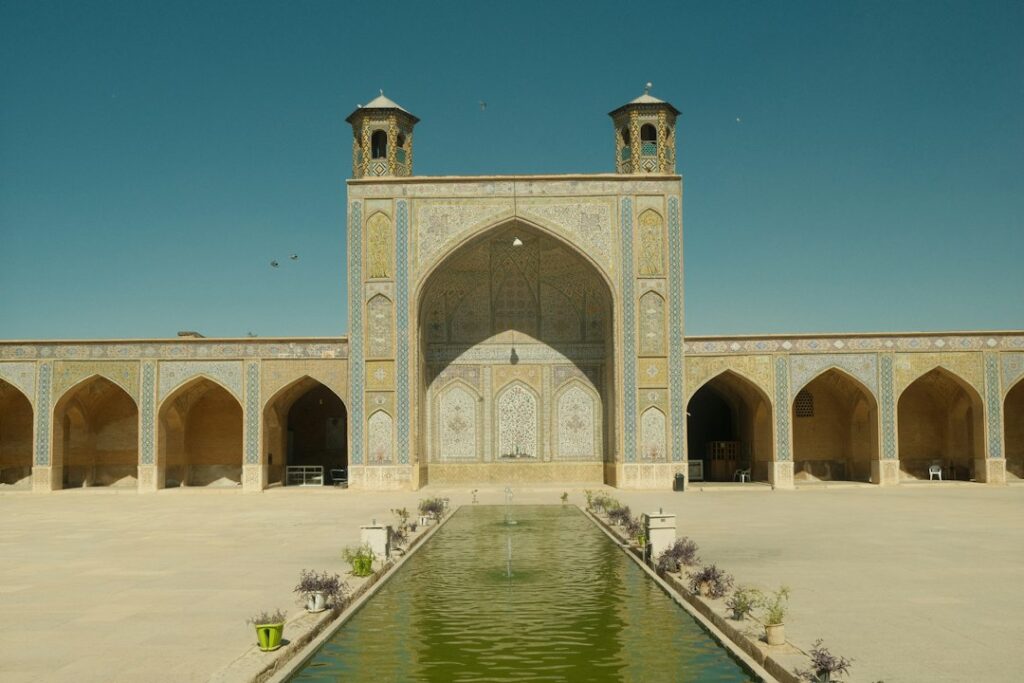
Photo: Muaz Semih Güven / Unsplash.