
What Happened First? — A Shared-Reading Picture Story
Age: 3–5 | Code: B21 | Focus: sequencing events and using evidence
Cast: Teacher Hala, and Salma, Layan, and Mawaddah—three five-year-old girls. No male character appears.
The story
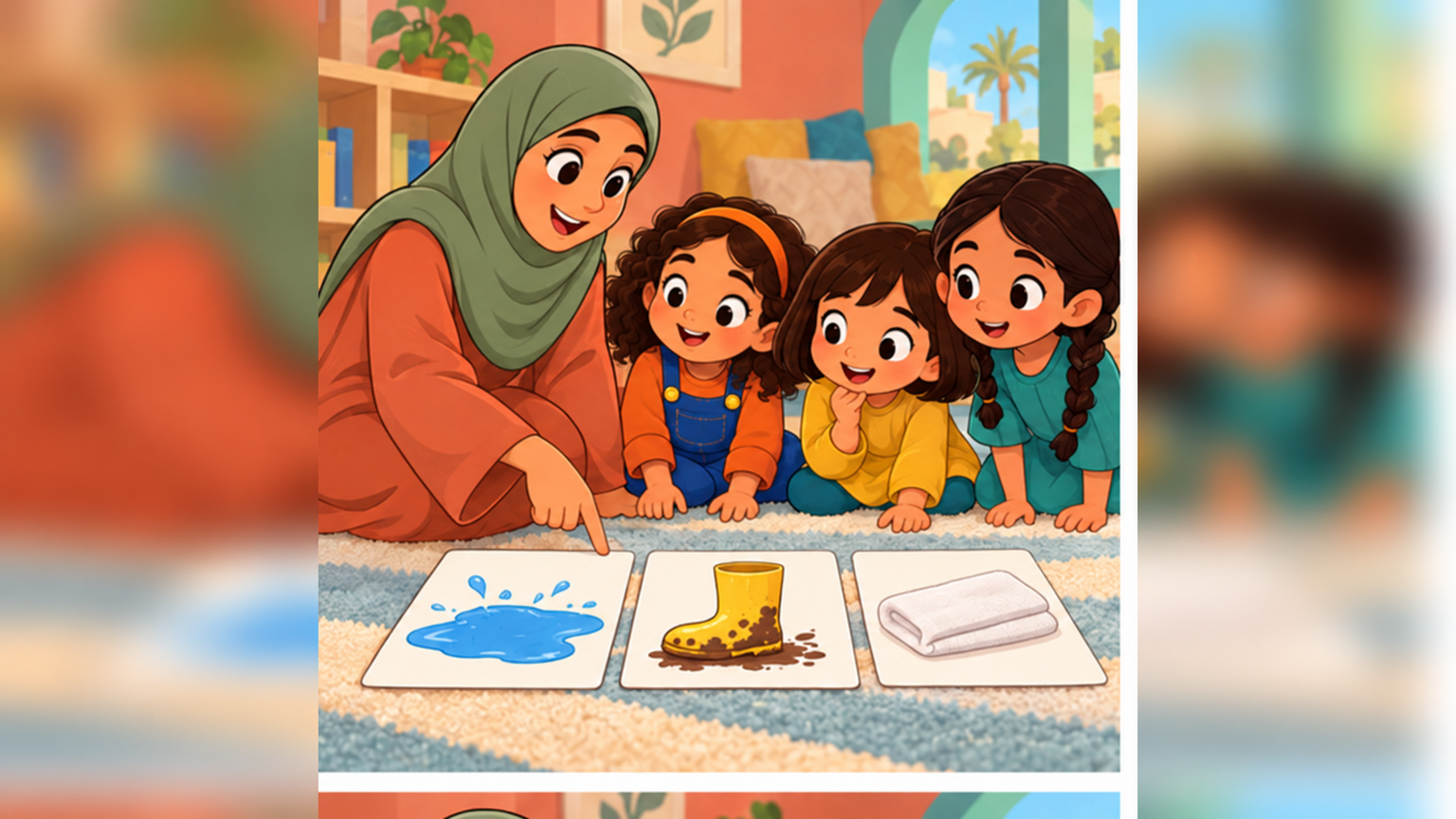
The teacher placed three cards on the rug: a puddle, a muddy boot, and a towel drying the floor. “It is a story!” Layan said. Then she lifted the towel card. “First, we dried the floor.”
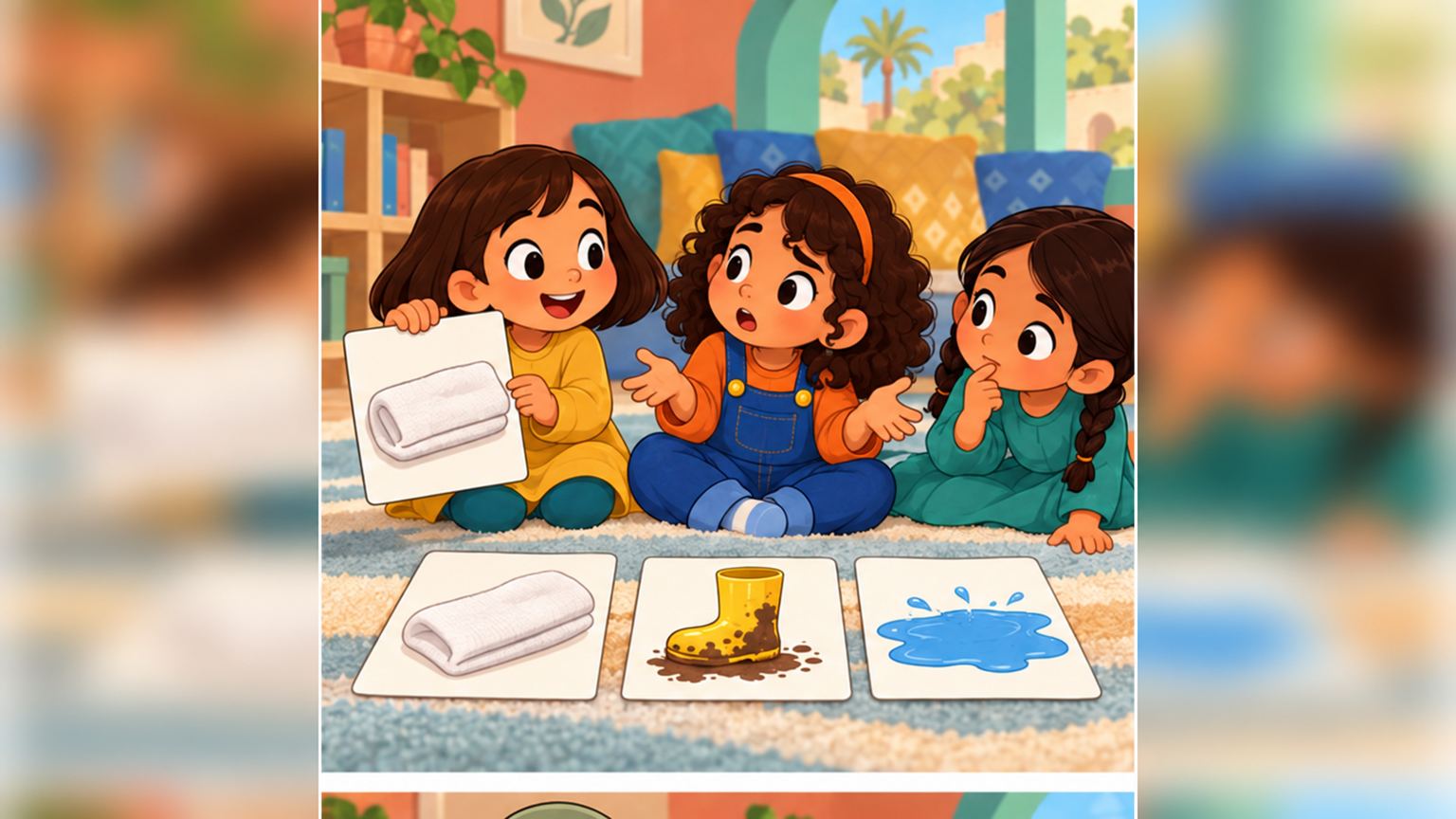
Salma shook her head. “But why was the floor wet?” They arranged the towel, then the boot, then the puddle. Everyone laughed. “The puddle cannot wait until the end!” Layan said.
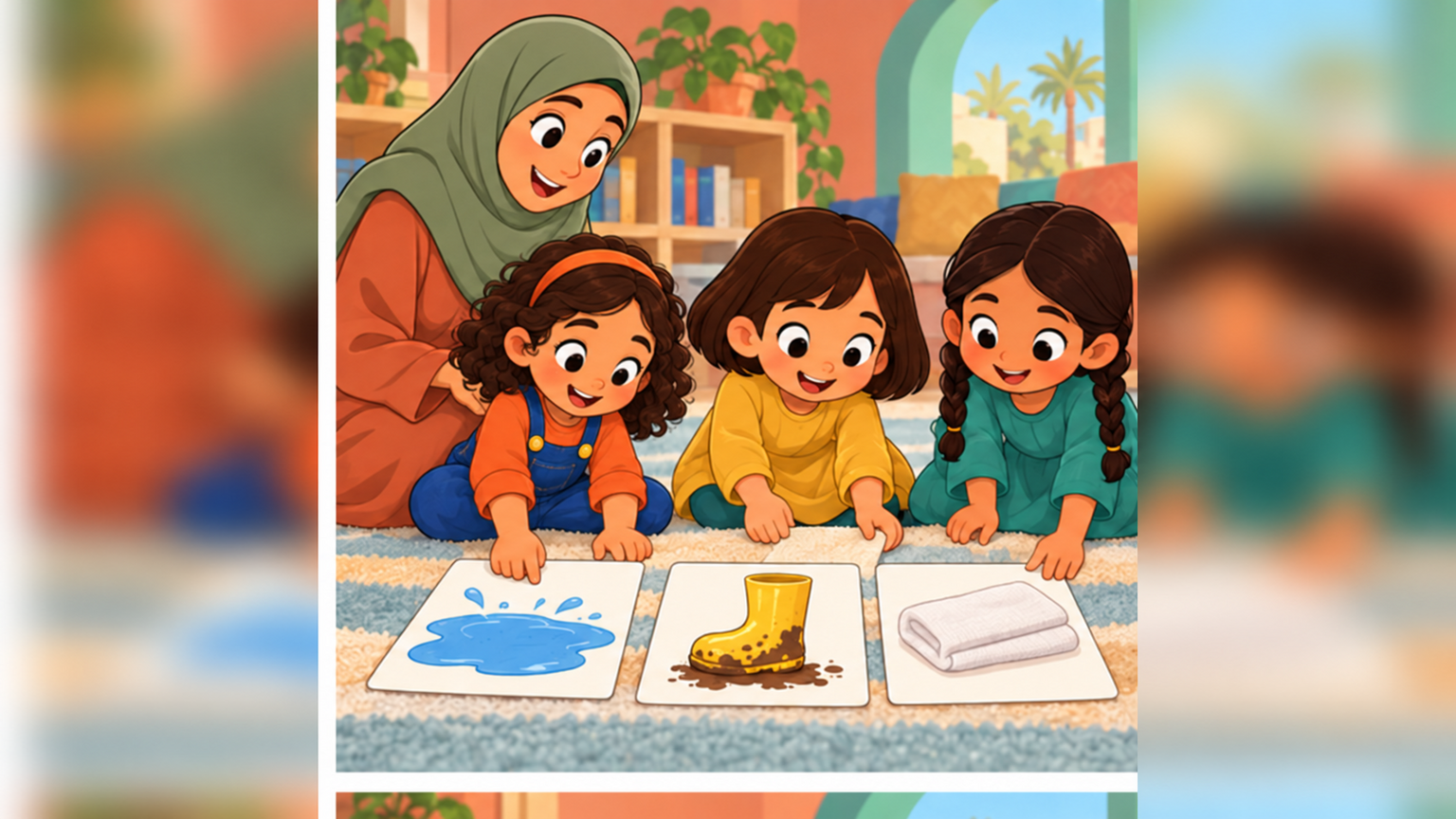
The teacher mixed the cards again. Salma chose the puddle first. Layan added the muddy boot. Mawaddah finished with the towel. Now each picture opened the door to the next one.
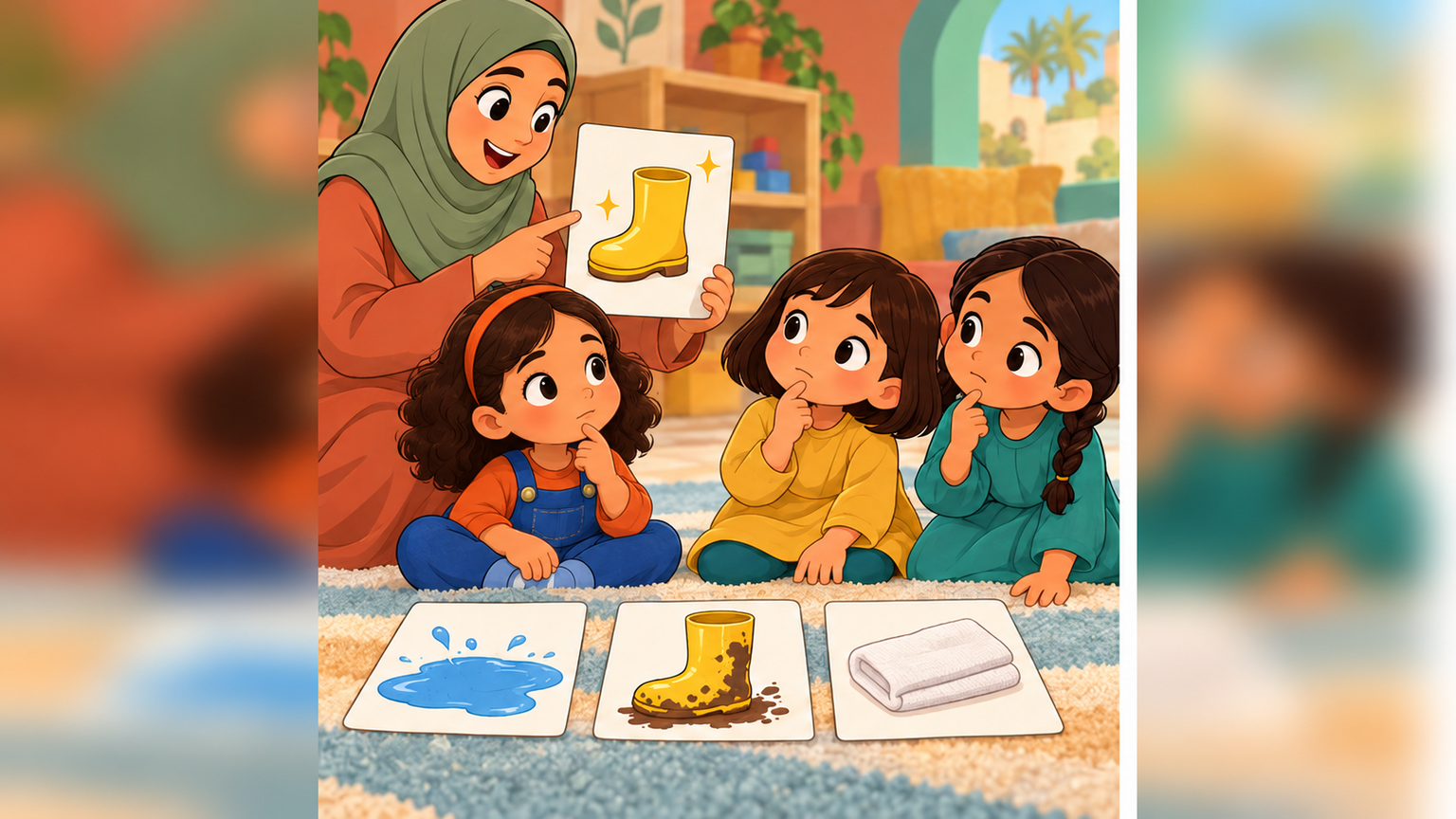
The teacher added a fourth card: a clean boot on a shelf. Salma thought it belonged at the beginning. Mawaddah thought it belonged at the end. The picture alone did not tell them who was right.
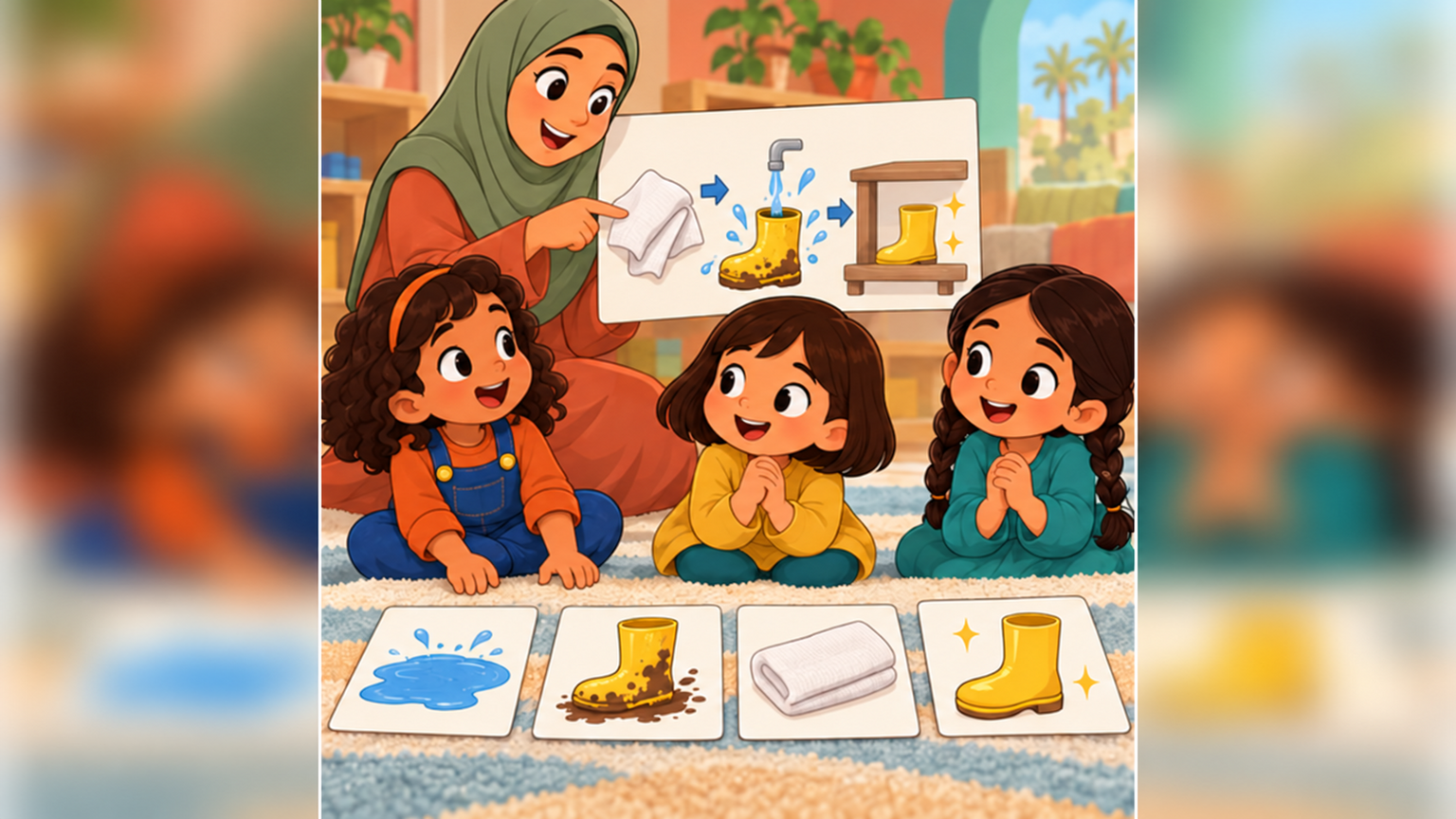
“We should not guess by ourselves,” the teacher said. “We need another picture or a sentence from the storyteller.” She showed: dry the floor, wash the boot, place it on the shelf. The clean boot belonged last.
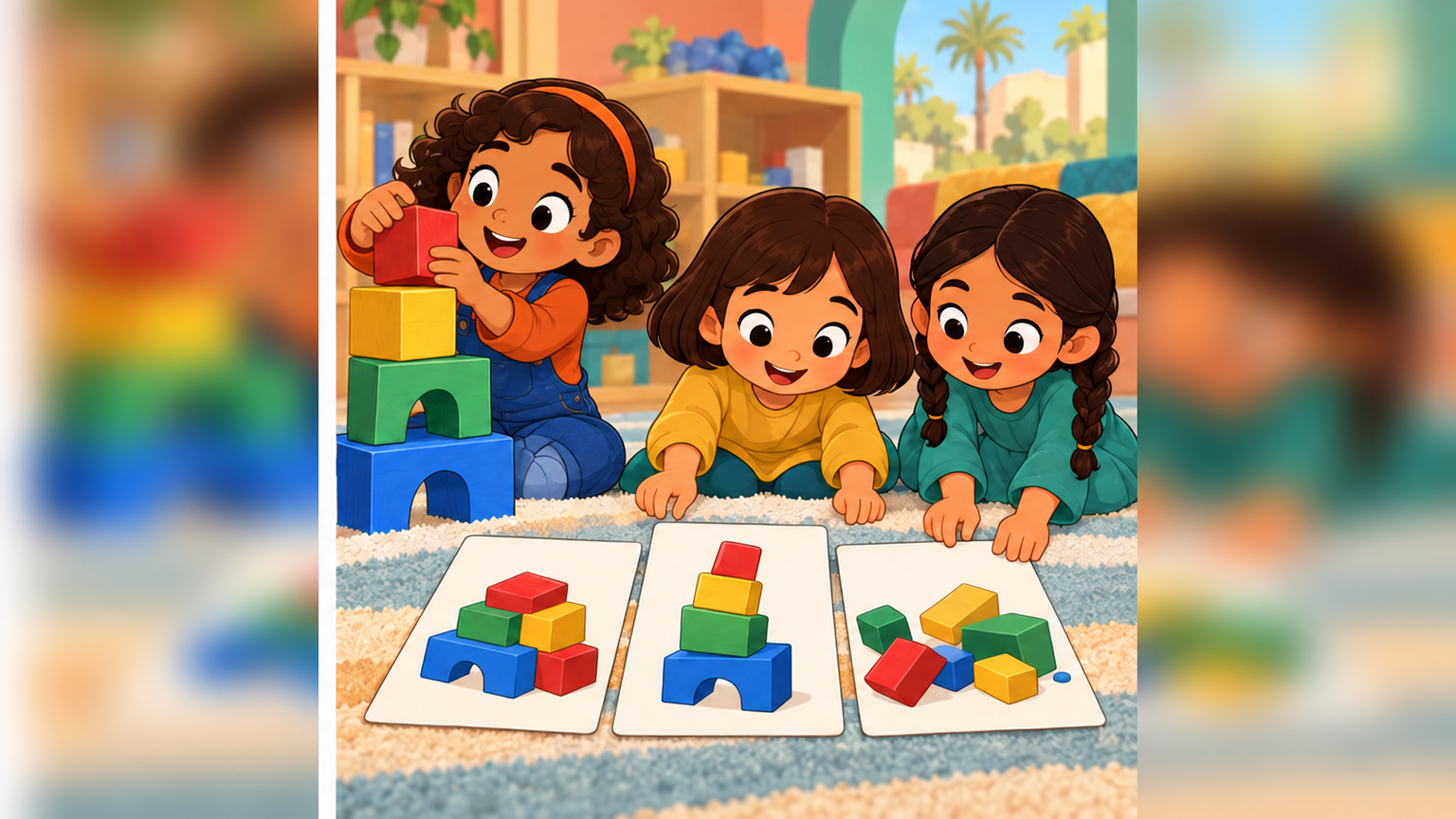
During playtime, Salma built a tower and it fell. Layan and Mawaddah arranged three pictures: blocks in a pile, a standing tower, and scattered blocks. They did not choose the prettiest card. They chose the order that made the story clear.
For the grown-up
Question: Why was the clean-boot picture not enough by itself?
Activity: Take three pictures of a simple action: beginning, middle, and ending. Mix them, arrange them, and explain your clue.
Source and verification card
Original classroom fiction that turns comprehension into visible performance: sequencing events, explaining why one event comes first, and requesting more evidence instead of guessing. Inspired by comprehension skills in Read to Understand, after reviewing the actual pages 7, 9, and 17. It contains no direct Qur’an or hadith quotation and does not retell a historical report.
The editorial and visual assessment is an internal AI-assisted review, not independent human review, child testing, or global certification.