
مقالات مدارج
B23 · Ages3–5 — shared reading
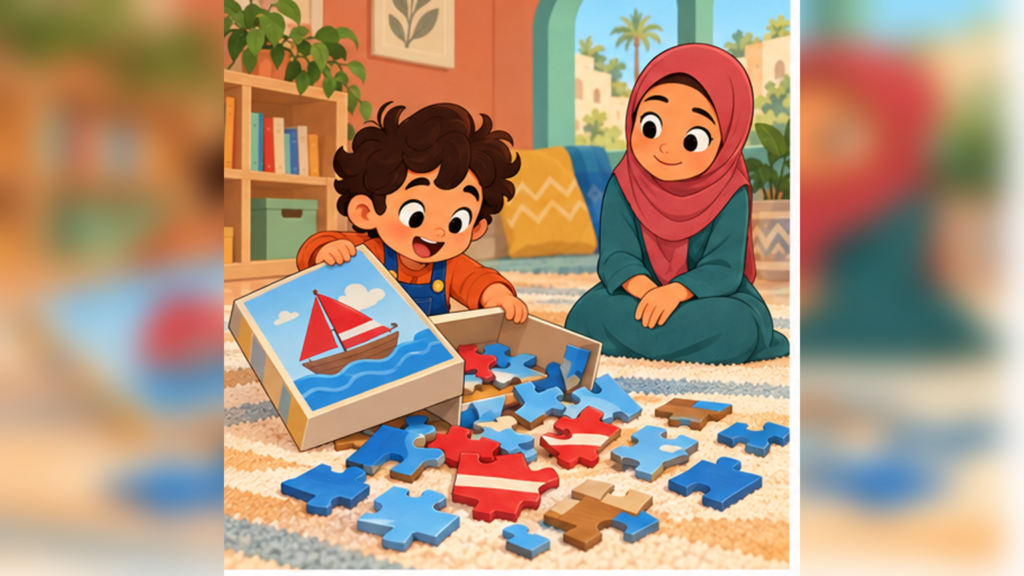
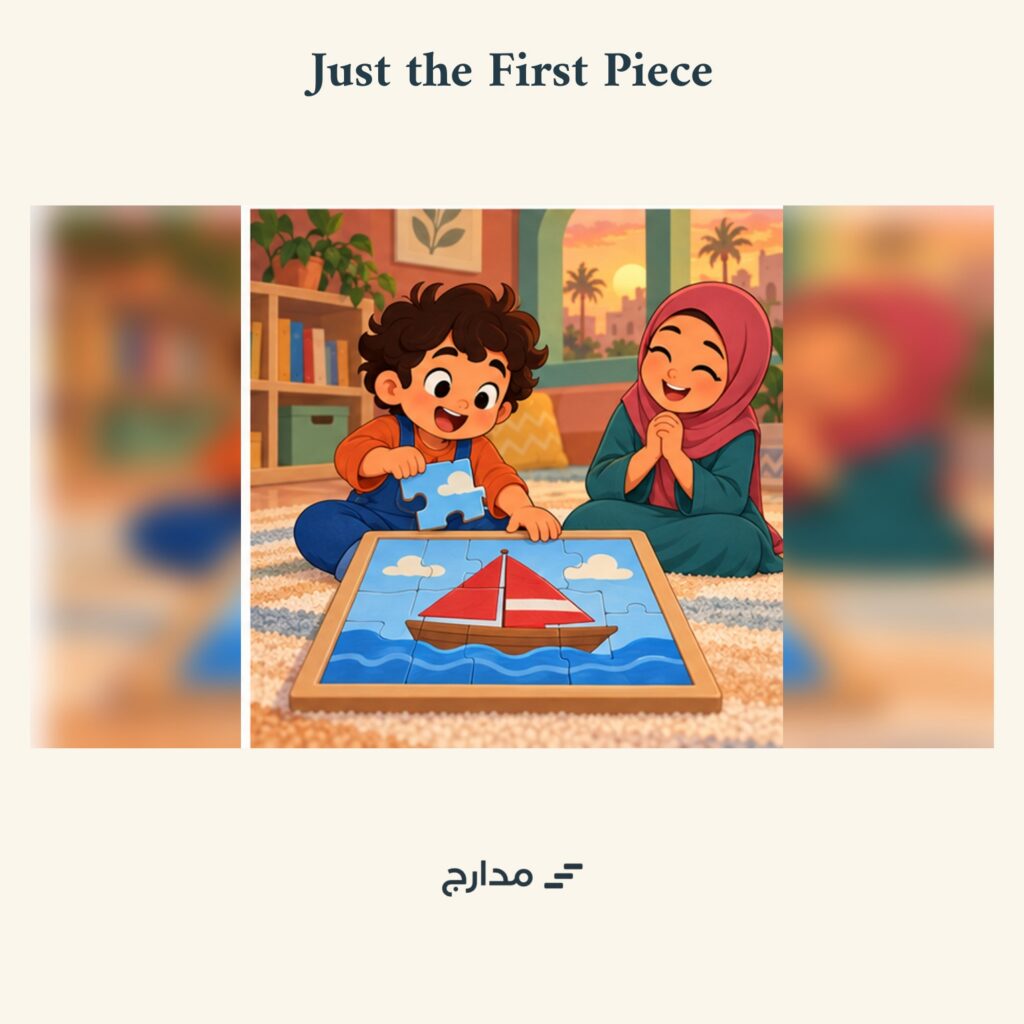
Five-year-old Rayyan opened the puzzle box. Pieces spilled across the rug: blue sky, a red sail, and a sea full of waves.
He looked at the picture on the lid, then at the pieces. “It's too big. I can't do it.”
“Would you like to put it back in the box?” asked his eight-year-old sister, Salma.
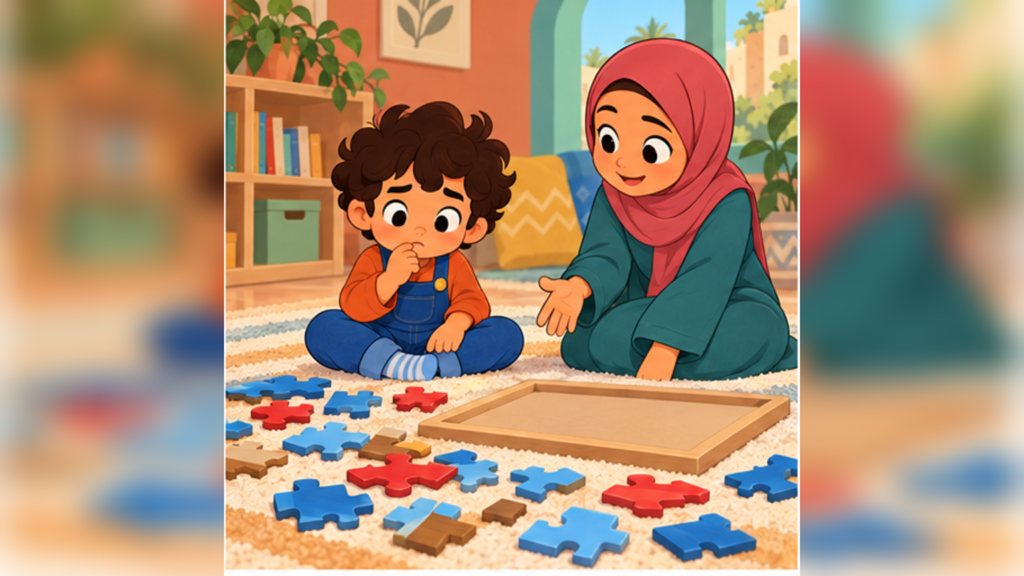
Rayyan reached out, then pulled back. He wanted the whole boat but did not know where to begin.
Salma sat beside him. “We don't need the whole boat yet. We only need the first piece.”
Rayyan searched until he found a red corner shaped like the tip of the sail. He placed it at the edge of the board.
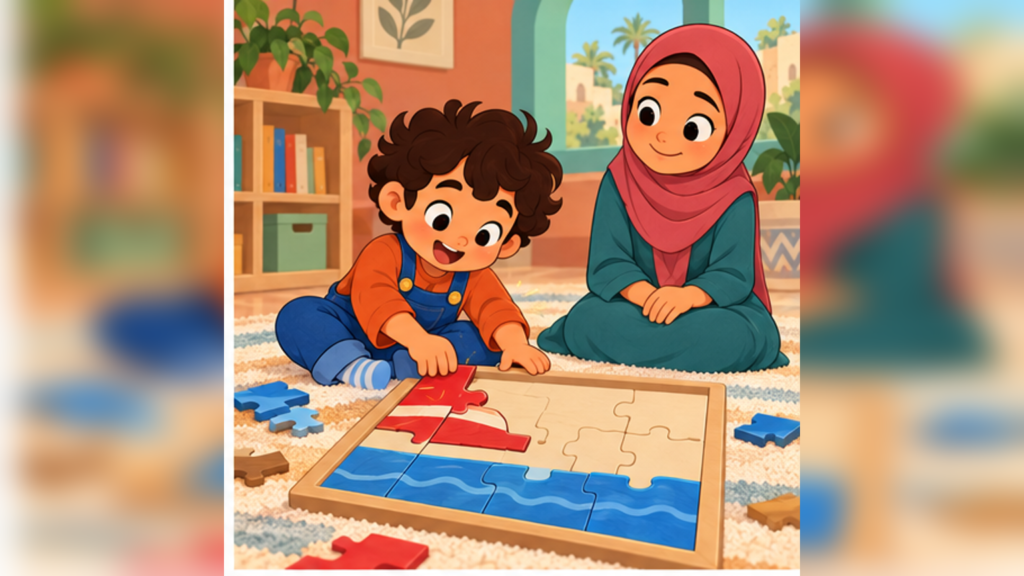
“That's the first piece.”
He found another red piece, but it would not fit. He pushed once, then twice.
“If it doesn't fit, we don't hurt the piece,” Salma said. “What could we ask?”
Rayyan compared the two red lines. “Does this belong at the top of the sail or the bottom?”
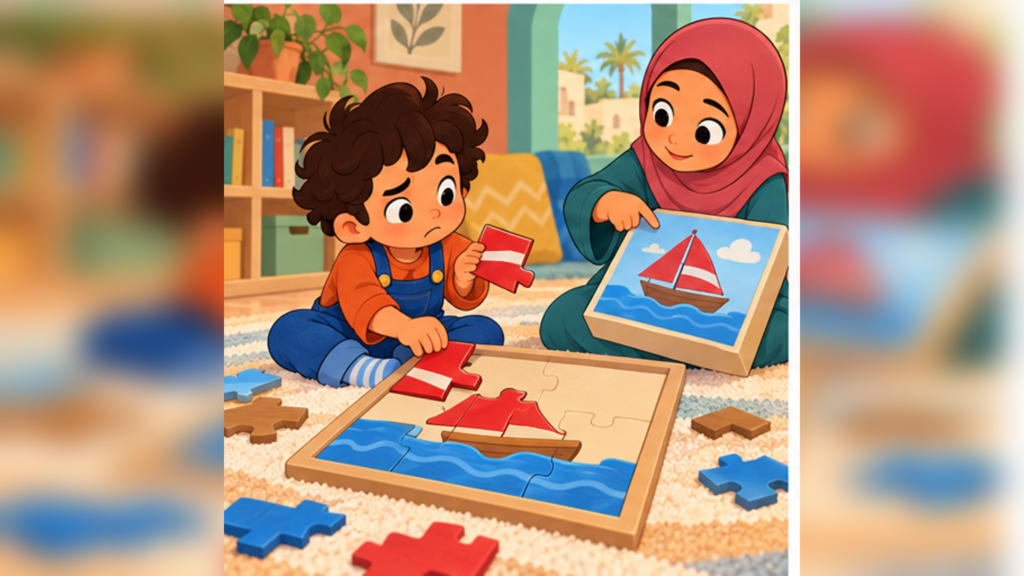
Salma pointed to the lid without placing the piece for him. Rayyan noticed a thin white stripe and found its place.
Now the sail had two corners. Next he chose a straight edge. Then he found a piece with a wave.
Whenever the puzzle felt enormous, he told himself, “Just one piece.”
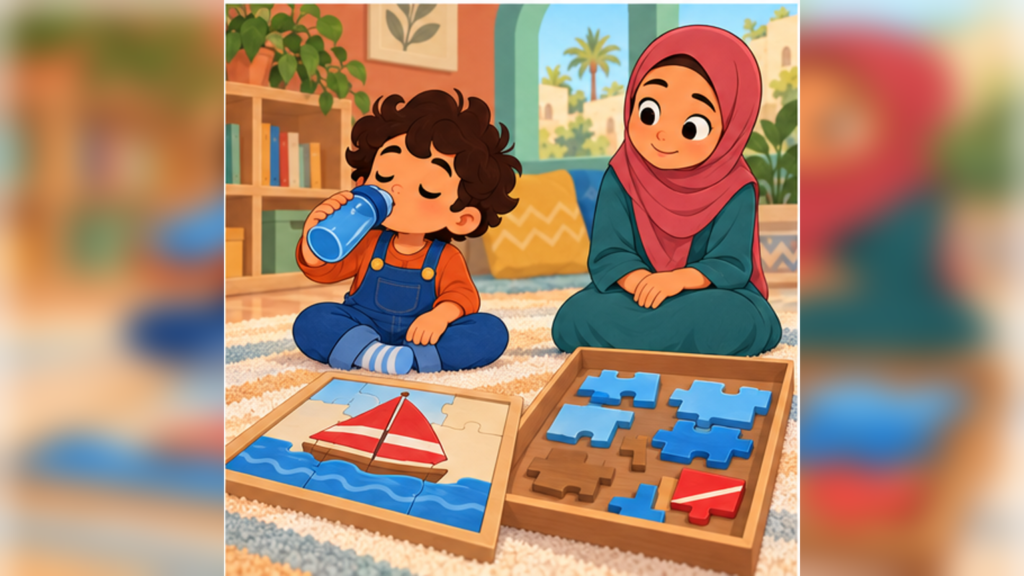
When he grew tired, he put the loose pieces on a tray and went for a drink. “I'm stopping for a rest, and I'll come back,” he said.
The red sail waited for him. He added one piece, then asked for help when two colours looked alike. Salma asked a question, and he chose for himself.
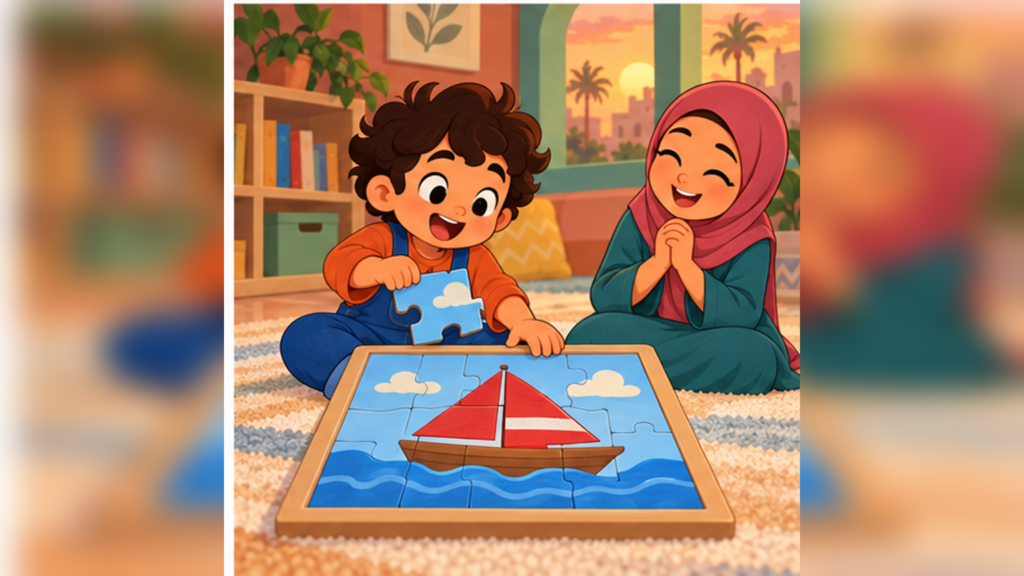
Before sunset, the whole boat appeared. Salma had not solved it for him. It began with one red corner and grew whenever Rayyan found a step he could manage.
He lifted the final piece. “This is the last one!”
“And how did we reach it?” Salma asked.
Rayyan pointed to the first corner of the sail. “With that one. It wasn't the whole boat, but it opened the way.”
B23 · 3–5 سنوات — قراءة مشتركة
فتح ريان، ذو الخمس سنوات، صندوق الأحجية، فانسكبت القطع على السجادة: سماء زرقاء، وشراع أحمر، وبحر كثير الموج.
نظر إلى الصورة على الغطاء، ثم إلى القطع. «إنها كبيرة جدا. لن أستطيع.»
قالت أخته سلمى، ذات الثماني سنوات: «هل تريد أن نعيدها إلى الصندوق؟»
مد ريان يده، ثم سحبها. كان يريد القارب كاملا، لكنه لم يعرف أي قطعة يختار.
جلست سلمى قربه. «لا نحتاج إلى القارب كله الآن. نحتاج إلى أول قطعة فقط.»
بحث ريان بين القطع. وجد زاوية حمراء تشبه طرف الشراع، فوضعها عند جانب اللوح.
قال: «هذه أول قطعة.»
وجد قطعة حمراء أخرى، لكنها لم تدخل. ضغط عليها مرة، ثم مرتين.
قالت سلمى: «إذا لم تلائم مكانها، لا نؤذي القطعة. ماذا يمكن أن نسأل؟»
قارن ريان الخطين الأحمرين. «هل هذه من أعلى الشراع أم من أسفله؟»
أشارت سلمى إلى صورة الغطاء ولم تضع القطعة بدلا منه. رأى ريان خطا أبيض صغيرا، فعرف مكانها.
صار للشراع طرفان. ثم اختار قطعة لها حافة مستقيمة، وبعدها قطعة فيها موجة.
كلما شعر أن الأحجية كبيرة، قال: «قطعة واحدة فقط.»
وعندما تعب، وضع القطع الباقية في طبق عريض حتى لا تضيع، وذهب ليشرب الماء. لم يقل إن الأحجية فشلت؛ قال: «توقفت، وسأعود بعد الراحة.»
عاد فوجد الشراع ينتظره. أضاف قطعة، ثم طلب من سلمى مساعدة أخرى عندما تشابه عليه لونان. سألته سؤالا، فاختار بنفسه.
قبل المغرب ظهر القارب كاملا. لم تقفز الصورة من الصندوق، ولم تحلها سلمى عنه. بدأت بزاوية حمراء، وكبرت كلما وجد ريان خطوة يقدر عليها.
رفع القطعة الأخيرة وقال: «هذه آخر قطعة!»
ضحكت سلمى. «وكيف وصلنا إليها؟»
أشار إلى أول زاوية في الشراع. «بهذه. لم تكن القارب كله، لكنها فتحت الطريق.»
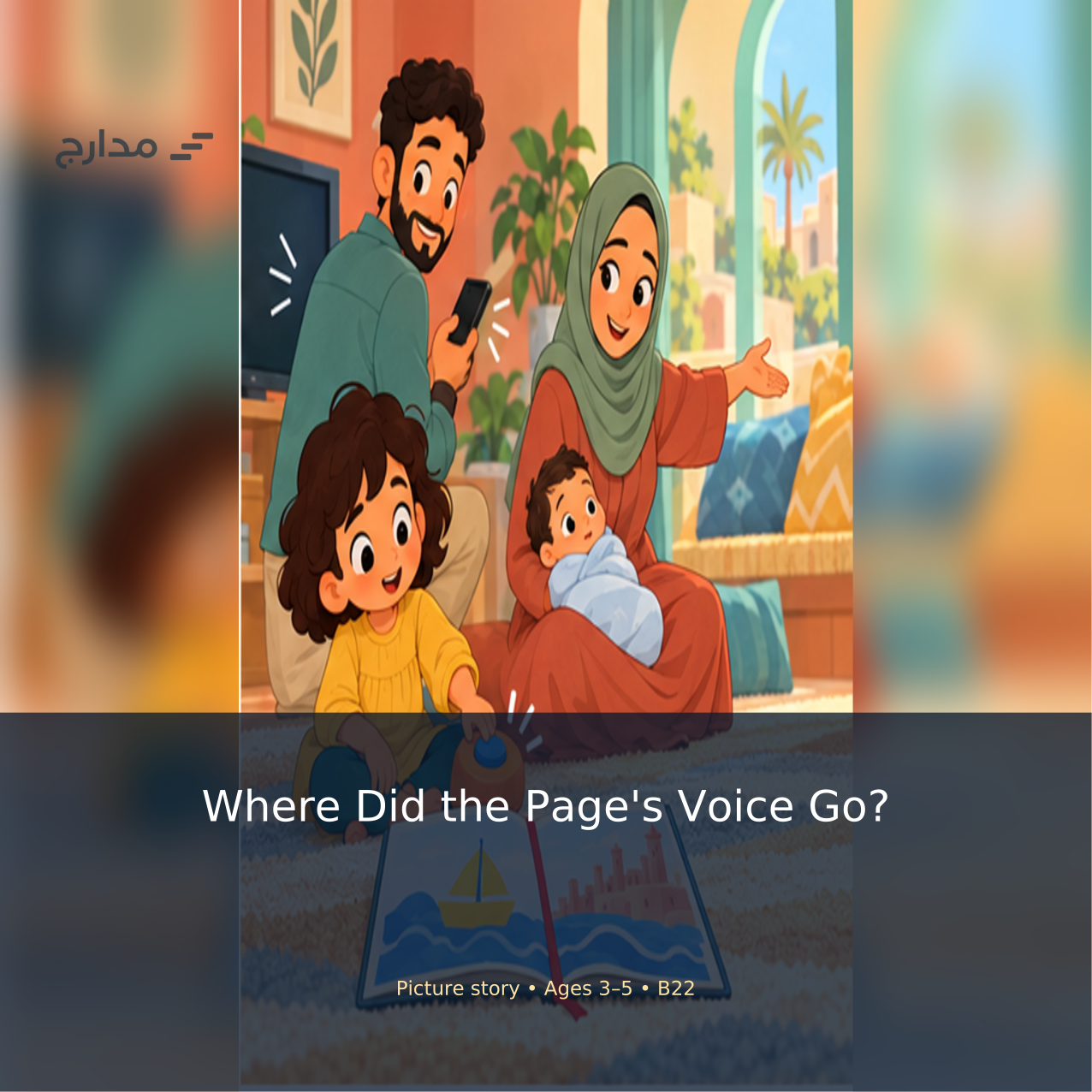
Age: 3–5 | Code: B22 | Focus: attention during family reading
Characters and relationship: Mariam, age five; her dad; her mum, who is Dad’s wife and the mother of Mariam and the baby; and Mariam’s baby brother. They are one family, with no unrelated character present.
The story
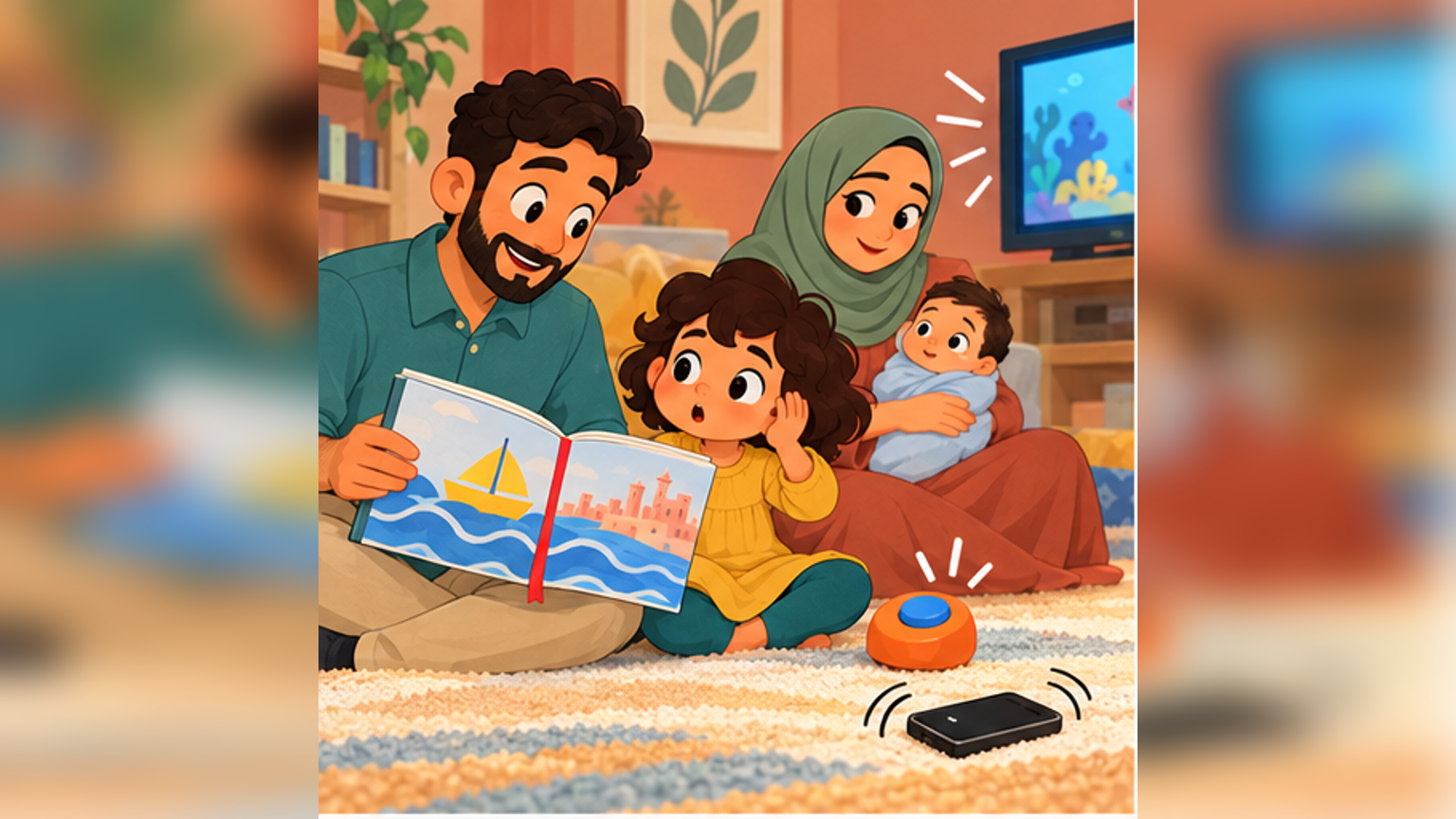
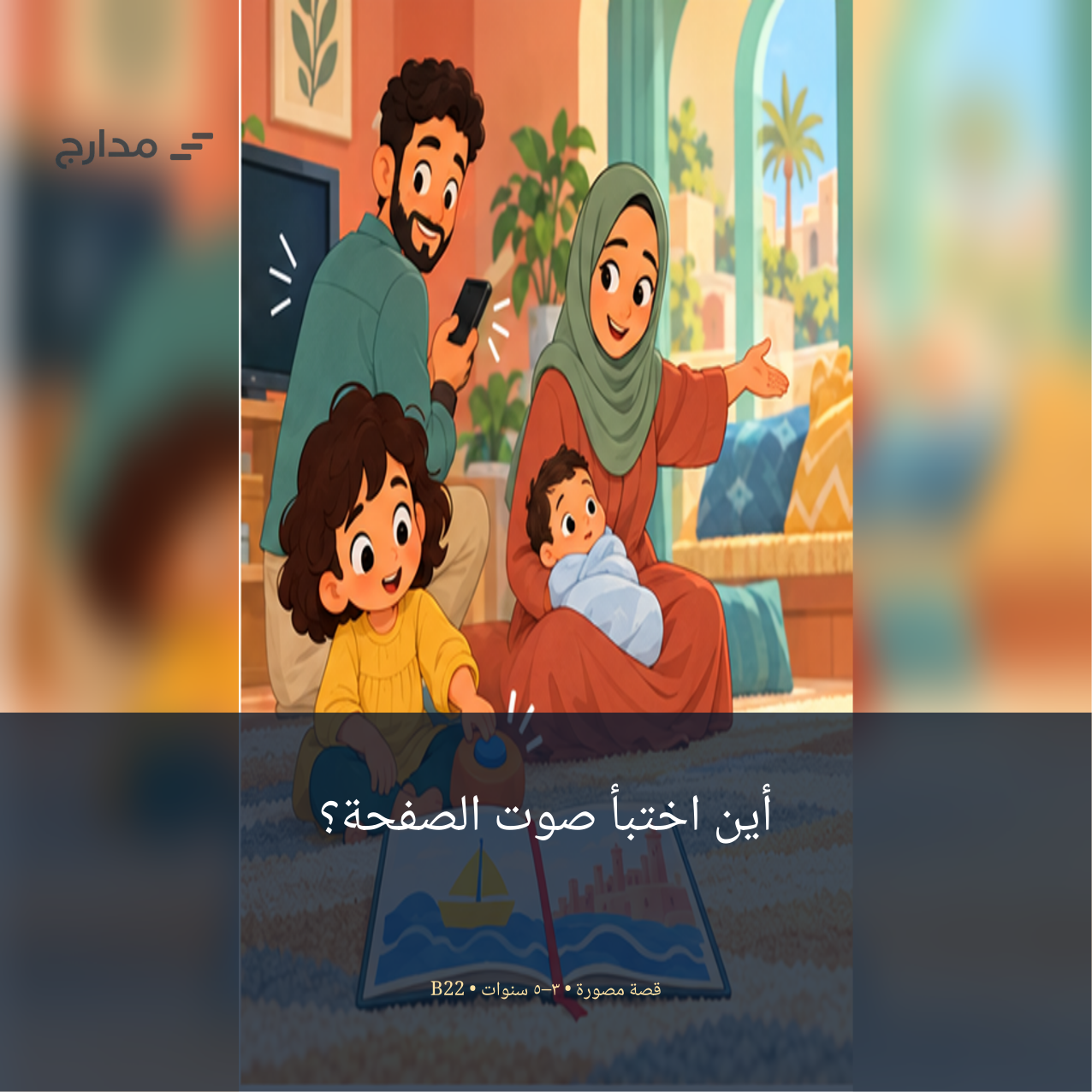
Five-year-old Mariam chose a story about a yellow boat. The family settled down to read after lunch: Mariam, her dad, her mum—Dad’s wife—and her baby brother. Dad opened the first page. At that very moment, the television called from the next room, his phone rang, and Mariam’s toy announced, “Let’s play!”
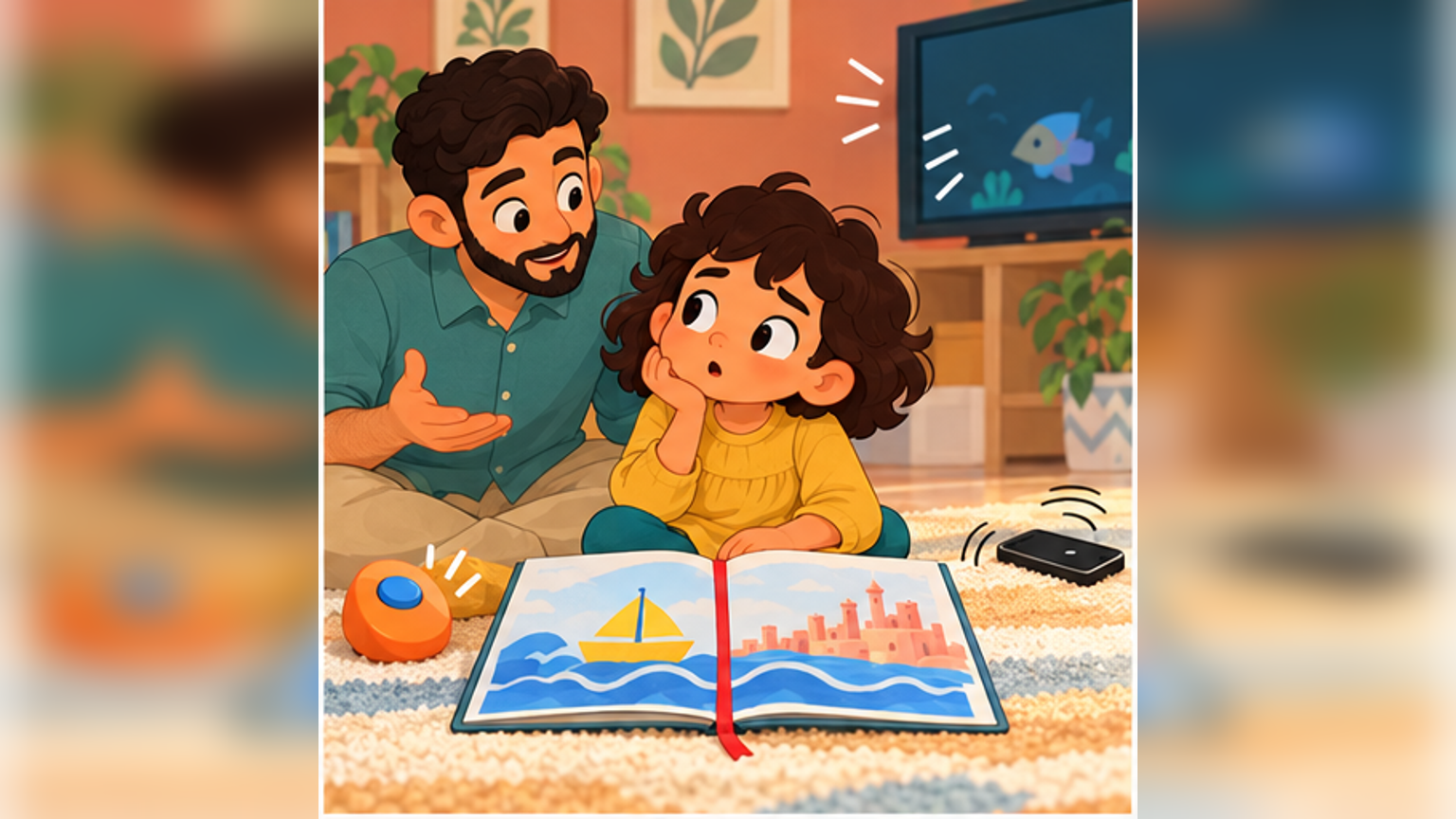
Mariam read the first line, then looked up. “I can’t hear the boat.” Dad smiled. “The boat is a picture, so it has no voice. But we have to listen if we want to hear what the page is telling us.” She tried again. One word—then she turned toward the toy. Another word—then she asked, “Where did the page’s voice go?” “Let’s find out what is competing with it,” Mum suggested.
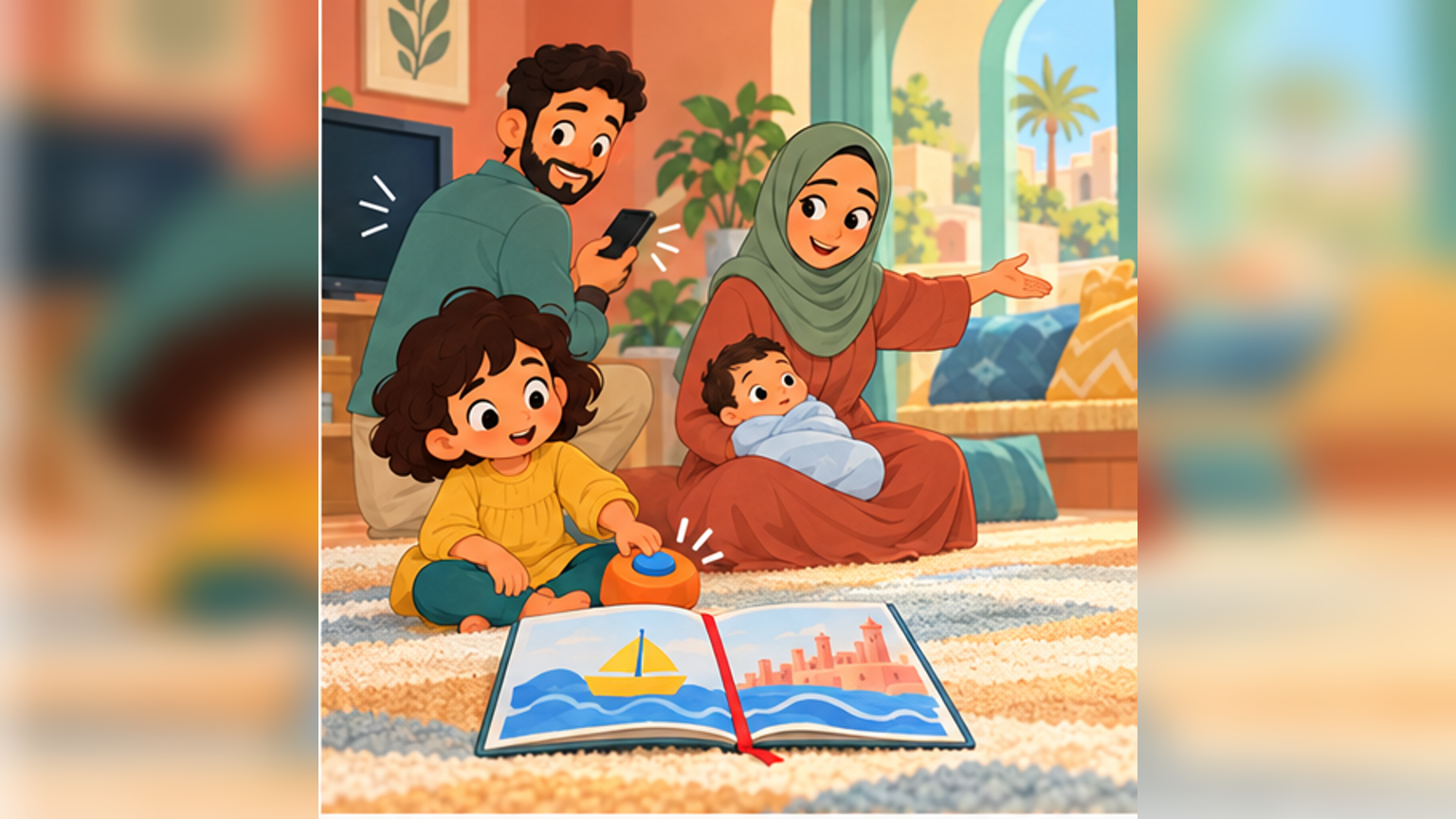
Mariam looked around. She pointed to the television, and Dad turned it off because no one was watching. She pressed the button on her toy, and it grew quiet. Dad silenced the non-urgent sounds on his phone. “If an important call comes, I’ll answer it,” he explained.
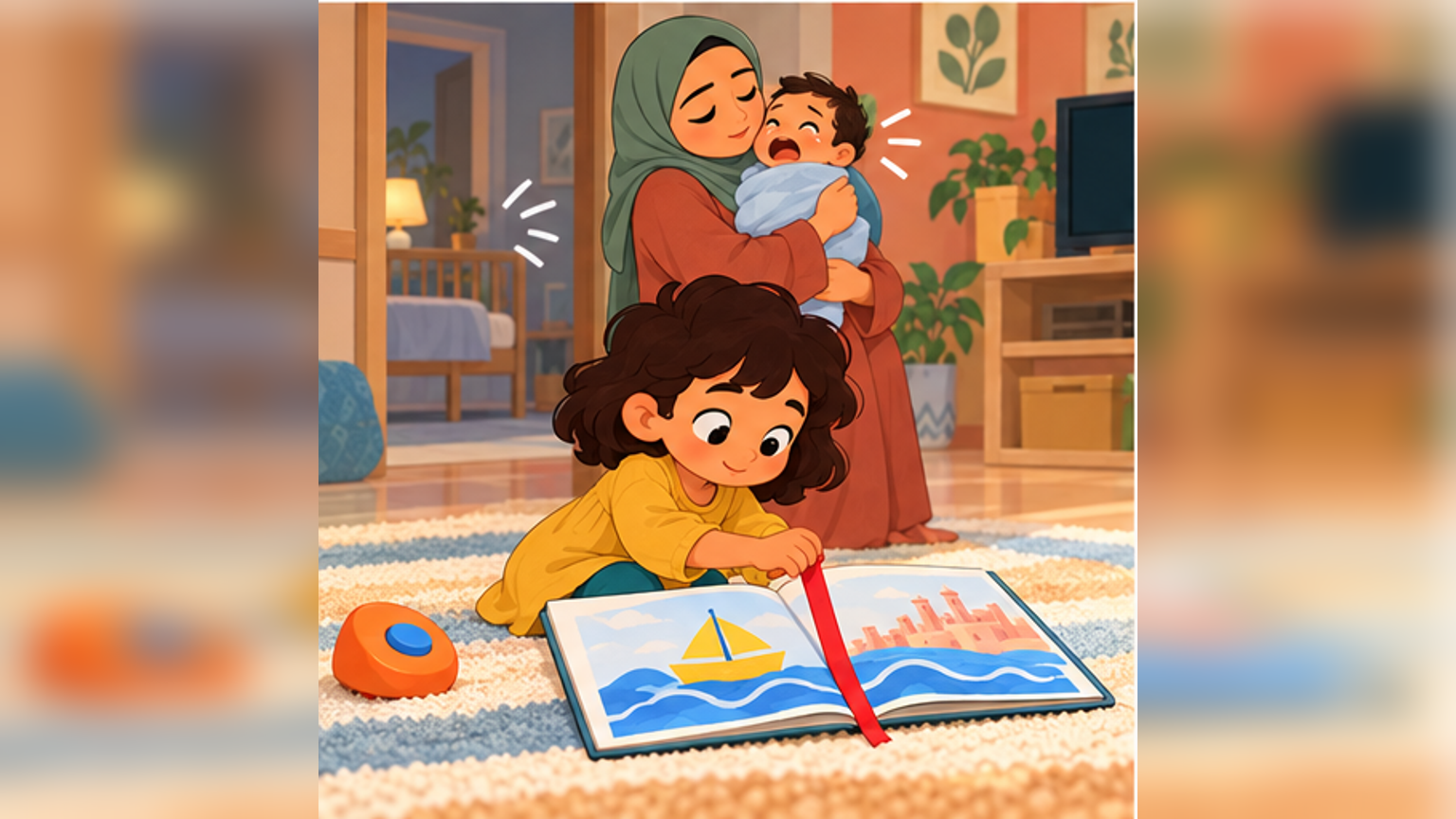
Then Mariam’s little brother cried in the bedroom. “Should we turn his sound off too?” she asked. “No,” Mum said. “He needs us. We can mark our page and come back.” Mariam fetched the red bookmark and helped Mum carry a small blanket.
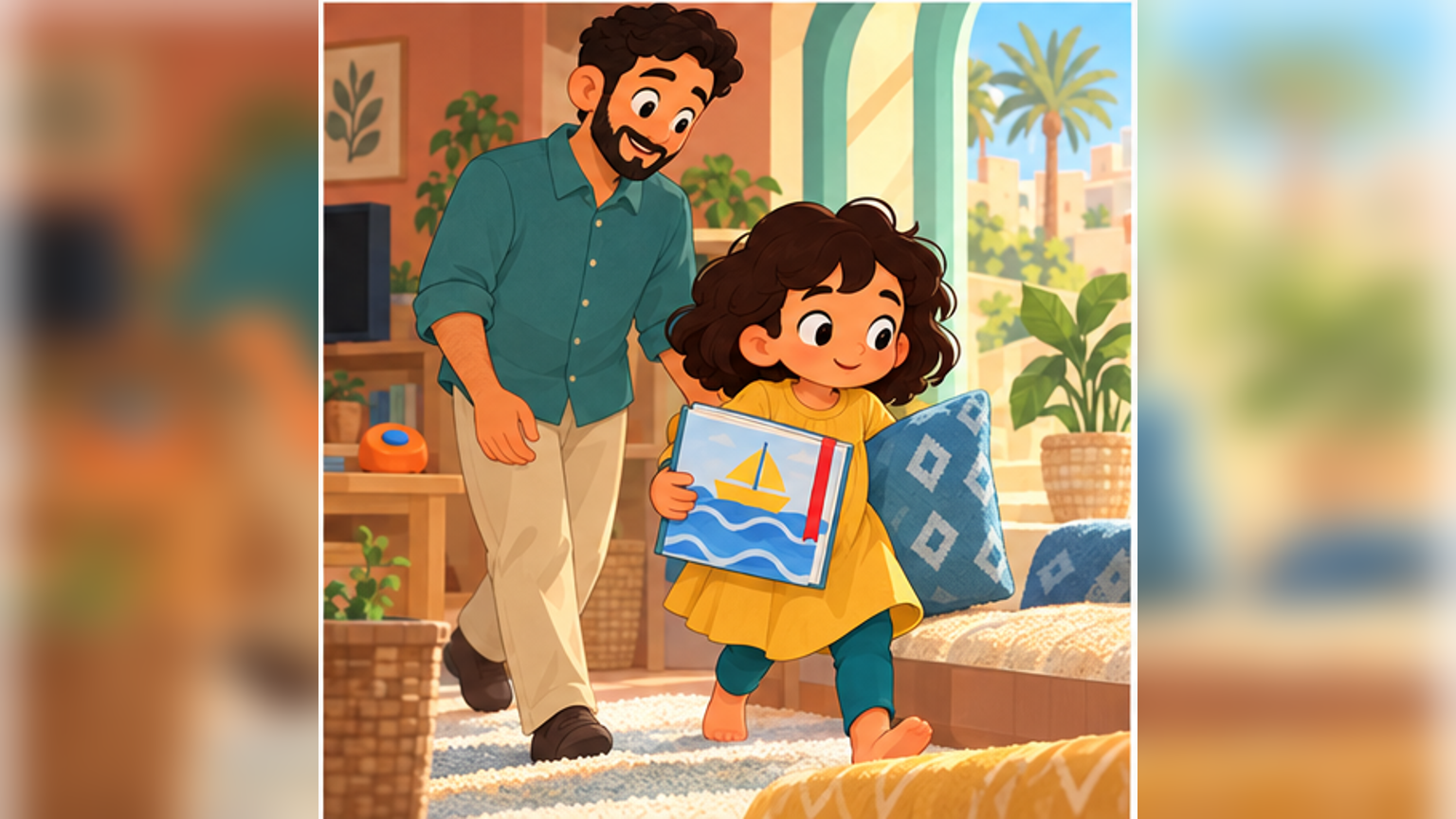
When her brother was settled, Mariam took the story and a cushion to a corner by the window. “The television won’t interrupt us here,” she said. “The toy is asleep, and we can still hear my brother if he needs us.” Dad opened the book at the red mark. This time the words moved slowly and clearly: a yellow boat, a blue wave, and a harbour far away.
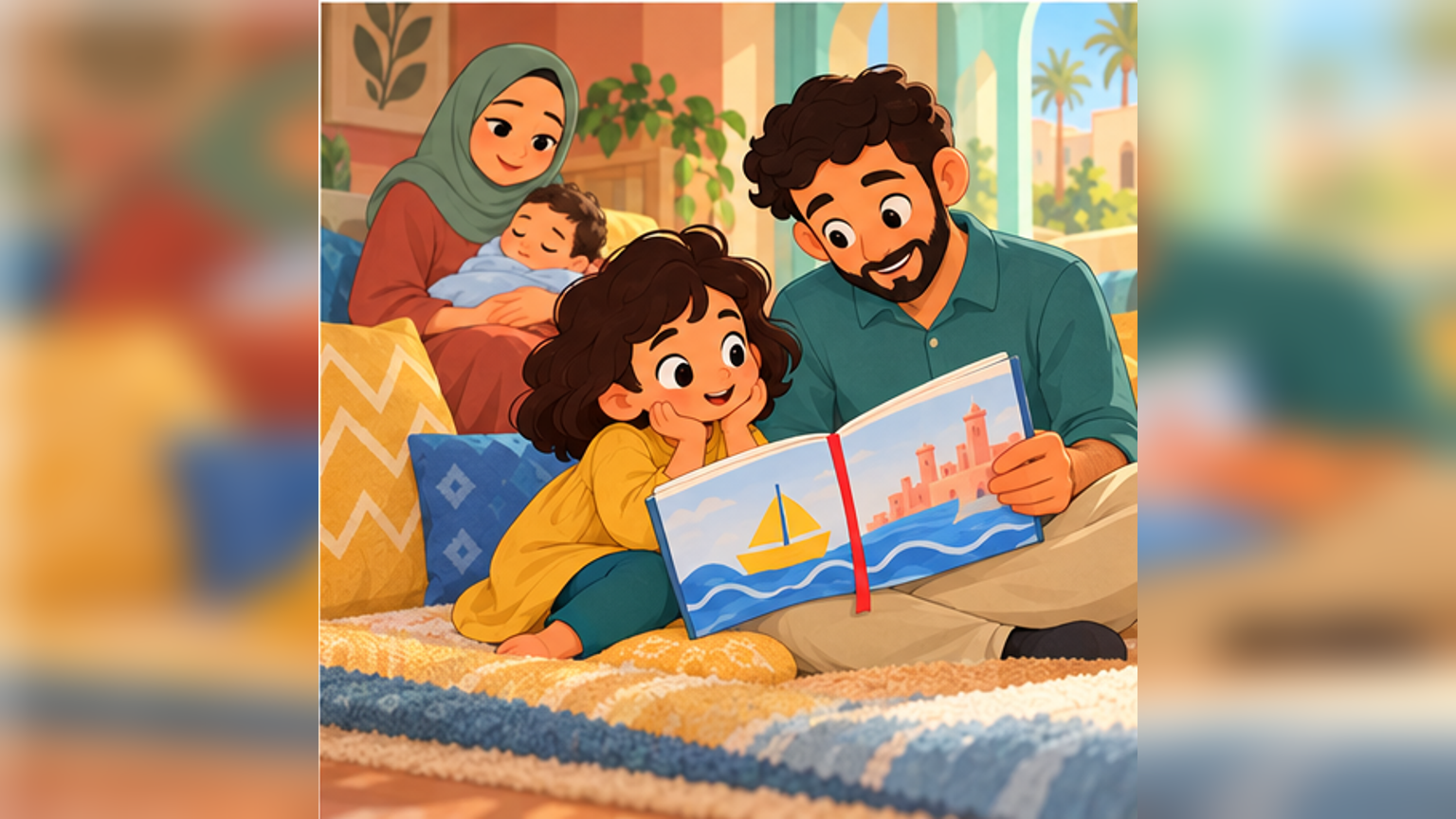
Dad’s voice had not changed. The letters had not grown larger. Yet Mariam heard the whole story. “The page’s voice wasn’t hiding,” she said at the end. “There were too many sounds around it.” She returned the book to its place and left the bookmark inside. Tomorrow, if the room becomes noisy again, the family will know where to begin: save their place, quiet what they can, and then return.
For the grown-up
Question: Which sounds can we quiet, and which sound points to a real need?
Activity: Read one page in two different places, then choose one small change that helps attention. Do not demand perfect silence; save the place if the child needs movement or a pause.
Source and verification
This original fictional family story applies the distinction between intention, capacity and context: the family quiets optional distractions, saves a place to return, and does not treat a child’s real need as disposable noise. It was inspired by Reclaim Your Attention after checking the actual pages 8, 10 and 16. It contains no direct Qur’an or hadith quotation, does not retell a historical report, and makes no diagnostic or therapeutic claim.
The editorial and visual assessment is an internal AI-assisted review, not an independent human review, child trial or global certification.
العمر: 3–5 سنوات | الرمز: B22 | المجال: الانتباه في القراءة الأسرية
الشخصيات والعلاقة: مريم، طفلة عمرها خمس سنوات؛ وأبوها؛ وأمها، وهي زوجة أبيها وأم مريم والرضيع؛ وأخوها الرضيع. جميعهم أسرة واحدة، ولا تظهر شخصية غير مرتبطة بها.
القصة
اختارت مريم، ذات الخمس سنوات، قصة عن قارب أصفر. وجلست الأسرة لتقرأها بعد العصر: مريم، وأبوها، وأمها زوجة أبيها، وأخوها الرضيع. فتح أبوها الصفحة الأولى. في اللحظة نفسها صاح التلفاز من الغرفة الأخرى، ورن الهاتف، وبدأت لعبة مريم تقول: «هيا نلعب!»
قرأت مريم السطر الأول، ثم رفعت رأسها. «لا أسمع القارب.» ابتسم أبي. «القارب مرسوم، ولا صوت له. لكن كلمات الصفحة تحتاج أن نصغي إليها.» حاولت مريم مرة أخرى. قرأت كلمة، ثم التفتت إلى اللعبة. قرأت كلمة ثانية، ثم سألت: «أين اختبأ صوت الصفحة؟» قالت أمها: «لنجرب أن نعرف ما الذي ينافسه.»
نظرت مريم حولها. أشارت إلى التلفاز، فأغلقه أبي لأنه لم يكن أحد يشاهده. ضغطت زر لعبتها فسكتت. وضع أبي هاتفه على وضع هادئ، وقال: «إذا جاء اتصال مهم فسأجيب.»
لكن أخاها الصغير بكى في غرفته. قالت مريم: «هل نغلق صوته أيضًا؟» قالت أمها: «لا. هو يحتاج إلينا. سنضع علامة في الصفحة ونعود.» أحضرت مريم العلامة الحمراء، ثم ساعدت أمها في إحضار الغطاء الصغير.
وبعد أن اطمأن أخوها، حملت القصة والوسادة إلى ركن قرب النافذة. قالت: «هنا لا يزاحمنا التلفاز، واللعبة نائمة، وإذا احتاجنا أخي نسمعه.» فتح أبي الصفحة عند العلامة. هذه المرة سارت الكلمات ببطء: قارب أصفر، موجة زرقاء، وميناء بعيد.
لم يتغير صوت أبي، ولم تكبر حروف الكتاب، لكن مريم سمعت الحكاية كاملة. في النهاية قالت: «لم يكن صوت الصفحة مختبئًا. كانت حوله أصوات كثيرة.» وضعت الكتاب في مكانه، وتركت العلامة داخله. غدًا، إذا ازدحم المكان، ستعرف الأسرة من أين تبدأ: تحفظ موضعها، وتختار ما تستطيع تهدئته، ثم تعود.
للمربي
سؤال: ما الصوت الذي نستطيع تهدئته؟ وما الصوت الذي يدل على حاجة حقيقية؟
نشاط: اقرأ صفحة واحدة في موضعين، ثم اختر تعديلًا صغيرًا يساعد على الانتباه. لا تجعل الهدوء شرطًا مثاليًا، واحفظ موضع العودة إذا احتاج الطفل إلى الحركة أو التوقف.
بطاقة المصدر والتحقق
قصة أسرية متخيلة أصلية تطبق التمييز بين النية والقدرة والسياق: تهدئ الأسرة المشتتات الاختيارية، وتحفظ موضع العودة، ولا تعامل حاجة الطفل الحقيقية كصوت ينبغي إلغاؤه. استُلهمت من «استعد انتباهك» بعد مراجعة الصفحات الفعلية 8 و10 و16. لا تتضمن اقتباسًا مباشرًا من القرآن أو الحديث، ولا تعيد سرد خبر تاريخي، ولا تقدم ادعاءً تشخيصيًا أو علاجيًا.
التقييم التحريري والبصري داخلي بمساعدة الذكاء الاصطناعي؛ وليس مراجعة بشرية مستقلة، ولا تجربة أطفال، ولا شهادة عالمية.
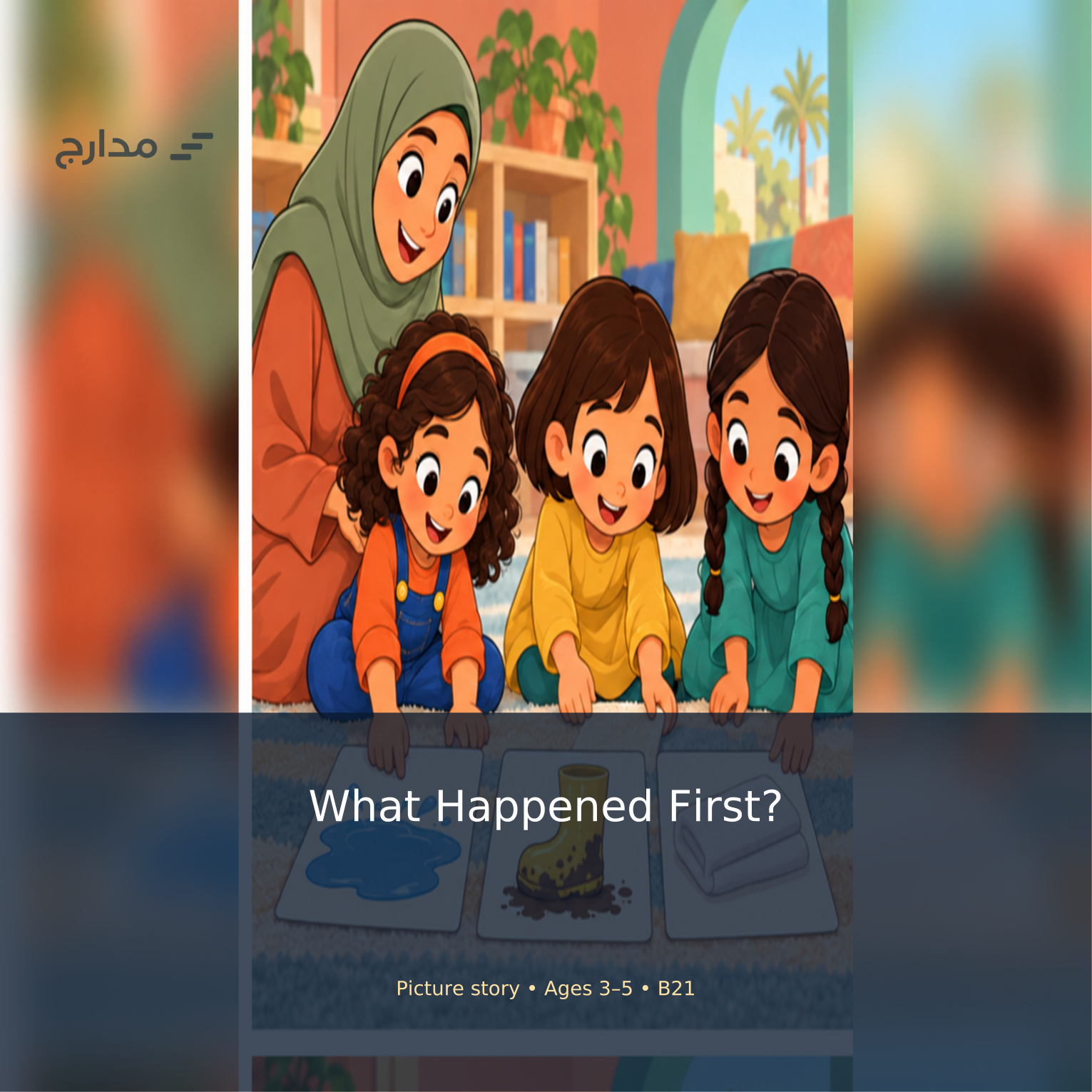
Age: 3–5 | Code: B21 | Focus: sequencing events and using evidence
Cast: Teacher Hala, and Salma, Layan, and Mawaddah—three five-year-old girls. No male character appears.
The story
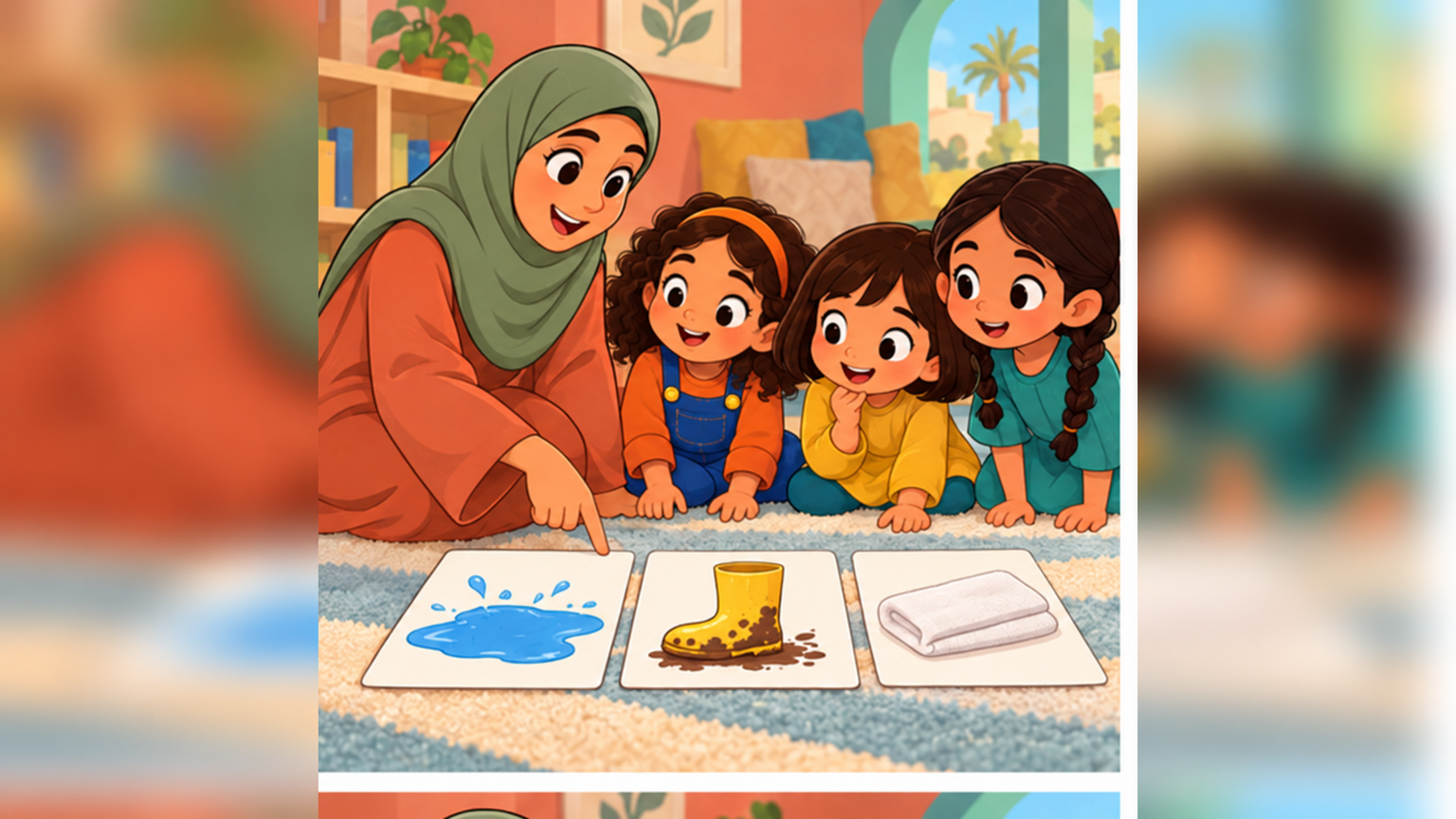
The teacher placed three cards on the rug: a puddle, a muddy boot, and a towel drying the floor. “It is a story!” Layan said. Then she lifted the towel card. “First, we dried the floor.”
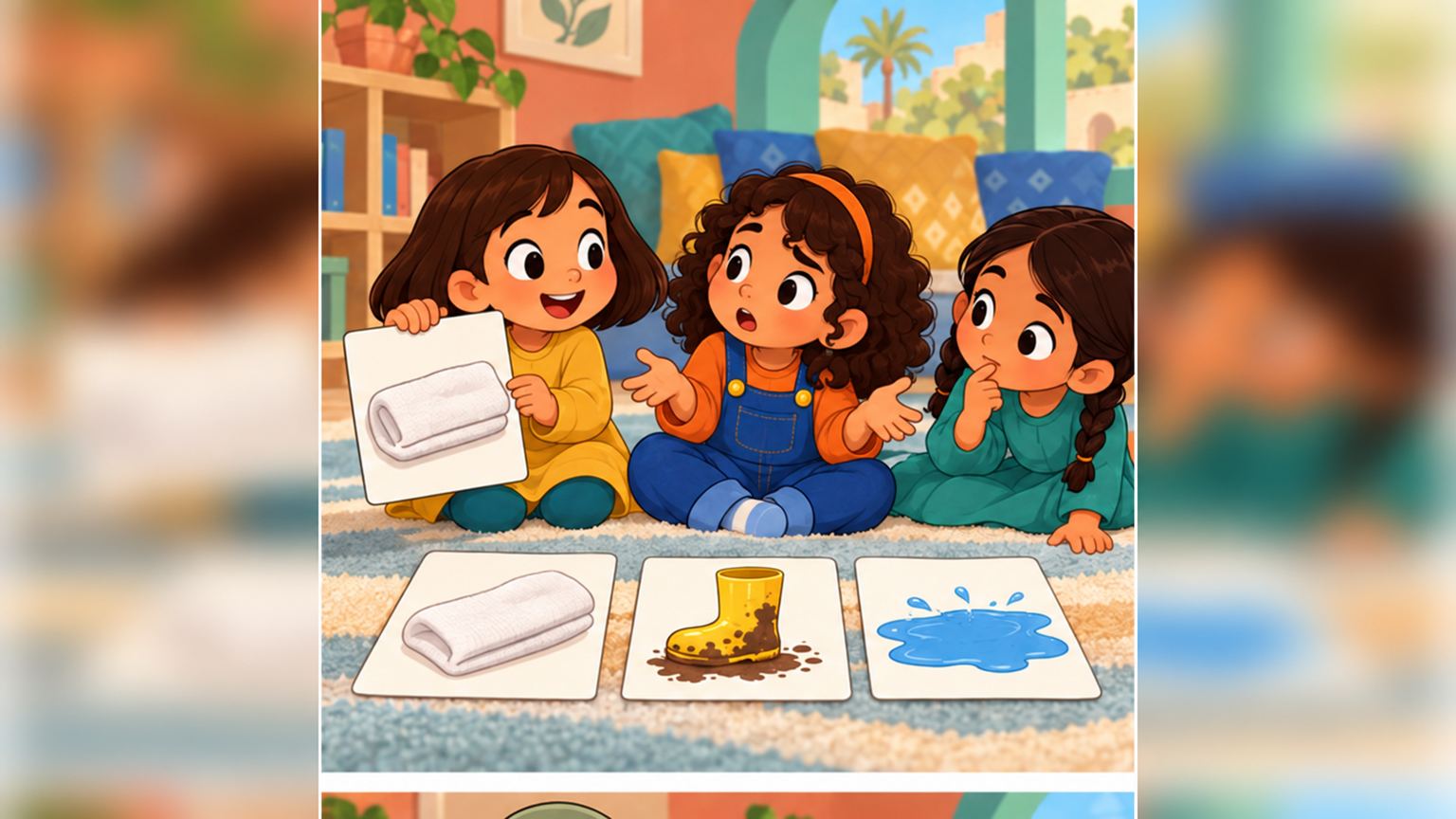
Salma shook her head. “But why was the floor wet?” They arranged the towel, then the boot, then the puddle. Everyone laughed. “The puddle cannot wait until the end!” Layan said.
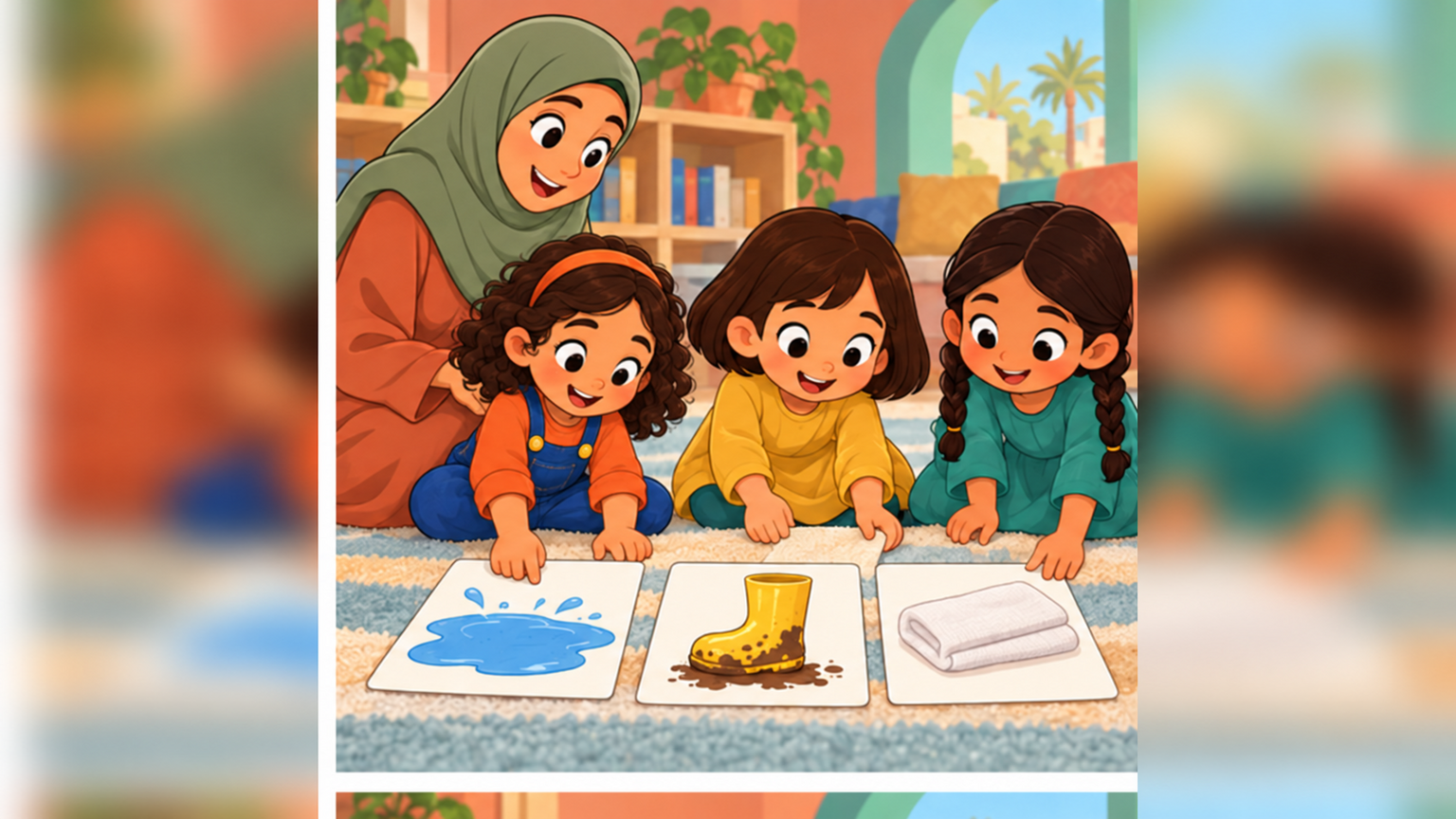
The teacher mixed the cards again. Salma chose the puddle first. Layan added the muddy boot. Mawaddah finished with the towel. Now each picture opened the door to the next one.
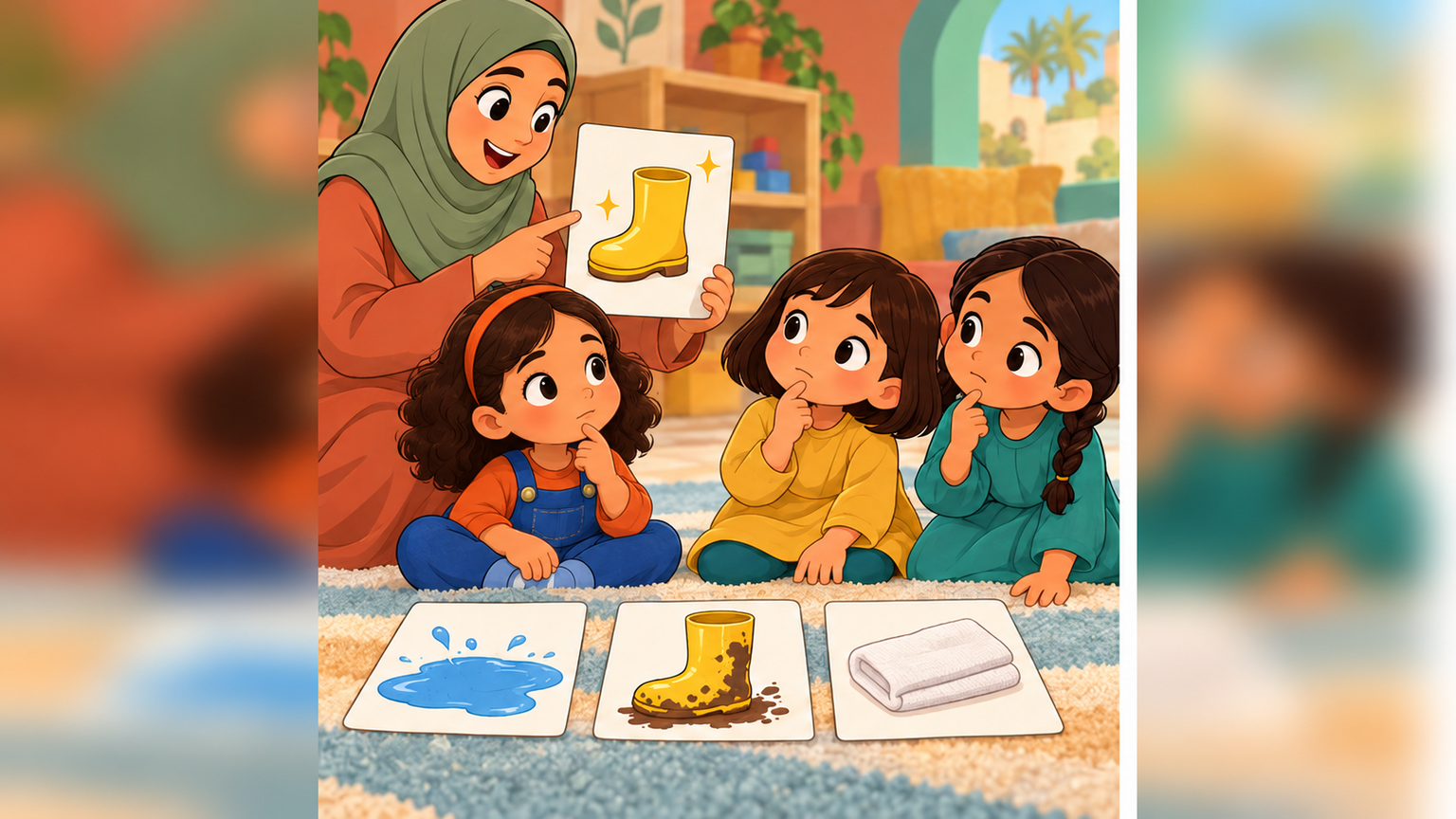
The teacher added a fourth card: a clean boot on a shelf. Salma thought it belonged at the beginning. Mawaddah thought it belonged at the end. The picture alone did not tell them who was right.
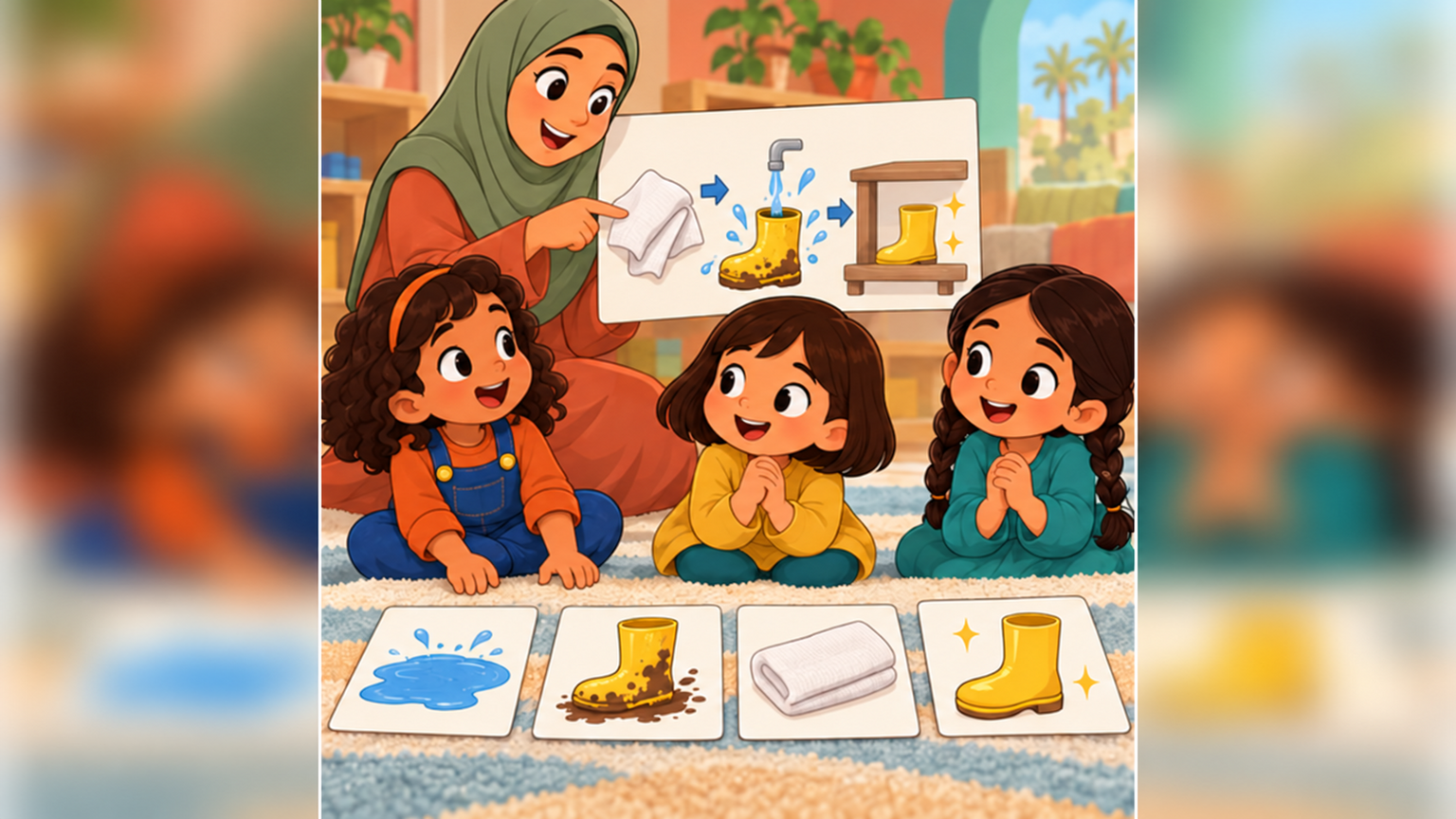
“We should not guess by ourselves,” the teacher said. “We need another picture or a sentence from the storyteller.” She showed: dry the floor, wash the boot, place it on the shelf. The clean boot belonged last.
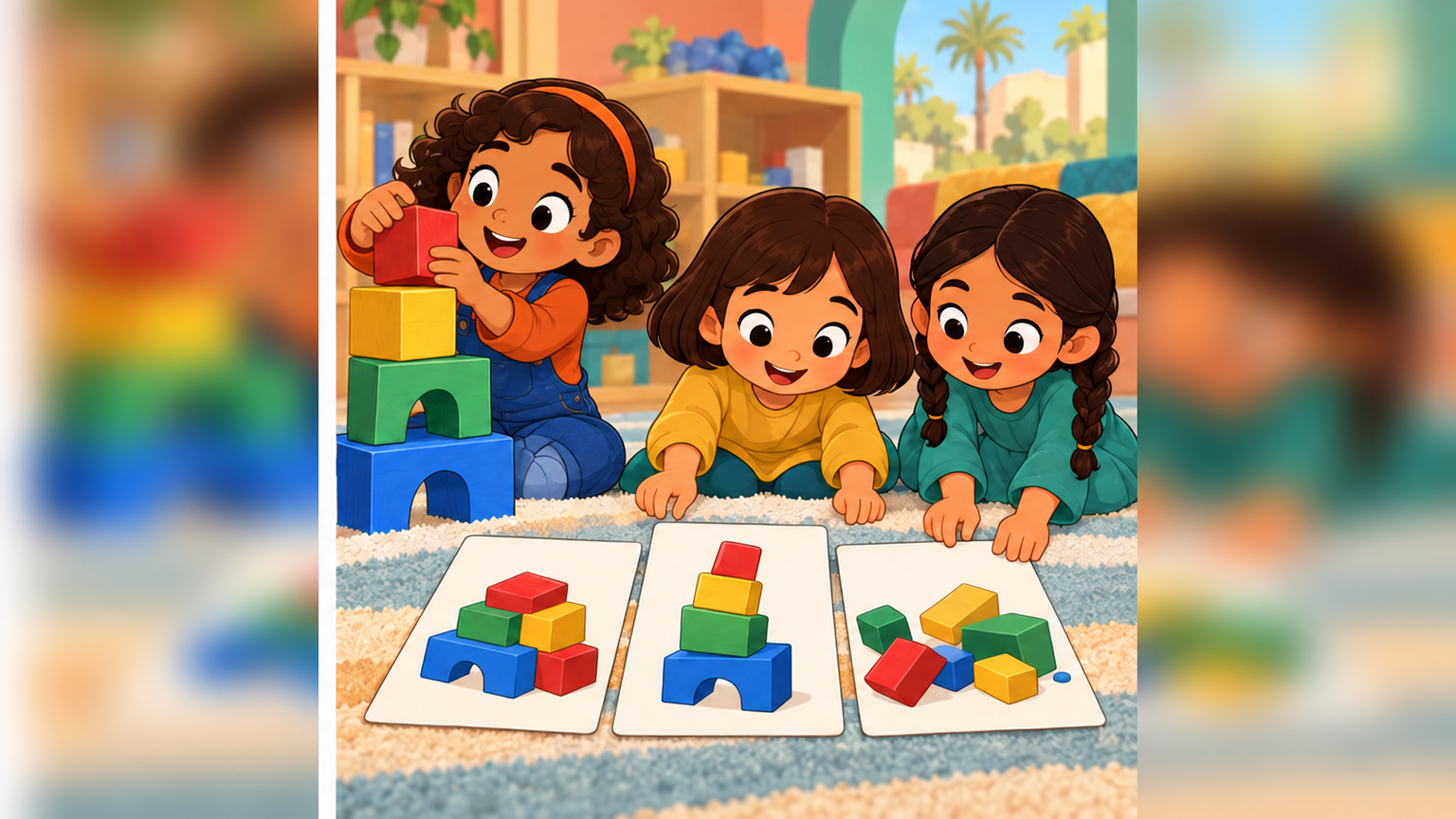
During playtime, Salma built a tower and it fell. Layan and Mawaddah arranged three pictures: blocks in a pile, a standing tower, and scattered blocks. They did not choose the prettiest card. They chose the order that made the story clear.
For the grown-up
Question: Why was the clean-boot picture not enough by itself?
Activity: Take three pictures of a simple action: beginning, middle, and ending. Mix them, arrange them, and explain your clue.
Source and verification card
Original classroom fiction that turns comprehension into visible performance: sequencing events, explaining why one event comes first, and requesting more evidence instead of guessing. Inspired by comprehension skills in Read to Understand, after reviewing the actual pages 7, 9, and 17. It contains no direct Qur’an or hadith quotation and does not retell a historical report.
The editorial and visual assessment is an internal AI-assisted review, not independent human review, child testing, or global certification.
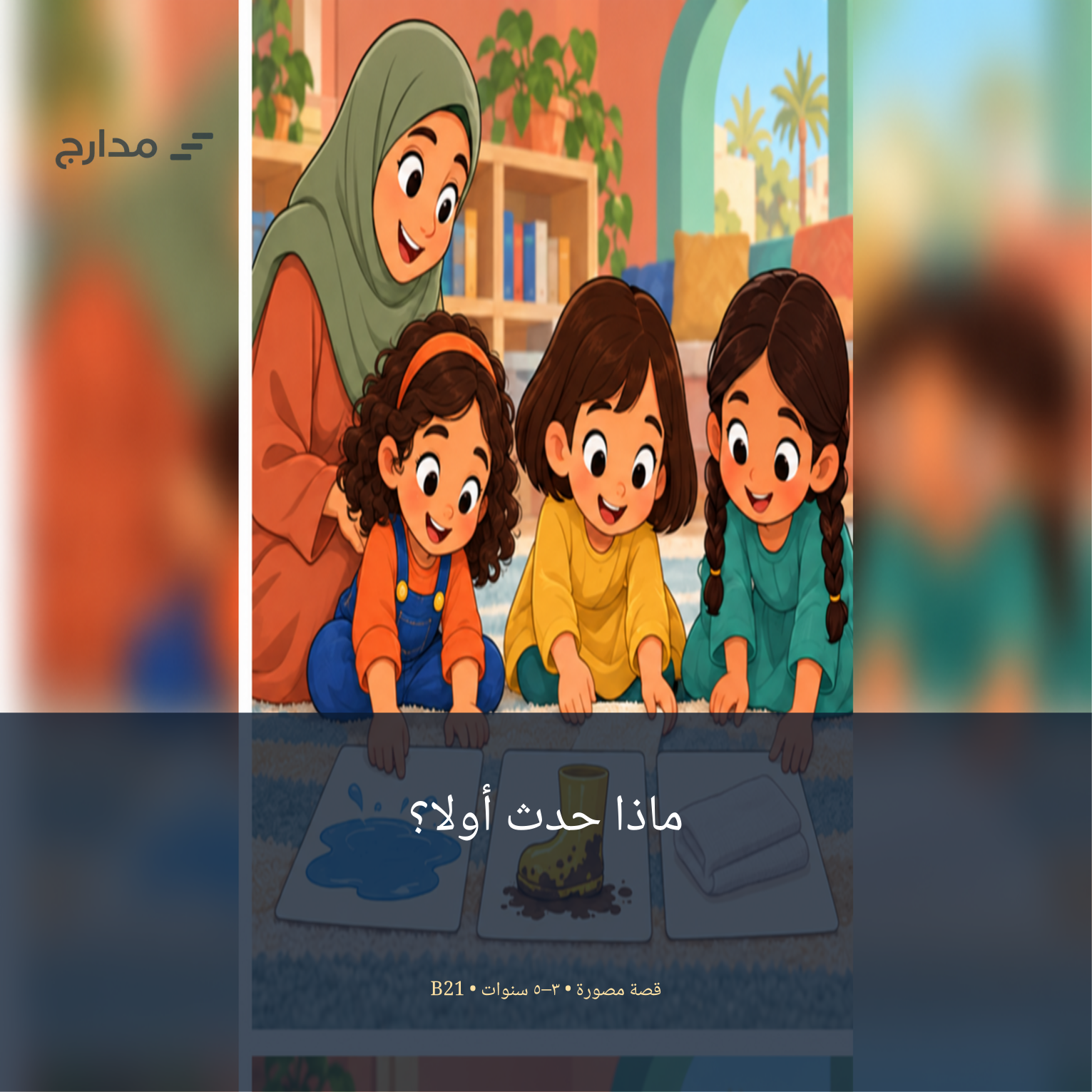
العمر: 3–5 سنوات | الرمز: B21 | المجال: ترتيب الأحداث وفهم الأدلة
الشخصيات: المعلمة هالة، وسلمى وليان ومودة؛ ثلاث فتيات عمر كل واحدة منهن خمس سنوات. لا تظهر شخصية ذكورية.
القصة
وضعت المعلمة ثلاث بطاقات على السجادة: بركة ماء، وحذاء موحل، ومنشفة تجفف الأرض. قالت ليان: «هذه حكاية!» ثم رفعت بطاقة المنشفة وقالت: «أولًا جففنا الأرض.»
هزت سلمى رأسها: «لكن لماذا كانت الأرض مبتلة؟» رتبن المنشفة ثم الحذاء ثم البركة، فضحكن. قالت ليان: «البركة لا تنتظر النهاية!»
خلطت المعلمة البطاقات من جديد. اختارت سلمى البركة أولًا، ثم وضعت ليان الحذاء الموحل، وأكملت مودة بالمنشفة. صار لكل صورة باب يفتح لما بعدها.
أضافت المعلمة بطاقة رابعة: حذاء نظيف على الرف. قالت سلمى إنها البداية، وقالت مودة إنها النهاية. لم تخبرهن الصورة وحدها أي الرأيين أصح.
قالت المعلمة: «لا نخمن وحدنا. نحتاج صورة أخرى أو جملة من صاحب الحكاية.» أظهرت لهن: جففنا الأرض، ثم غسلنا الحذاء، ثم وضعناه على الرف. فصارت بطاقة الحذاء النظيف في النهاية.
في وقت اللعب بنت سلمى برجًا ثم سقط. رتبت ليان ومودة صور المكعبات: قطع مرتبة، ثم برج قائم، ثم قطع متناثرة. هذه المرة لم يخترن الأجمل؛ اخترن ما يجعل الحكاية مفهومة.
للمربي
سؤال: لماذا لم تكفِ صورة الحذاء النظيف وحدها لمعرفة مكانها؟
نشاط: التقط ثلاث صور لعمل بسيط: البداية، ثم ما حدث، ثم النهاية. اخلطها، ثم أعد ترتيبها واشرح دليلك.
بطاقة المصدر والتحقق
قصة صفية متخيلة أصلية تحول الفهم إلى أداء ظاهر: ترتيب الأحداث، وبيان سبب التقدم، وطلب دليل إضافي بدل التخمين. استُلهمت من مهارات الفهم في «اقرأ لتفهم»، بعد مراجعة الصفحات الفعلية 7 و9 و17. لا تتضمن اقتباسًا مباشرًا من القرآن أو الحديث، ولا تعيد سرد خبر تاريخي.
التقييم التحريري والبصري داخلي بمساعدة الذكاء الاصطناعي؛ وليس مراجعة بشرية مستقلة، ولا تجربة أطفال، ولا شهادة عالمية.
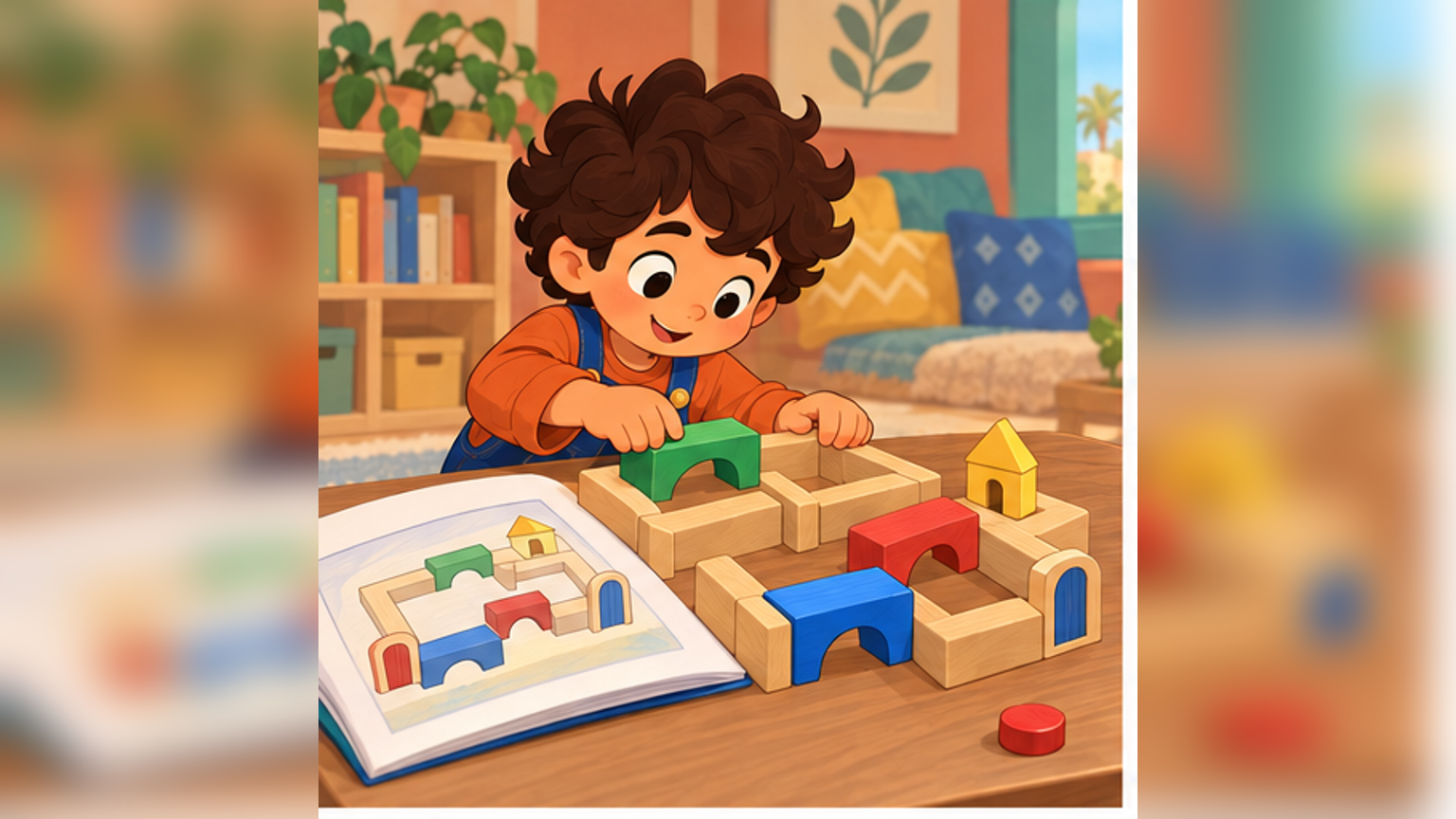
Age: 3–5 | Code: B20 | Illustrated shared-reading story.
Cast: Omar, his brother Nader, and their sister Layan in the final scene. The storyboard fixes Layan at age five and shows her in full hijab.
The Book I Shared
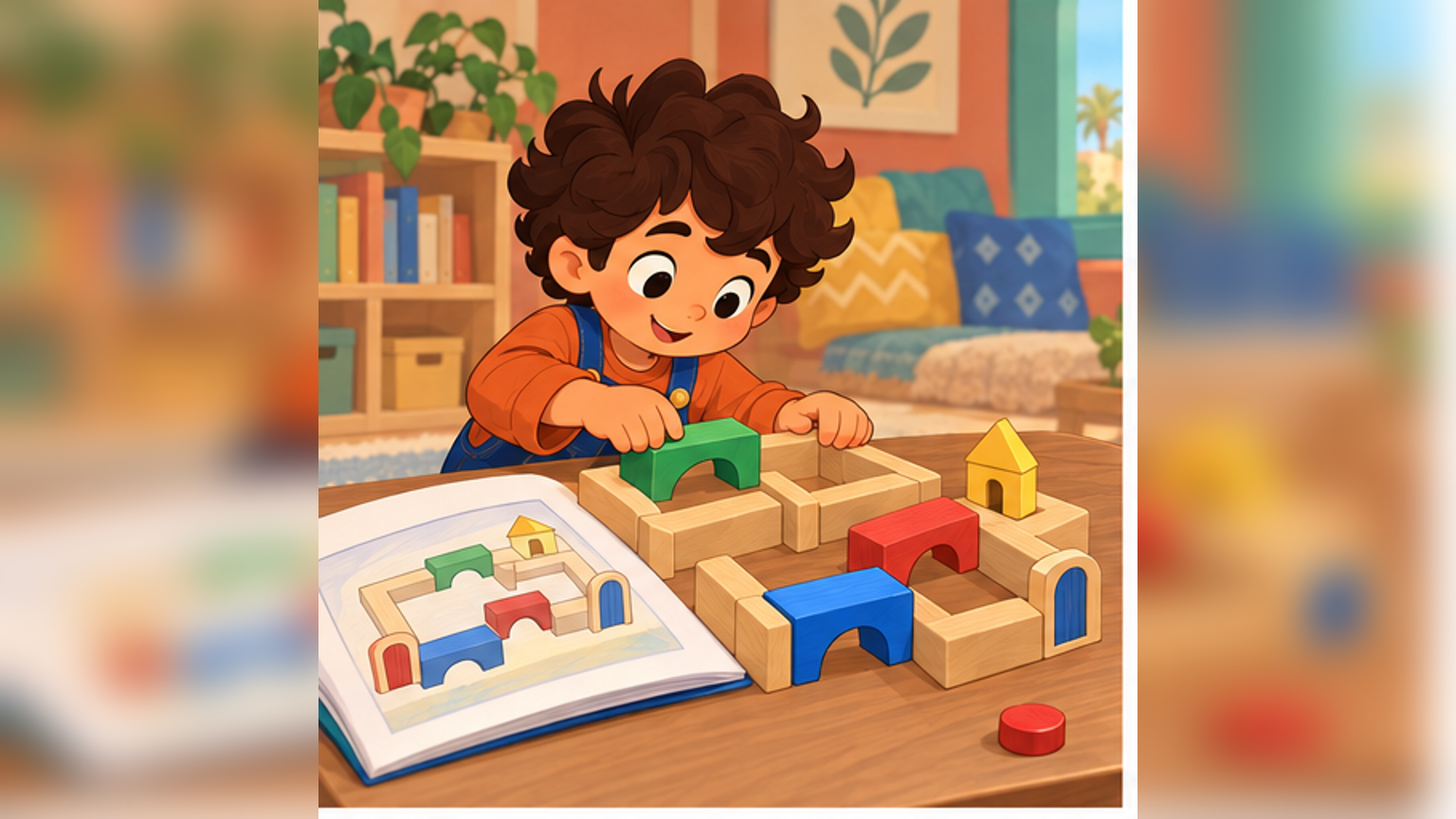
Omar opened his game book to the maze page. It showed three bridges and a tiny house at the end. He traced the path with one finger, then built a similar maze from wooden pieces on the table.
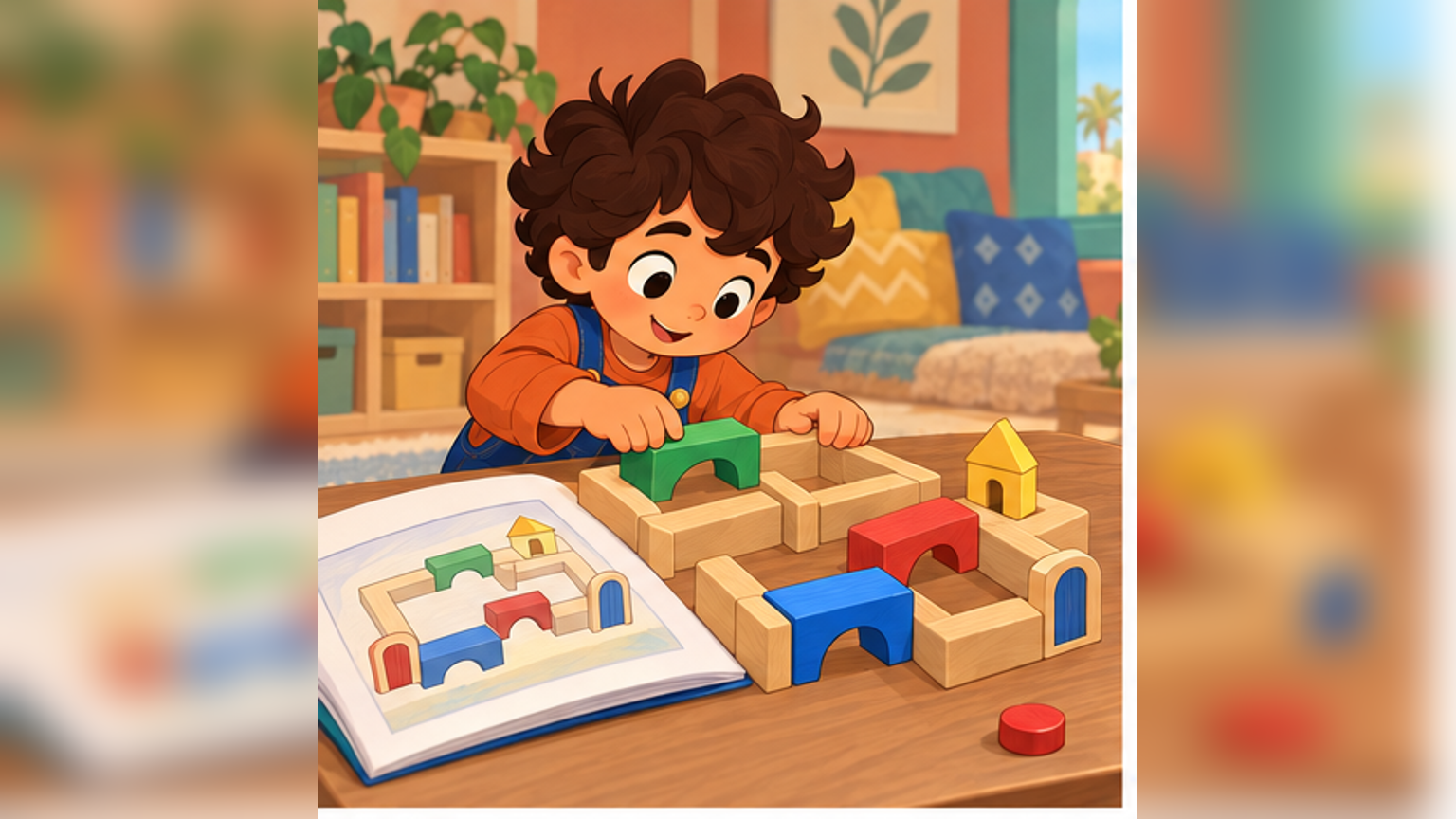
His brother Nader moved a counter to the entrance.
“Teach me the whole answer,” Nader said.
Omar covered the path with his hand. “If I tell you every step, there won’t be a game left for you.”
He pointed to the first bridge. “I’ll teach you one thing: before you move, look at where the bridge ends.”
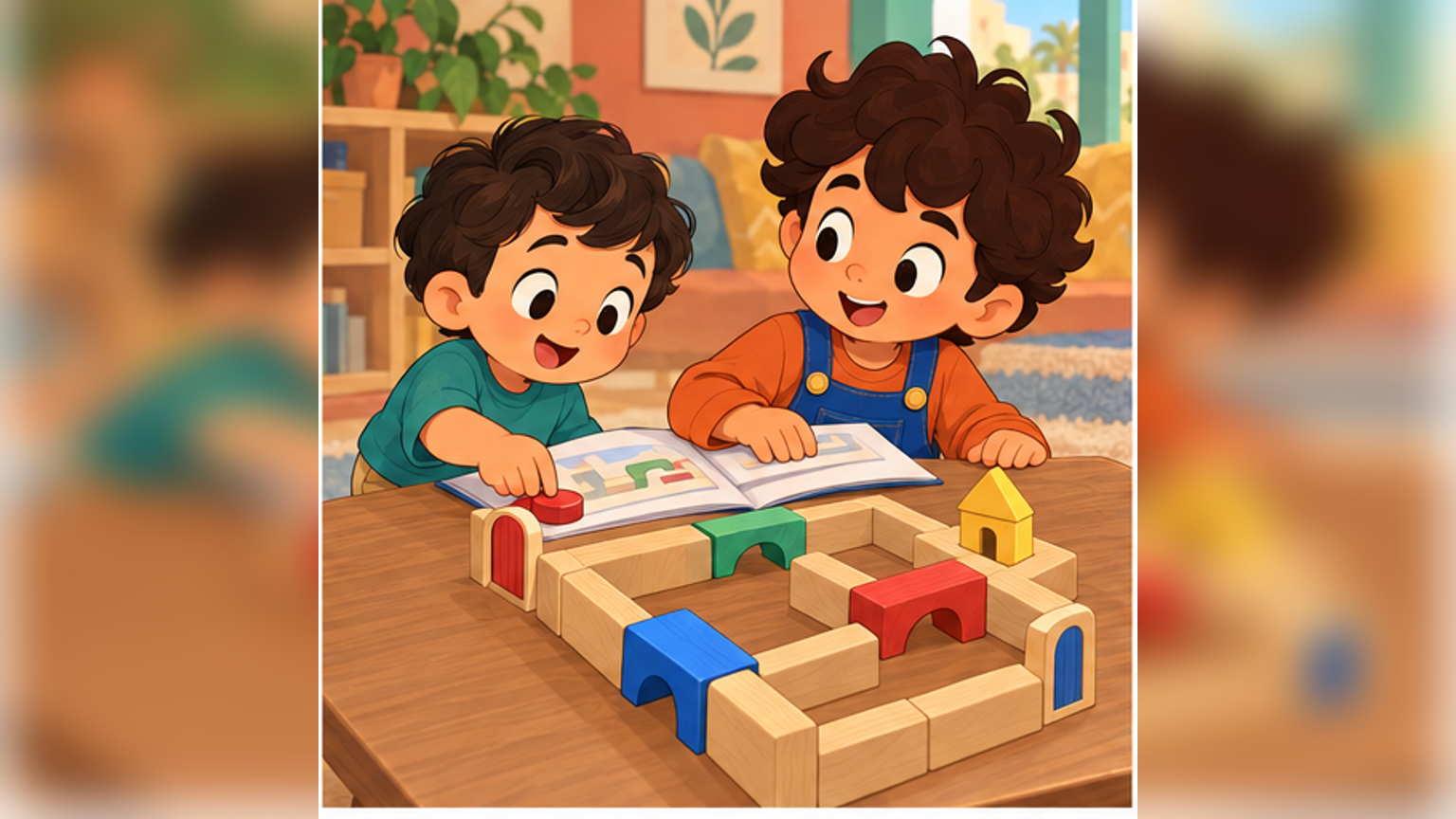
Nader chose the blue bridge. It led to a wall.
“Go back and look again,” Omar said.
This time Nader chose the green bridge. He reached a small square but found two doors.
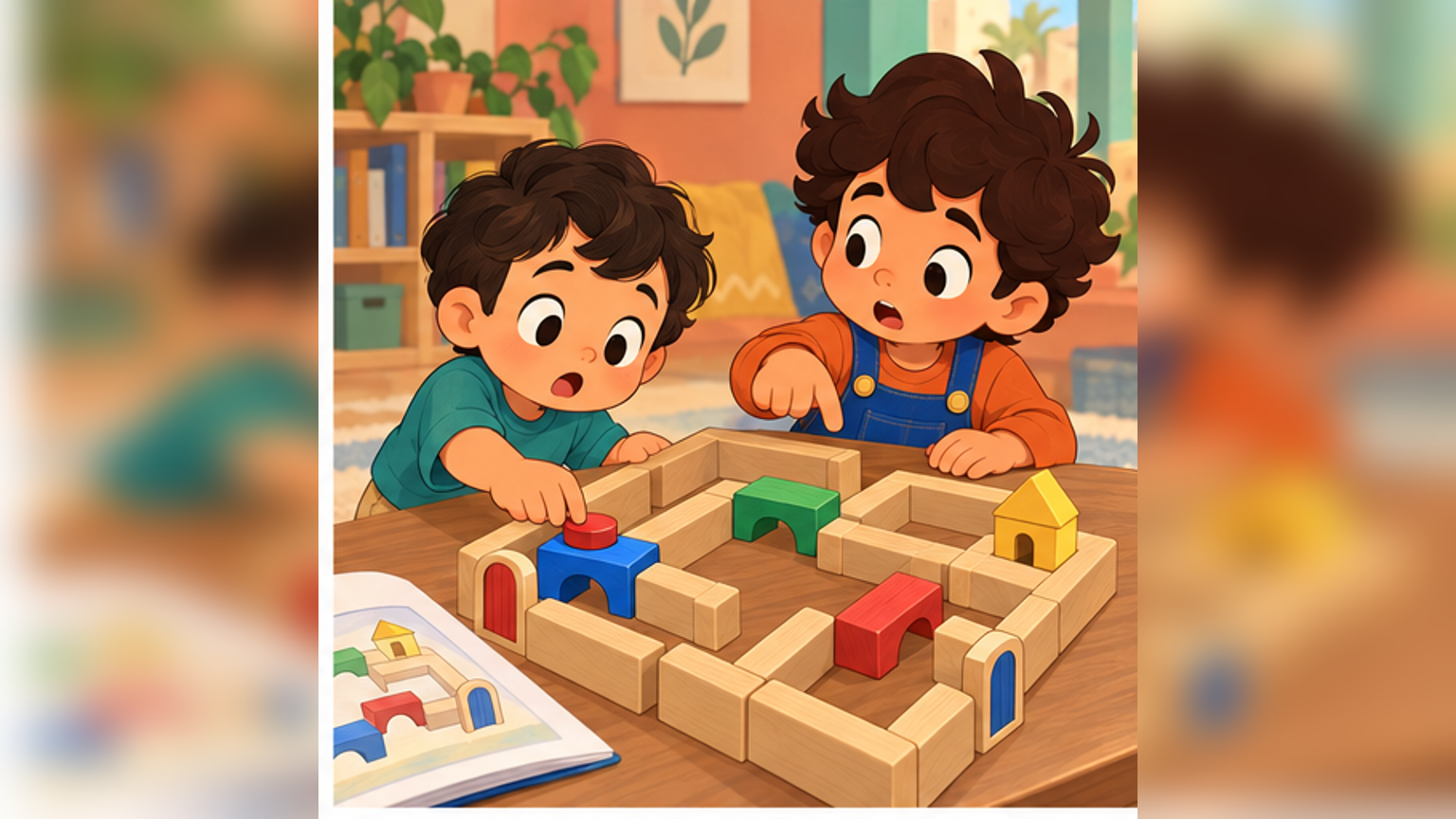
Omar almost moved the counter for him. Then he pulled his hand back.
“Try the door closer to the house.”
Nader tried it and laughed when the path opened. Only one step remained.
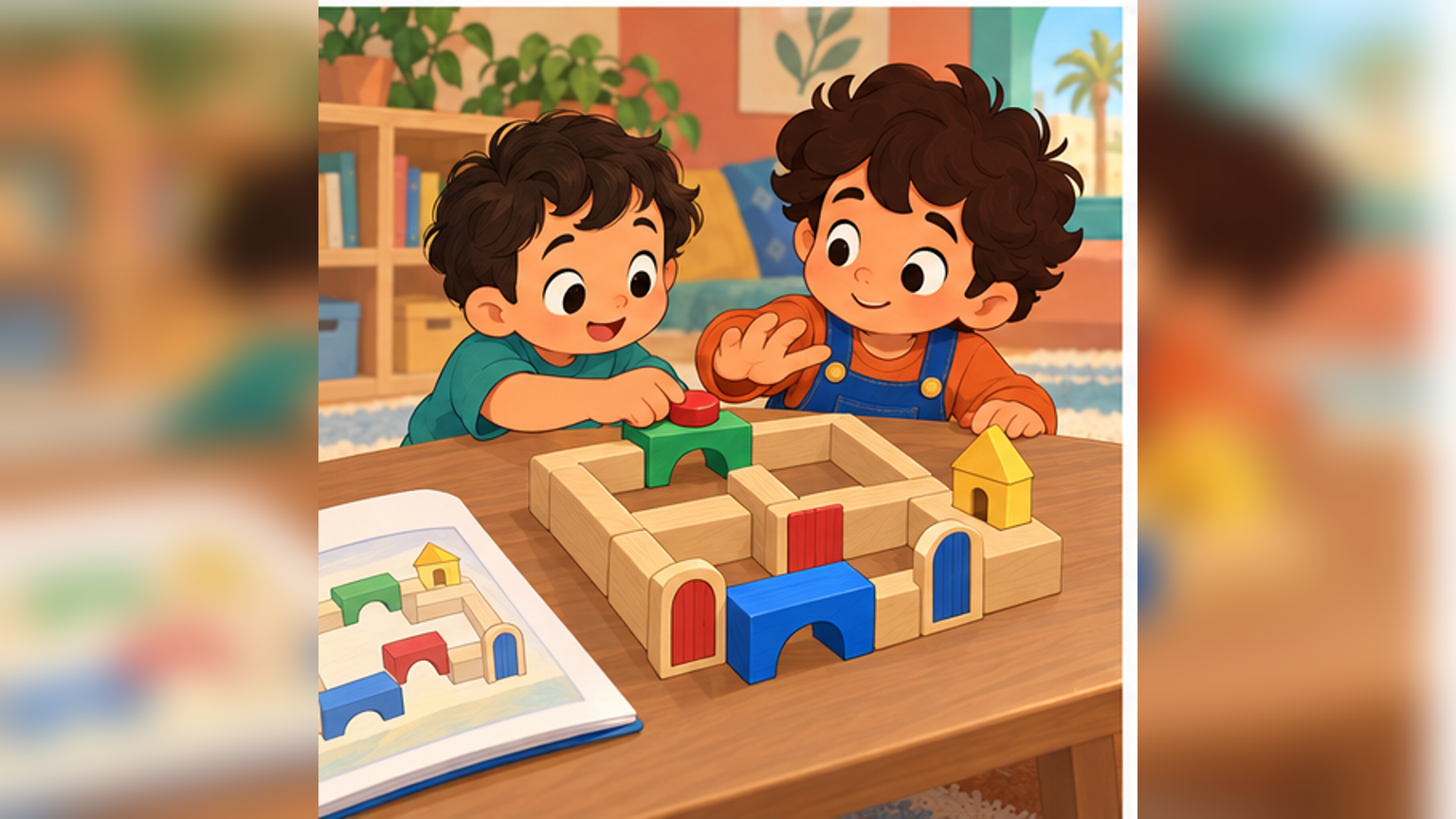
“Go right,” Omar said confidently.
Nader studied the pieces. “But the right path returns to the beginning.”
Omar traced it with his finger. Nader was right.
“I made a mistake,” Omar said. “Let’s check the picture in the book.”
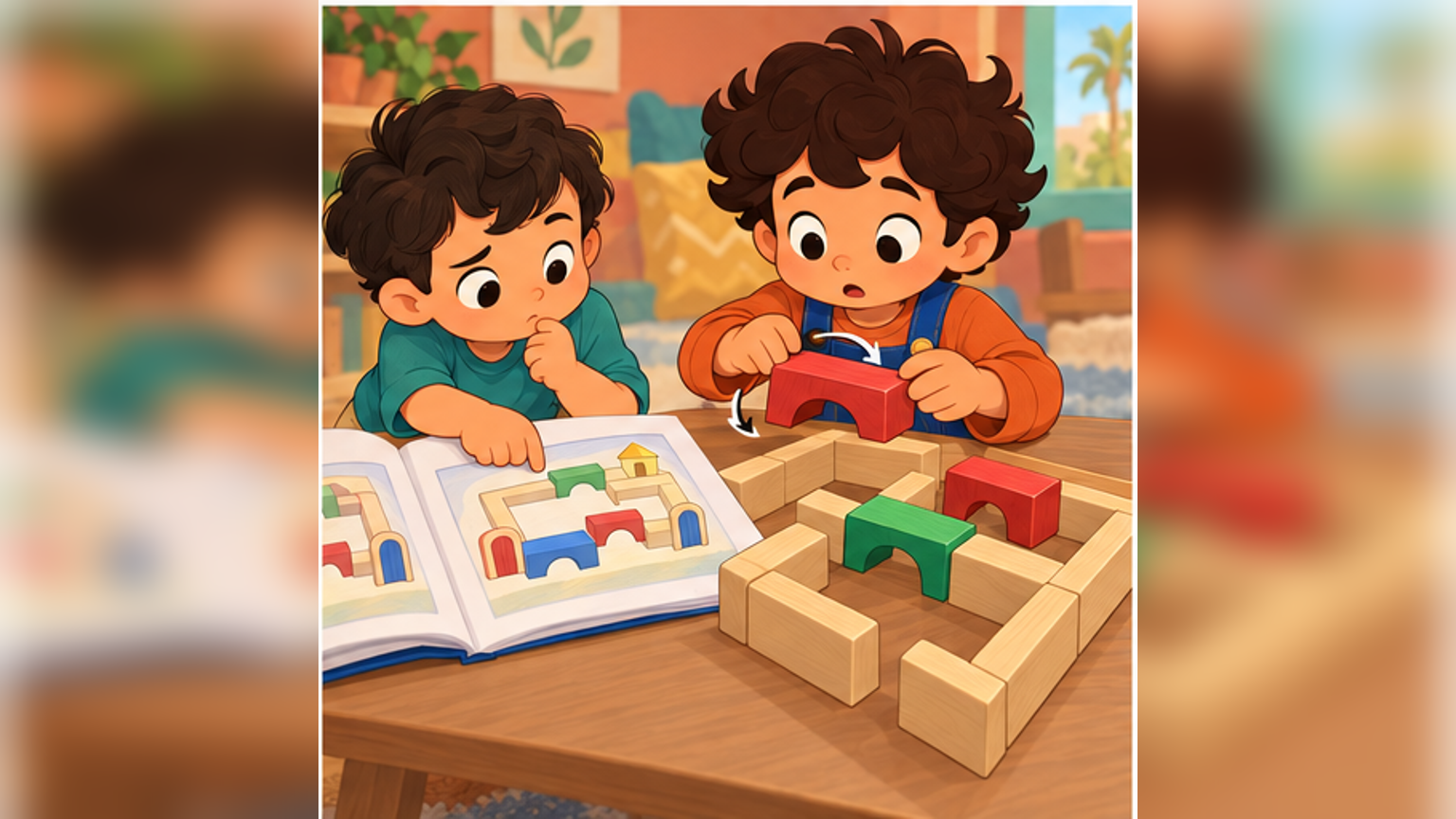
They opened the page and discovered that Omar had placed one wooden bridge backward. They turned it around. Then Omar closed the book.
“Now you finish it.”
Nader guided his counter through the last door and reached the house.
Omar had not given away the whole answer, and he had not defended an answer after it proved wrong. He shared one useful key, checked the picture, and left Nader the pleasure of finding the end.
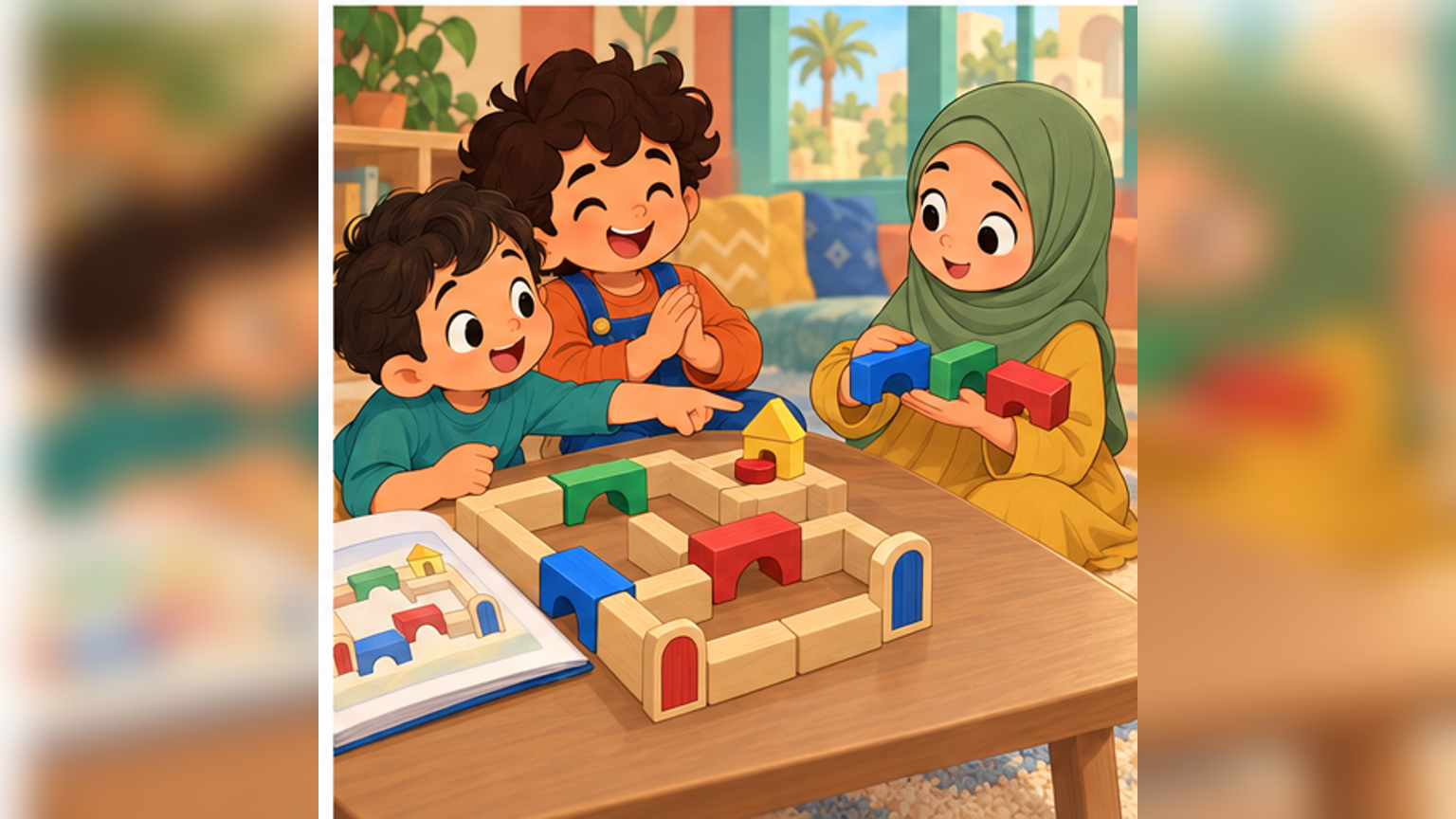
That evening, Nader placed three new pieces on the table. Their sister came over.
“Teach me,” she said.
Nader smiled and pointed to the first bridge. “I’ll teach you one thing. Then you can discover the rest.”
Download the English picture book (PDF)
Source and verification card
This is an original contemporary family story inspired by accurate transmission, checking a source, correcting an error, and helping another learn. It does not retell a historical report or depict Ibn al-Mubarak. Source review covered physical PDF pages 48 and 77, corresponding to printed pages 47 and 76. The story contains no direct Qur’an or hadith quotation.
Reference source: Abdullah ibn al-Mubarak
The editorial score is an internal quality-control measure, not a global certification, independent human review, or child trial.
العمر: 3–5 سنوات | الرمز: B20 | قصة مصوّرة للقراءة المشتركة.
الشخصيات: عمر، وأخوه نادر، ثم أختهما ليان في الخاتمة. ليان في لوحة المشاهد طفلة في الخامسة، وتظهر بحجاب كامل.
الكتاب الذي شاركته
فتح عمر كتاب الألعاب عند صفحة المتاهة. كانت فيها ثلاثة جسور وبيت صغير عند النهاية. جرب الطريق بإصبعه، ثم صنع متاهة تشبهها بقطع خشبية فوق الطاولة.
جاء أخوه نادر، وحرك قطعة عند المدخل. قال: «علمني الحل كله.»
غطى عمر الطريق بكفه وقال: «إن أخبرتك بكل خطوة، فلن تبقى لك لعبة.»
أشار إلى أول جسر. «سأعلمك شيئا واحدا: قبل أن تحرك القطعة، انظر أين ينتهي الجسر.»
حرك نادر قطعته إلى الجسر الأزرق، ثم توقف. كان الطريق بعده مسدودا.
قال عمر: «ارجع، وانظر مرة أخرى.»
اختار نادر الجسر الأخضر. وصل إلى ساحة صغيرة، لكنه احتار بين بابين.
أراد عمر أن يمد يده ويحرك القطعة عنه. ثم سحب يده وقال: «جرب الباب الأقرب إلى البيت.»
جرب نادر، فضحك حين وجد الطريق مفتوحا. بقيت خطوة أخيرة.
قال عمر بثقة: «الطريق من اليمين.»
نظر نادر إلى القطع، ثم قال: «لكن اليمين يعود إلى البداية.»
تتبع عمر الطريق بإصبعه. كان نادر محقا.
قال عمر: «أخطأت. لنتحقق من الرسم في الكتاب.»
فتحا الصفحة. اكتشفا أن عمر وضع جسرا خشبيا في الاتجاه المعاكس. أعادا القطعة إلى مكانها الصحيح، ثم أغلق عمر الكتاب.
قال: «الآن أكمل أنت.»
حرك نادر قطعته عبر الباب الأخير حتى وصل إلى البيت.
لم يعطه عمر الحل كله، ولم يتمسك بإجابته حين ظهرت خاطئة. شاركه أول مفتاح، وراجعا الرسم، وترك له متعة العثور على النهاية.
في المساء، وضع نادر ثلاث قطع جديدة على الطاولة. جاءت أختهما وقالت: «علمني اللعبة.»
ابتسم نادر، وأشار إلى أول جسر: «سأعلمك شيئا واحدا، ثم تكتشفين الباقي.»
بطاقة المصدر والتحقق
قصة أسرية معاصرة أصلية مستلهمة من معنى نقل العلم بأمانة، والتحقق من المصدر، وتصحيح الخطأ، ومساعدة المتعلم. ليست إعادة سرد لخبر تاريخي ولا تمثل عبد الله بن المبارك. روجعت الصفحتان الفعليتان 48 و77 من المصدر، الموافقـتان للمطبوع 47 و76. لا تتضمن القصة اقتباسًا مباشرًا من القرآن أو الحديث.
المصدر المرجعي: عبد الله بن المبارك
التقييم التحريري داخلي لضبط الجودة، وليس شهادة عالمية ولا مراجعة بشرية مستقلة ولا تجربة أطفال.
Story code: B19 · Age: 3–5 · Shared reading: 2–4 minutes
The story
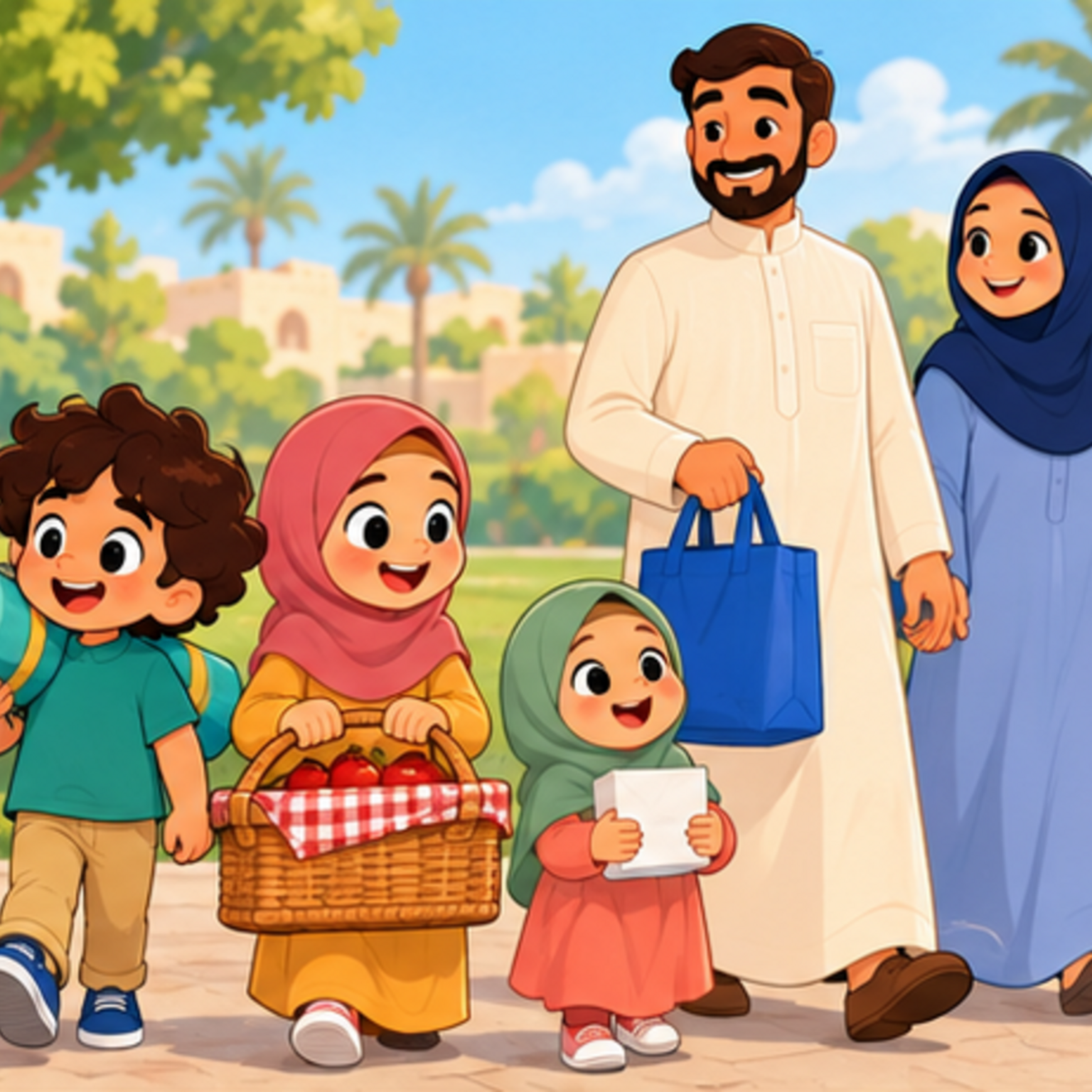
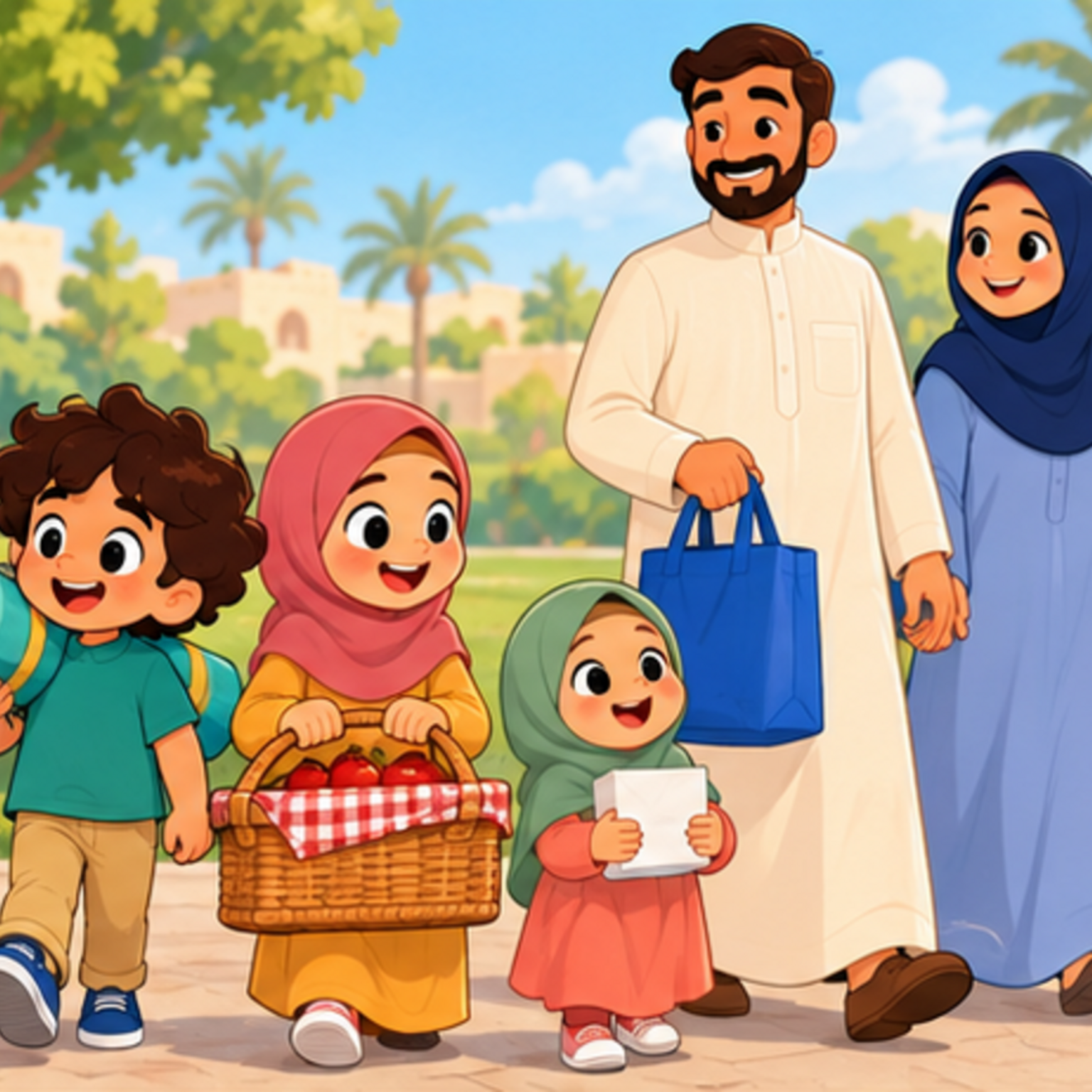
Sami’s family was getting ready for a picnic: Sami was five, his sister Maryam was seven, and their sister Hanaa was four. Their father and mother were with them.
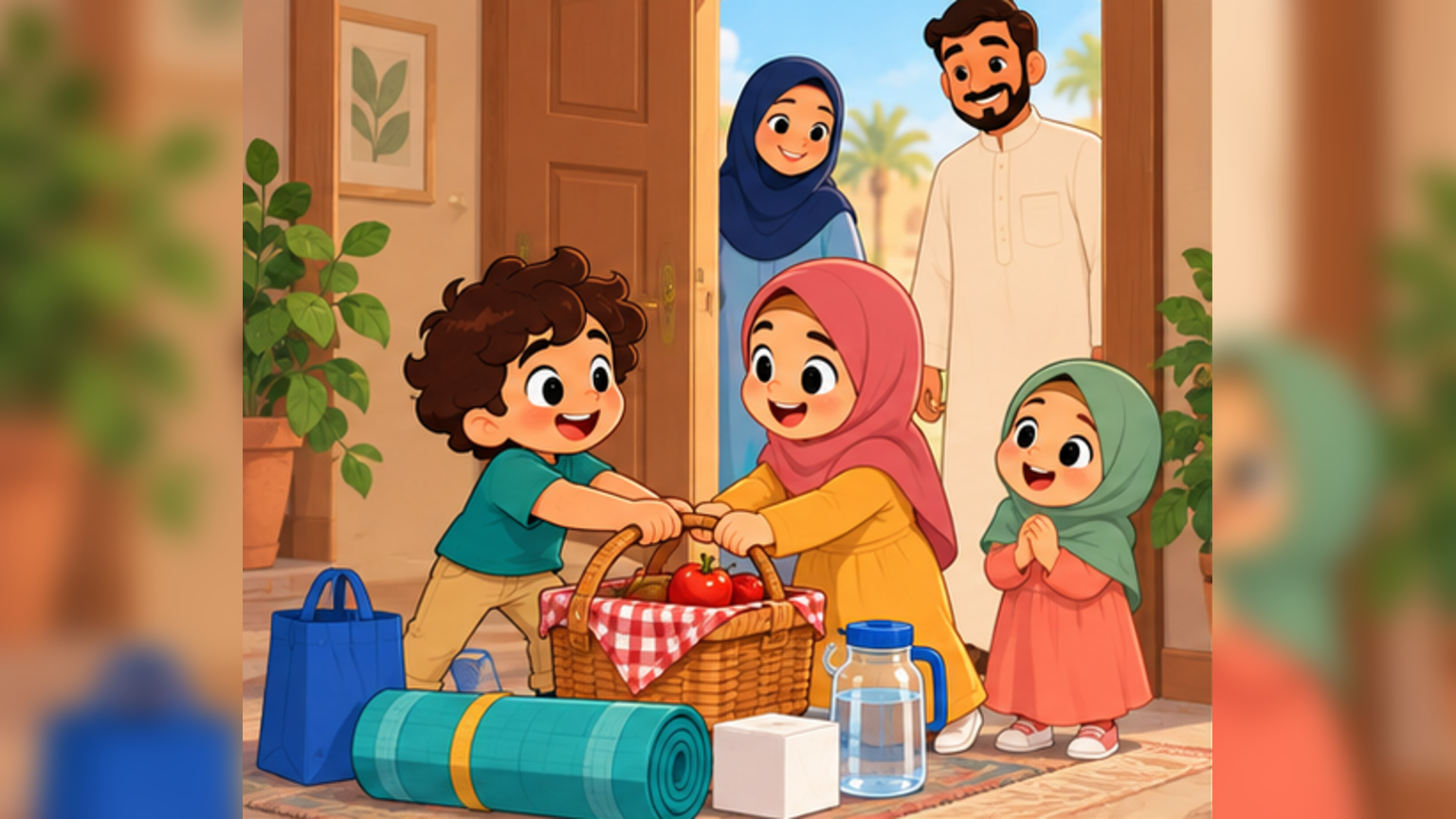
Their father lifted the large basket. It tipped a little, so he held it steady. Their mother said, “Let’s arrange the work. Then it will be easier for us.”
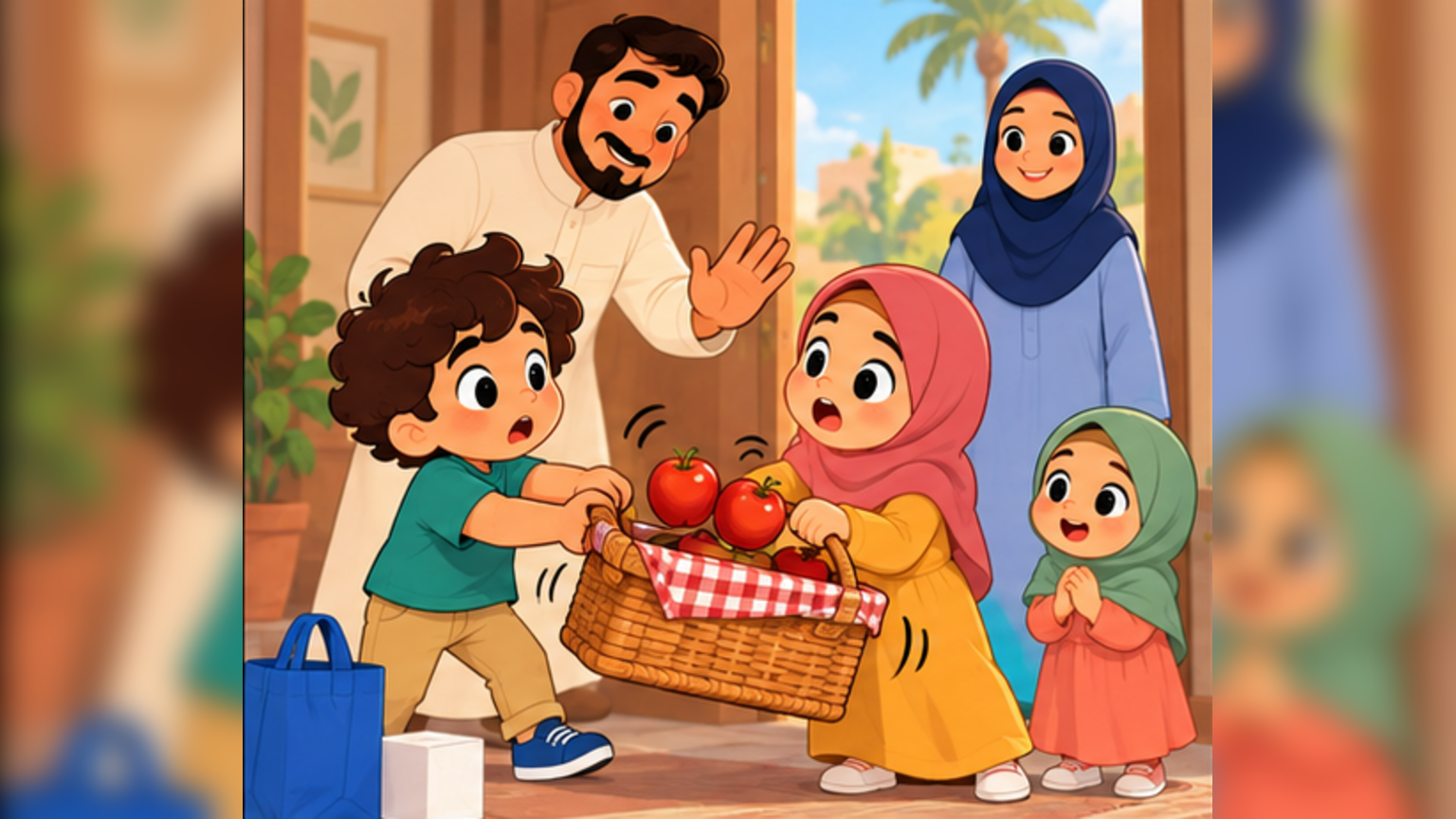
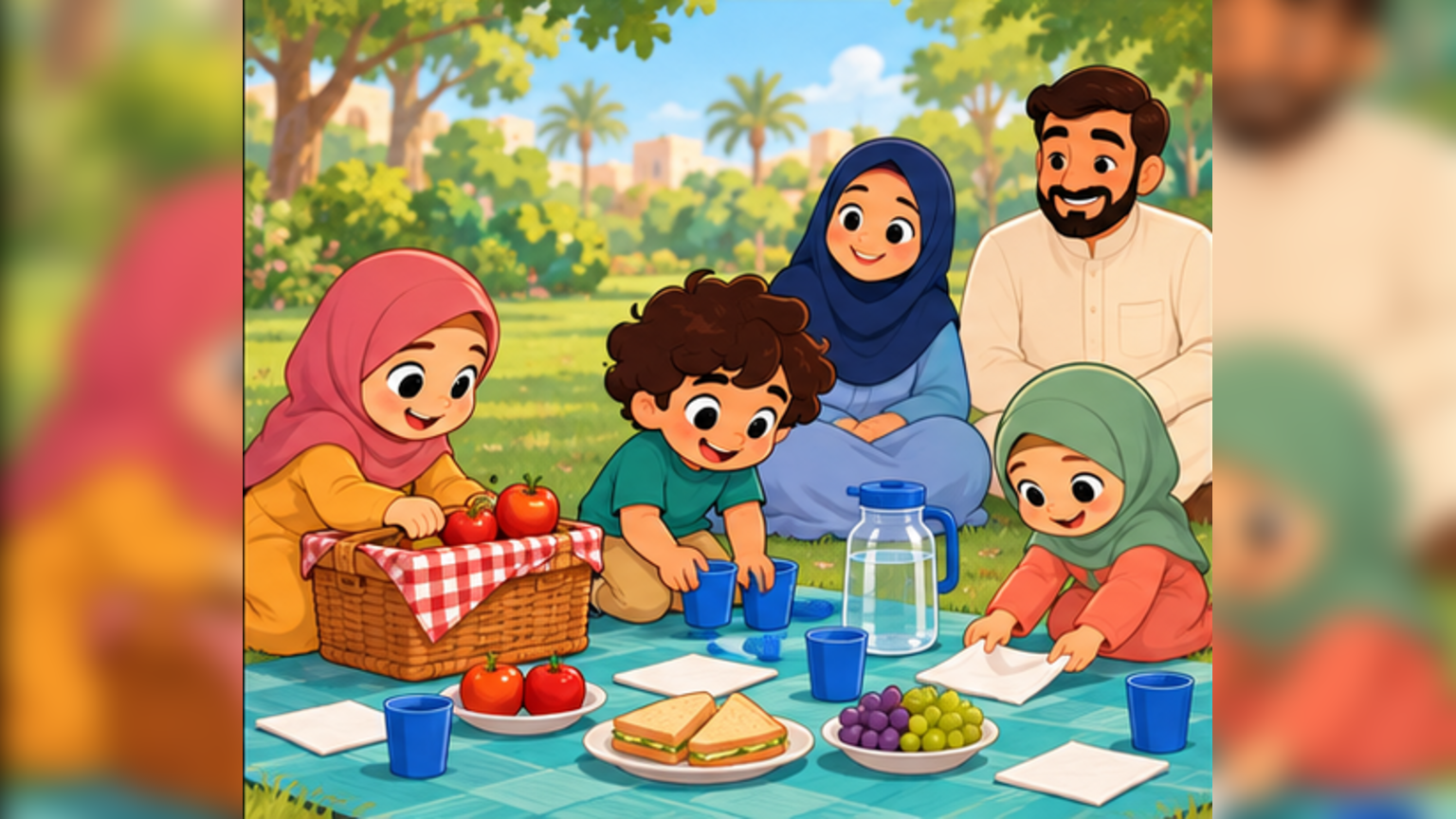
The family divided the jobs: their father carried the basket, their mother carried the bottle, Sami carried the mat, Maryam arranged the food, and Hanaa placed the napkins.
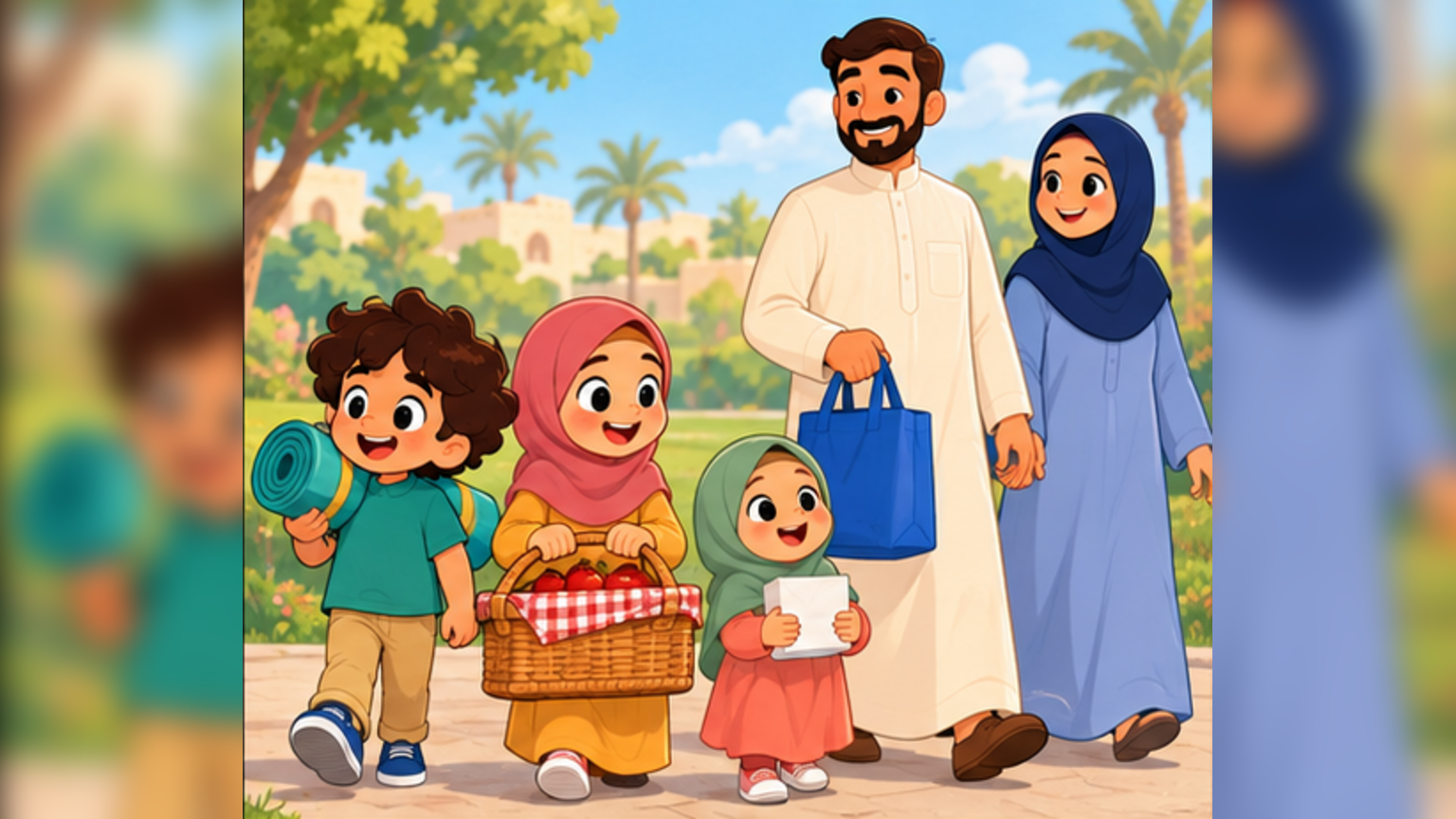
Sami held the edge of the mat with both hands. He carried it carefully, then spread it in the right place.
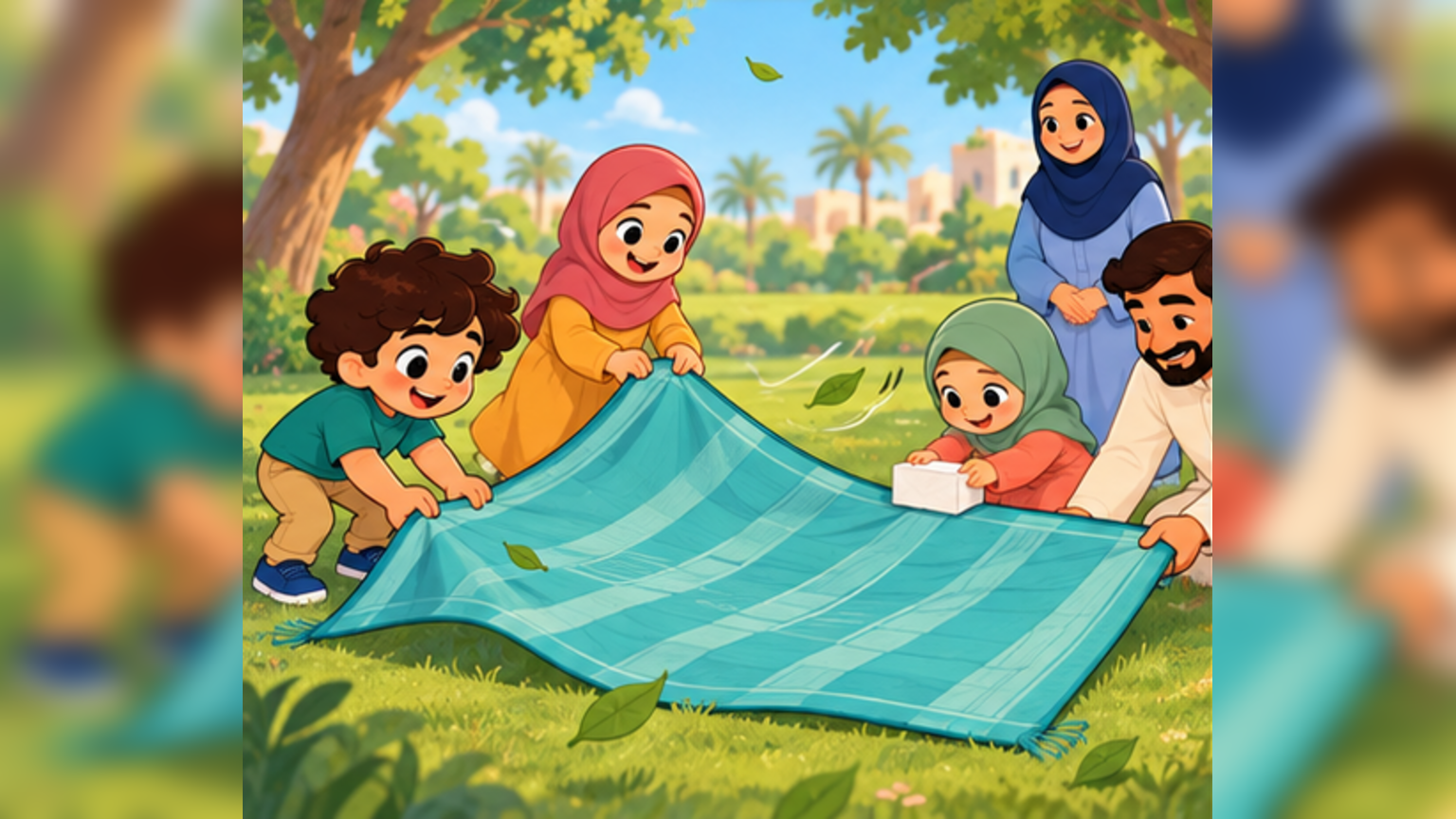
Maryam arranged the food in small rows, and Hanaa placed the napkins one by one. Their mother handed them what they needed.
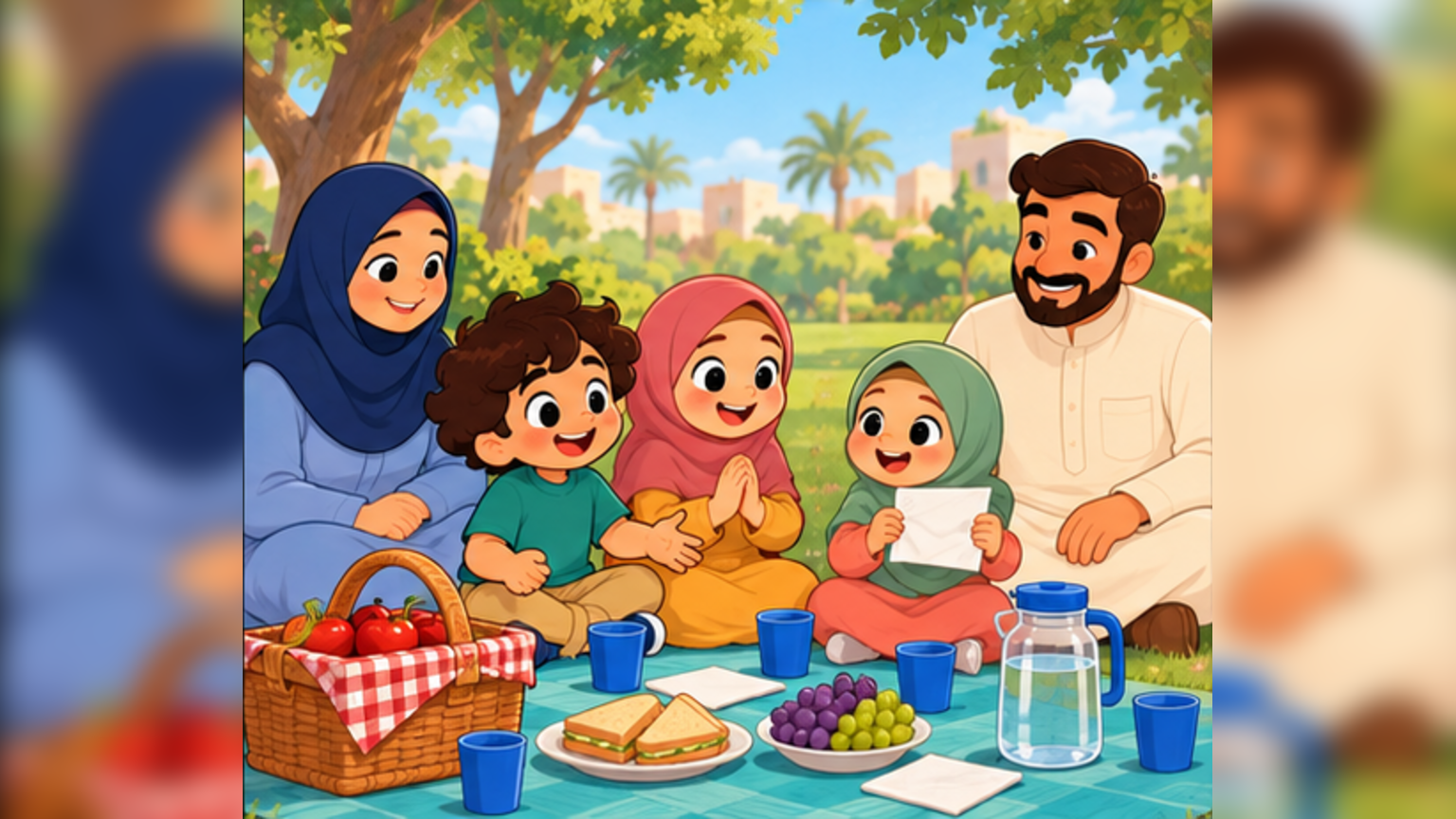
Their father looked at the tidy place and said, “When we work together, our family finishes the job.” Sami, Maryam, and Hanaa smiled. Each of them now knew: What do I carry? What do I arrange?
After reading
Choose three light, safe things at home. Who will carry each thing? Who will arrange it? Do the task with your family, then say: We worked together and finished the job.
Download the English picture book as a PDF
This is a contemporary fictional story for family learning. Its review and score are internal editorial assessments, not a global certification, human review, or child trial.
رمز القصة: B19 · العمر: 3–5 سنوات · القراءة المشتركة: 2–4 دقائق
القصة
كانت أسرة سامي تستعد لنزهة: سامي في الخامسة، وأخته مريم في السابعة، وأختهما هناء في الرابعة، ومعهم أبوهم وأمهم.
حمل أبوهم السلة الكبيرة. مالت السلة قليلًا، فأمسك بها بثبات. قالت أمهم: «نرتب العمل، فيسهل علينا.»
قسمت الأسرة المهمة: يحمل أبوهم السلة، وتحمل أمهم القارورة، ويحمل سامي المفرش، وترتب مريم الطعام، وتضع هناء المناديل.
أمسك سامي طرف المفرش بكلتا يديه. حمله بهدوء، ثم بسطه في المكان المناسب.
رتبت مريم الطعام في صفوف صغيرة، ووضعت هناء المناديل واحدة بعد أخرى. ناولتهما أمهما ما تحتاجانه.
نظر أبوهم إلى المكان المرتب وقال: «حين نتعاون، تنجز الأسرة العمل.» ابتسم سامي ومريم وهناء؛ فقد عرف كل واحد منهم: ماذا يحمل؟ وماذا يرتب؟
بعد القراءة
اختر ثلاثة أشياء خفيفة وآمنة في البيت: من يحمل كل شيء؟ ومن يرتبه؟ نفذ المهمة مع أسرتك، ثم قل: تعاونّا فأتممنا العمل.
تحميل الكتاب المصوّر العربي بصيغة PDF
قصة متخيلة معاصرة للتعلم الأسري. المراجعة والدرجة تحرير داخليتان، وليستا شهادة عالمية أو مراجعة بشرية أو تجربة أطفال.