
When Goodness Became a Facade
F03 · 16–18
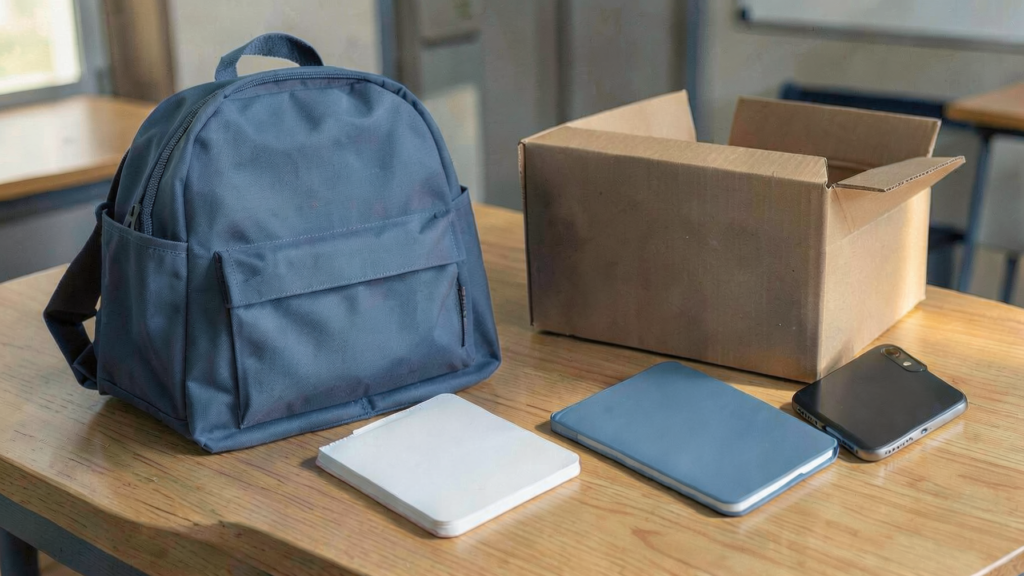
Only a few voices remained in the school courtyard, but the activity room rustled with paper bags. Ahmad, a seventeen-year-old student, carried a box to the table and checked the task sheet on the door. He had volunteered to distribute notebooks, attach size labels, and prepare a short announcement. He had started with the announcement. The pictures he had arranged the night before seemed too good to leave on his phone. Setting the box beside his foot, he opened the design again. His name appeared above the description of school bags intended for students who needed them. He enlarged his name, considered it, then returned it to its earlier size.
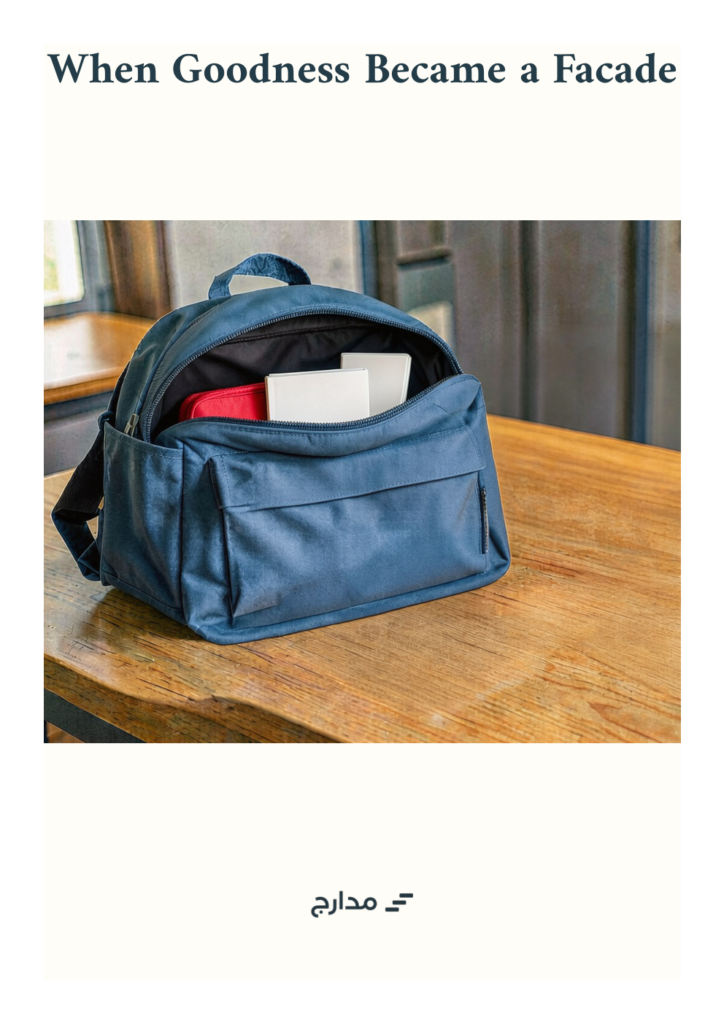
Across the table, Yusuf, his classmate and also seventeen, called, “Hold this for a moment.” He lifted a blue bag and tucked the wrapping beneath it. A clear photograph, he explained, would help people understand the project and contribute. Ahmad agreed and moved the tape dispenser out of the frame. They took two pictures. On the screen, the bags formed a tidy row; the open box and scattered papers were invisible. A classmate sent a message: “Looks great! Who designed the announcement?” Ahmad smiled and began typing while Yusuf waited for the labels.
“Ahmad. The labels.” He looked up and passed them over. He had come to help, yet each flash of the screen drew him back. He liked the thought of students knowing his name. Turning the phone facedown, he pulled the box onto the table. The announcement could wait. There were still unopened bags and a task sheet needing genuine ticks. He reached for the first bag and checked its pockets before adding supplies.
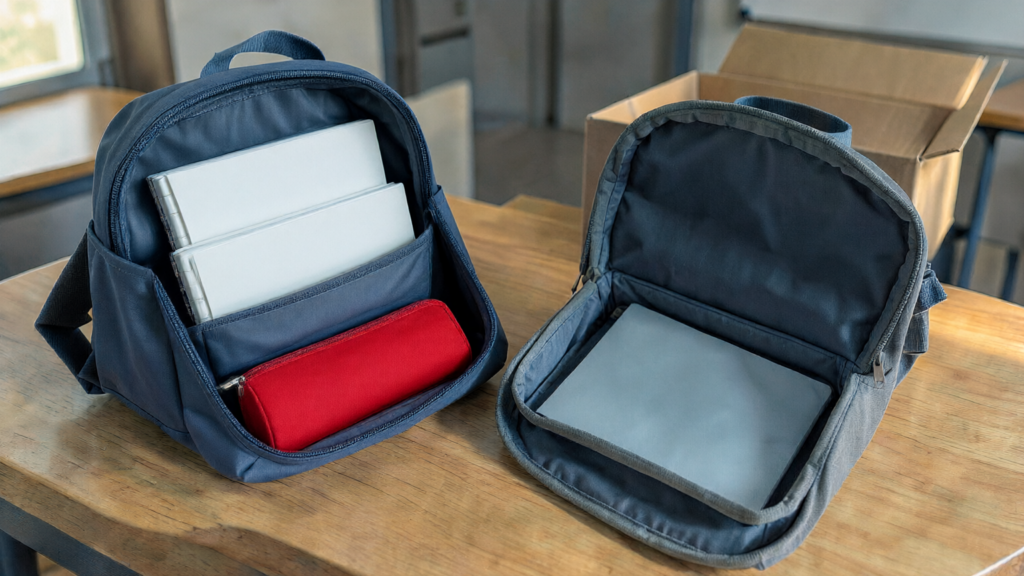
The first bag had no ruler. The second held two notebooks, but Ahmad could not find a pencil case. He reached for the blue bag they had photographed earlier. That one was full: they had supplied it from the open box beside the table. He set the packing sheet next to the bags. “The one in our picture has more in it than these.” Yusuf opened a third bag. “I thought all the boxes contained the same things.” A single pen rolled out. Ahmad stopped it with his palm and left the box on his checklist unticked.
A man stood in the doorway holding a folded slip of paper. Khalid, a forty-two-year-old father, had come to ask about a bag for his son. Yusuf made room and offered him a chair. “He still has last year’s notebooks,” Khalid explained, “but his bag has torn. Should I come back tomorrow?” Yusuf raised his phone to photograph the work. Khalid moved out of the frame. “Please, I would rather not be in any pictures.” Yusuf lowered the phone at once. “Of course. We won’t photograph you.” He put it down and asked what size bag Khalid’s son needed.
Ahmad pulled an unopened bag closer and laid out its contents. He needed another list: what was missing, rather than what he hoped was ready. His announcement still waited on the phone. “Shall I write twenty bags ready?” Yusuf asked. Ahmad looked along the tidy row, then down at the only ruler in his hand. “Wait. How many have we actually checked?”
Yusuf looked up from the checklist. “If we don’t post the announcement, where will the missing supplies come from?” Ahmad hesitated. His classmate had spent the previous afternoon calling donors. One clear photograph might explain their needs faster than a long message. “I didn’t say we shouldn’t post it. But anyone seeing this picture will think every bag is like that one.” He pointed to the full blue bag. Yusuf pulled his chair towards the screen. “Could we call it a sample?” Ahmad glanced at his name above the design, then at the space left for the students’ needs. He had volunteered hoping to please Allah. It troubled him that his classmates’ attention had begun to matter more than the person who needed a bag. Silently he asked Allah to put his intention right, then turned the screen towards Yusuf.
Khalid was waiting by the door to learn when he should return. “There’s nothing wrong with telling people what you still need,” he said. “Someone may help.” He paused. “Just don’t write my son’s name. His classmates don’t know I came.” Ahmad nodded and moved Khalid’s paper away from the photographing area. The man was not asking them to hide the project. He wanted a family matter to stay inside that room. “We could photograph the supplies on their own,” Yusuf suggested. This time he left his phone down and waited for Khalid’s answer.
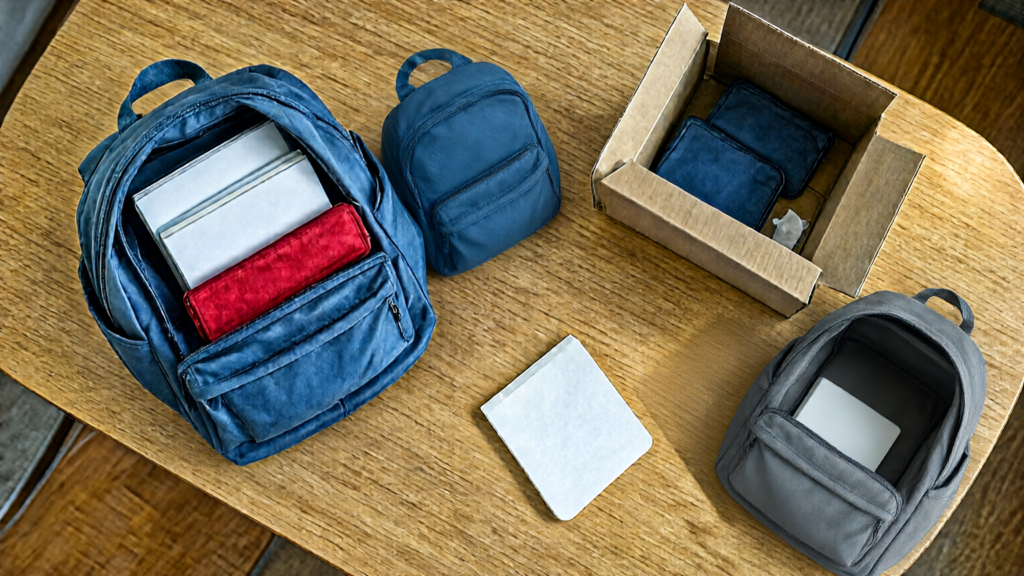
Another message asked when the announcement would appear. Ahmad began typing, then stopped. He had promised to send it before leaving, and could not check everything alone in the time remaining. “Help me get the count first. Then we can choose the words.” Yusuf placed the next bag between them. The design remained open, but Ahmad moved the cursor from his name to the line describing what they had actually finished.
Yusuf counted the rulers in the small supply bag while Ahmad checked the school bags. They placed complete ones at one end of the table and left the others beside the box. Each time Ahmad finished a bag, Yusuf added one tick. At last, eight stood in the first row; twelve still needed something. The rows were only a step apart, but the difference changed the sentence Ahmad had been about to publish. He wrote both numbers down and passed the sheet to Yusuf. They counted again and noted that the blue bag was one of the eight, not an extra bag to add to the total.
“The shop closes in half an hour,” Yusuf said. “Should I get the missing things?” Ahmad searched his messages for the remaining budget, then remembered his bus home. Going to the shop would mean missing it. Stopping at eight would mean changing the time they had promised their classmates. There was no quick finish that pleased everyone. They called the activity supervisor and explained the checked total and the missing supplies. He asked them to wait until the expenses had been reviewed and keep the remaining bags for tomorrow. Ahmad crossed out the promise to finish twenty that day. The black line across his own words bothered him.
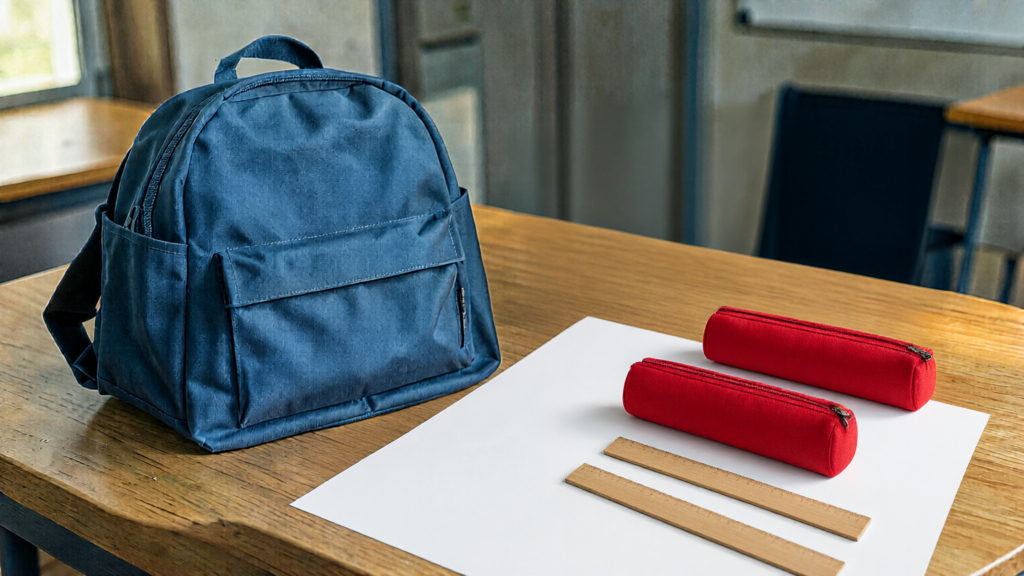
While Yusuf collected loose supplies, Ahmad labelled the rows: “Complete” and “Still needs supplies.” He straightened the blue bag in the complete row. A student could use it; it need not remain the room’s best photograph. He turned to Khalid. “We can prepare your son’s bag from this row. I’d rather check before promising when the rest will be ready.”
Ahmad returned to the announcement. He replaced “Twenty bags ready” with “Eight bags fully packed; twelve still need supplies.” Reading it aloud, he paused when Yusuf asked, “Will people know what we need?” They added a short list of rulers and pencil cases, checking it against their inventory rather than the photograph. Then Ahmad put the activity team’s name where his own had been. His finger hesitated above the letters. He could still add a small credit in the corner. He closed the text box instead.
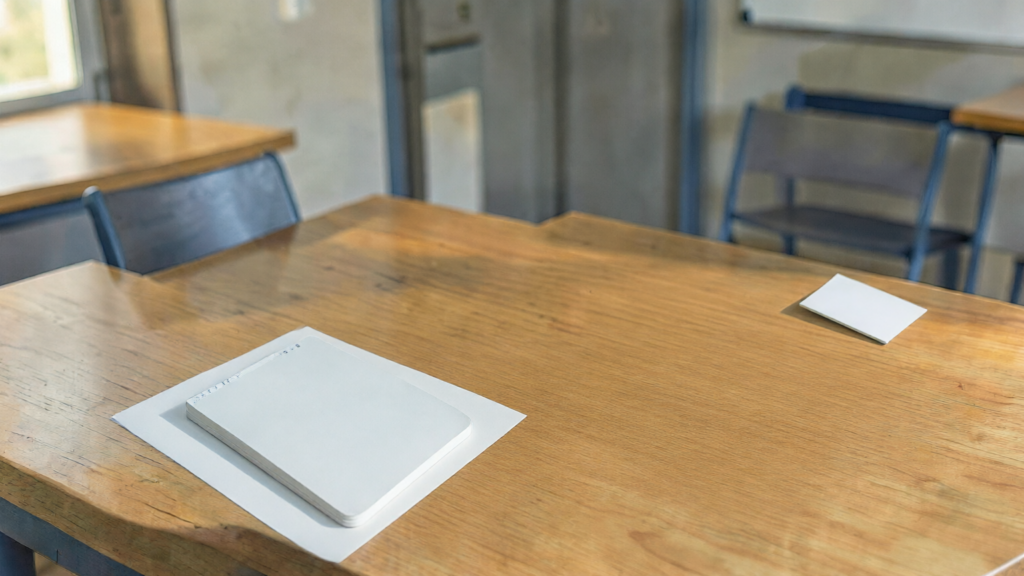
The photograph needed changing too. Yusuf spread white paper across the table and arranged the missing supplies on it. Ahmad moved Khalid’s slip away and checked the frame for any student’s name on a label. They photographed the supplies, then the complete bags, without people. The background was less tidy than before: tape and a box corner showed at the edge. Yusuf cropped that edge, leaving the bags untouched. “No moving supplies between bags for the picture this time,” Ahmad said. Yusuf laughed, then checked the caption and count once more.
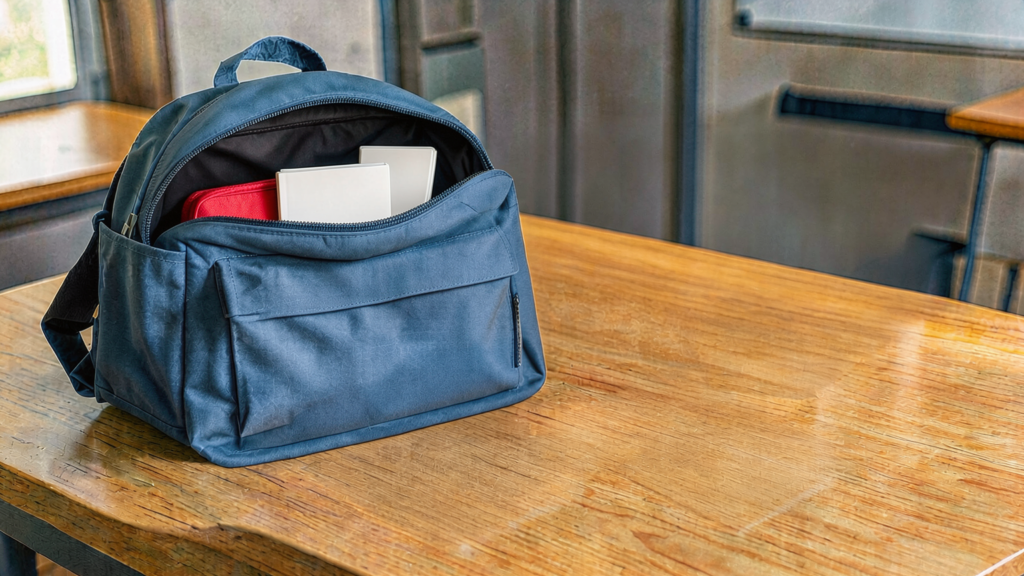
A classmate messaged to ask for the old design for the school noticeboard. Ahmad sent the corrected version and briefly explained the delay. The reply came: “I’ve already printed the first one.” Ahmad winced. This mistake could not be erased from a phone. He asked his classmate not to display it and offered to help replace it tomorrow. After the supervisor checked the update, he pressed send. He did not wait for its first like. Khalid had risen beside the complete row, and Ahmad went over to him.
Khalid chose the blue bag and lifted it by the handle to check that it was sound. Ahmad checked the supplies already inside against the list once more. He did not ask Khalid to pose beside the table or repeat his thanks for a camera. “Would your son need the larger size?” he asked. Khalid adjusted the straps and said this one would fit. Yusuf marked one of the eight bags as collected and recorded the time, keeping the named slip away from the photographs. Seven complete bags remained for their recipients; twelve still needed work.
The announcement did not fill Ahmad’s phone with messages. Someone asked how to bring supplies; someone else questioned the changed total. He answered with the checked count and specific shortages, neither apologising for the accurate figure nor praising his own honesty. His bus had left. He called home to explain the delay, then helped Yusuf gather the labels. He moved the first design into the old-versions folder and marked it not for use. Their afternoon looked smaller than the design had looked the night before. But they knew where the bags had gone and what remained unfinished.
At the door, Ahmad remembered the printed notice he had promised to replace. He set a reminder. A classmate was again asking who had designed the announcement. “We worked on it in the activity team,” he replied. He still wanted his work to be noticed. That feeling had not vanished with one corrected poster. He asked Allah to accept his work and help him renew his intention whenever he found himself seeking praise. He put the phone away and carried the supply box to the cupboard.
Reflection: How could the team explain its needs and invite donations while protecting recipients’ privacy? Suggest one change to the announcement.