
Istikhara Then Decision
F09 · 16–18
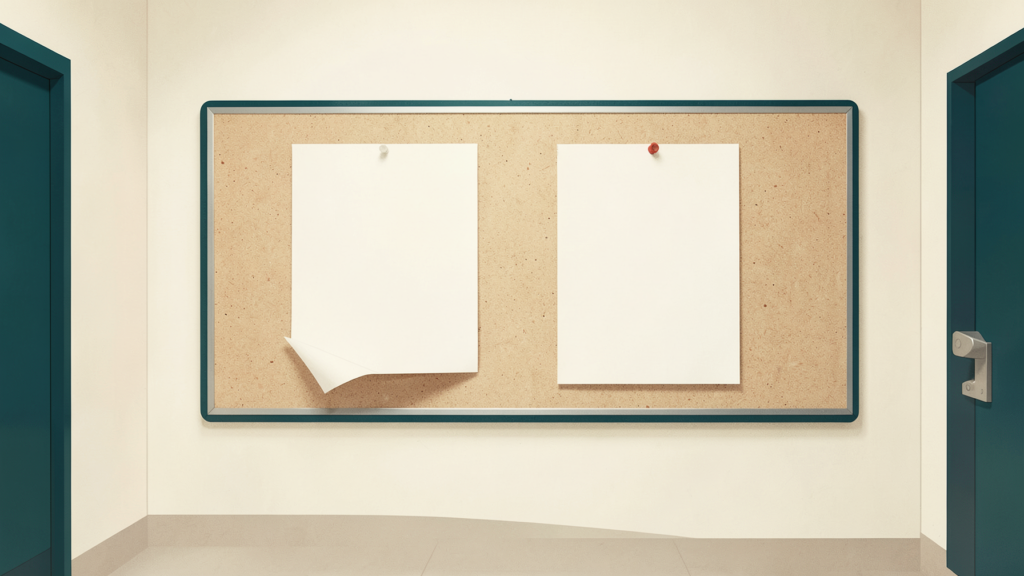
Ahmad stopped at the noticeboard in the school corridor. At sixteen, this was the first time he had been asked to choose a project he would stick with until the end of term. The repair workshop form was pinned on his left, the school newspaper form on his right. He had a week. He remembered the pleasure of tightening a loose handle on a kitchen drawer. Then he spotted a photograph of a student holding a small recorder. He imagined asking the caretaker about the tree he had planted by the gate when the school opened.
Yusuf, his classmate and friend, was sixteen too. He stopped when he saw Ahmad reach for a form and pull his hand back. Just then the corridor door swung open, lifting a corner of the workshop form. “Did you see that?” Ahmad said. “Only the workshop one moved.” He waited for the door to close and stepped to the other side of the board. A second pin held down the newspaper form. Ahmad pressed his finger against the loose corner. If the newspaper form had moved first, he thought, he might have said exactly the same thing.
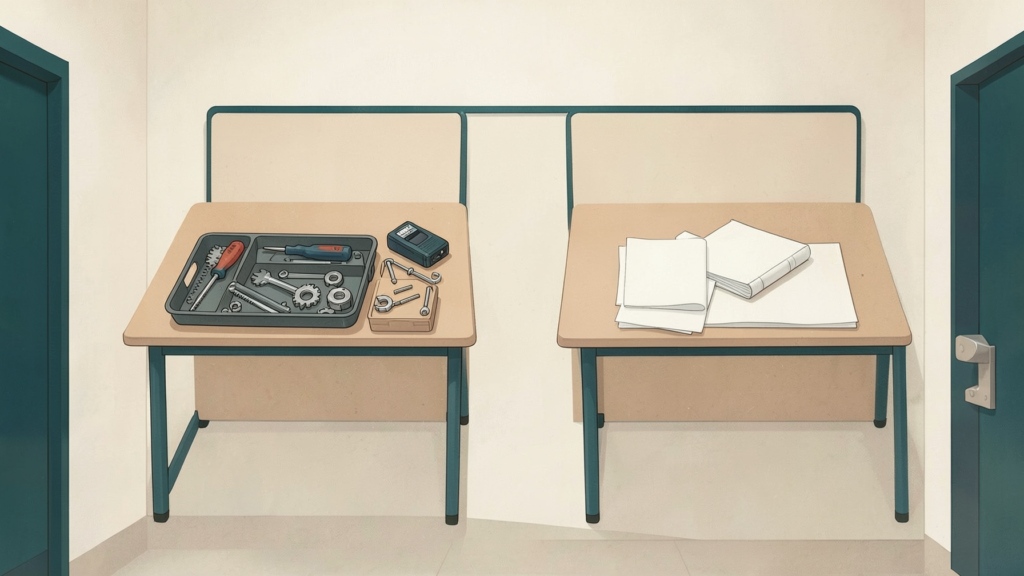
“You were about to pick up the workshop form before the door opened, weren’t you?” Yusuf asked. Ahmad looked at his hand. Yesterday he had stood in the same spot and nearly chosen the newspaper after hearing two students plan a feature. He took both forms, folded them together without writing his name. He could come back tomorrow and wait for another sign. He turned back to save the deadline on his phone. “I like both projects,” he said. “How do I know which one I can actually stick with?”
Ahmad and Yusuf headed toward the activity hall, where the repair workshop buzzed with the sound of hammers. As they entered, a supervisor greeted Ahmad with a smile. Yusuf asked the supervisor, “What do beginners actually do here in the first week?” The supervisor explained that they start with safety basics before moving on to dismantling and reassembling simple devices. Ahmad found the idea of handling gears and applying oil deeply appealing; the thought of fixing something tangible gave him a sense of accomplishment and the power to make a real difference.
Next, the two friends moved to the journalism room, where students sat around circular tables. Yusuf asked the supervisor about the training schedule. She explained that the work begins with gathering information through field interviews, followed by drafting initial copies. Ahmad noted that the idea of interviewing local elders to document the school’s history was incredibly exciting. He imagined himself holding a notebook, recording details that might otherwise be lost to time, and wanted to try that work too.

Ahmad and Yusuf returned to the corridor, with Ahmad holding both forms in his hands. He looked at the workshop paper, then at the newspaper form, trying to weigh the pros of each. He asked himself, “Which one will actually help me learn more?” As he prepared to examine the finer details, he noticed that the workshop form lacked a specific schedule for practical training, while the newspaper form was complete. He left the name boxes on both forms empty, wrote a question about training days and hours on the workshop form, and put them in his bag.
Ahmad returned home and set the forms on his desk. Before comparing them, he prayed and sought God's guidance for his choice, then returned to the papers. A breeze stirred the curtain. He smiled, remembering the noticeboard, left the window alone, and fetched his notebook. One form showed a screwdriver and the other a recorder, but neither told him what he could manage in a busy week. He turned to his timetable and opened it beside them.
His mother knocked and came in when he called. “I like both,” he said, “and I’m afraid I’ll choose one and regret it.” She asked what he would need to commit to each week. He began describing the gears he wanted to take apart and the interviews he hoped to conduct. She pointed to his timetable. He read through his homework commitments and sports practice, then admitted he still did not know the workshop’s training day. “That’s a question you can get answered tomorrow,” she said. He underlined the question he had written at school.
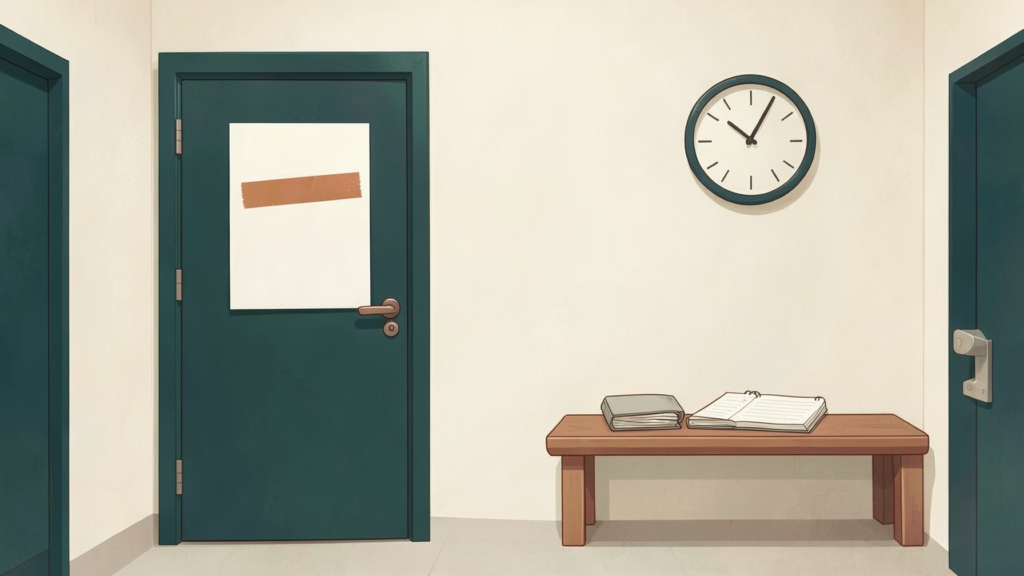
He drew two columns on a fresh sheet and wrote a project name above each. Under the workshop he put learning to repair things safely. Under the newspaper he put trying an interview. Below each ambition he left a line for the time it would require. The newspaper had given its meeting time, but the workshop’s line stayed empty. At the bottom he wrote that he would ask the supervisor about training days and hours before filling it in. His mother quietly closed the door. Ahmad gathered the papers into his bag, ready to take out in the morning.
The next morning, Ahmad found a new notice outside the workshop. The proposed slot during the last lesson had been crossed out. Training would now begin after the school day. He assumed that “after” meant late, remembered sports practice, and reached into his bag for the newspaper form. Then he stopped and pulled out his comparison sheet instead. He had written down a question about the hour, not an answer. He waited until the supervisor finished speaking to another student and showed him the underlined question.
“The time has changed,” the supervisor said. “Tuesday, from half past two to half past three.” Ahmad opened his phone’s timetable. Sports practice began at four, and the journey took about fifteen minutes. “Do I need to stay after half past three to clean the tools?” he asked. The supervisor explained that tidying was included in the workshop hour. Ahmad would need to leave on time for his next activity. He wrote down the details and read them back. He now had information he could actually compare.
At a bench near the window, he took out the newspaper form. Its meeting fitted too, though interviews might require an extra appointment arranged by the students. He added that beneath the time column. Neither sheet moved on the bench, and he no longer waited for one to move. He wanted to try repair work and now knew what that would require each week. The newspaper still appealed to him. He kept both forms, walked to the submission desk, and paused to read his notes once more.
Ahmad stood before the submission desk, taking a deep breath before placing the workshop form inside. He had chosen it because the corrected schedule aligned perfectly with his sports training, and he craved that hands-on experience with tools and gears. It was no longer a matter of guessing or waiting for a mysterious sign; it was a decision built on clear information he had gathered himself. He dropped the paper into the box, feeling a strange sense of relief wash over him, as if a heavy weight had finally lifted.
He turned to Yusuf, who was watching him with a smile, and said, “I’ve decided. The workshop is my choice. I asked about the hours, compared them to my schedule, and found that it gives me a chance for practical learning without sacrificing my other activities.” “I’ll miss the chance to ask the caretaker about his tree,” Ahmad added.

“You can still read the interviews when the newspaper comes out,” Yusuf said. Ahmad laughed and slipped the newspaper form into his bag. He would still like stories, but he could only make one commitment. That evening he opened his notebook and wrote a question on its first page about how to inspect a loose part safely. He packed the notebook and a pencil, checked that his sports kit was ready, and set a reminder for Tuesday after school. As he closed his bag, he noticed that the question had changed. Now he was asking what he wanted to learn on the first day.
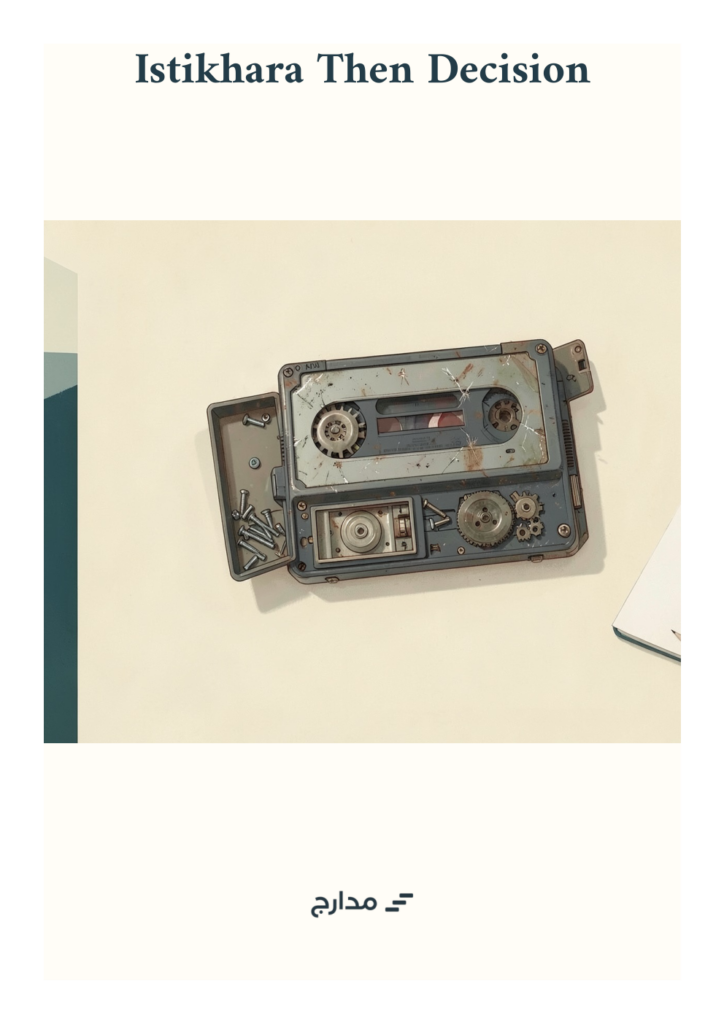
After school on Tuesday, Ahmad brought his notebook and pencil to the repair workshop. The supervisor disconnected an old cassette player before letting him open the case. He asked Ahmad to watch a gear turn as he moved the wheel by hand. Ahmad read his question about inspecting loose parts, drew the lamp closer, and placed the screws in a tray in the order he removed them.
At the last screw, the screwdriver slipped and scratched the case. Ahmad lifted his hand away and called the supervisor. “The screwdriver slipped. That’s the mark it left.” The supervisor showed him how to brace the cover on a rubber pad before trying again. Ahmad repeated the motion slowly. The scratch remained, so he noted it in the workshop log for the next group and drew where the pad went.
At half past three, Ahmad returned the screwdriver and picked up his bag. The player was still broken, but he knew how to open it and keep the screws in order. Yusuf was waiting at the door. “How was your first day?” he asked. “I’ve got a new question for next week,” Ahmad said, setting off toward the sports field. “Why does the gear turn while the spool stays still?”
Activity for the reader: Pick a small decision with two options. Write a question that would help you compare them, name someone you could consult, and identify one fact to check. Reflect on how you can pray for help and take practical steps without treating a coincidence as knowledge of the unseen.